Congestion Pricing Revenue Funds 14 New Bus Rapid Transit Routes for Outer Borough Riders
The MTA announced Thursday that the first full year of congestion pricing revenue will accelerate BRT expansion in the Bronx, Queens, and Brooklyn neighborhoods underserved by the subway.
By Marcus Webb · June 18, 2026 · 4 min read
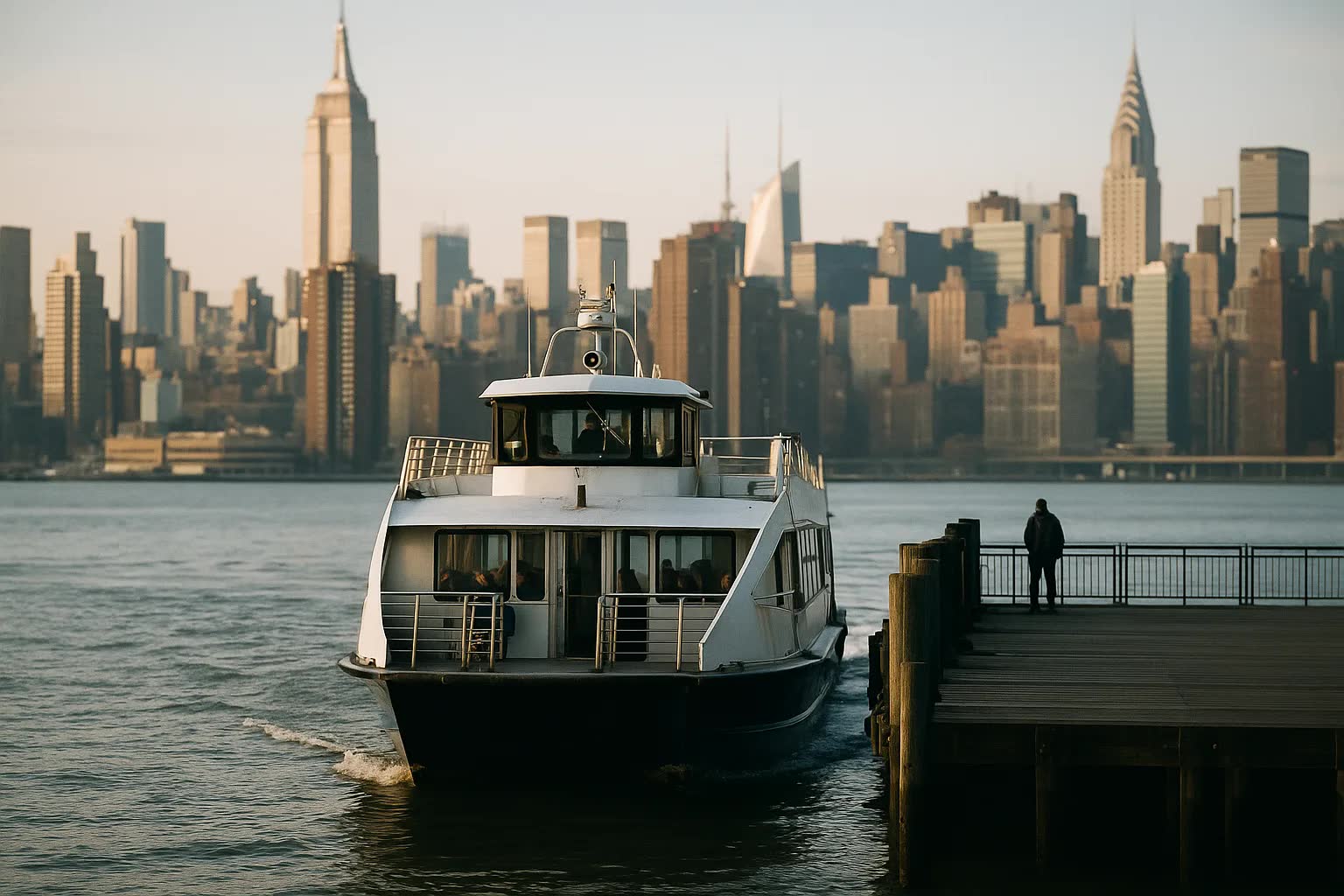
NEW YORK — The Metropolitan Transportation Authority announced Thursday that revenue generated by New York City's congestion pricing program in its first full year of operation will fund the accelerated deployment of 14 new Bus Rapid Transit routes in the Bronx, Queens, and Brooklyn — a significant investment in transit infrastructure for outer-borough neighborhoods that lack direct subway access and have historically depended on slower local bus service. The announcement was timed to coincide with the one-year anniversary of the program reaching full operational scale, and MTA officials said the BRT expansion represents exactly the kind of transit reinvestment that program advocates promised during the years-long political battle over its implementation.
Congestion pricing, which charges most drivers $9 to enter Manhattan below 60th Street, generated approximately $1.1 billion in net revenue in its first full year — in line with projections and sufficient to support $15 billion in capital financing for MTA projects. The BRT expansion is one of three major initiatives being funded from that capital pool; the others are a signal modernization program on the A and C subway lines and a comprehensive elevator installation project at 22 currently inaccessible subway stations. The BRT investment, valued at approximately $2.2 billion in total infrastructure costs, will be deployed over the next four years.
The 14 new routes are designed to address specific transit gaps identified through a comprehensive service analysis that the MTA conducted in partnership with the five borough presidents. The Bronx will receive six new BRT corridors, reflecting both the borough's historically underserved transit network and the density of its population along commercial corridors like Fordham Road, Westchester Avenue, and White Plains Road. Queens will receive five routes connecting neighborhoods in eastern and southeastern Queens — including Jamaica, Hollis, and St. Albans — with subway terminals and with each other. Brooklyn will receive three routes focused on serving communities in Canarsie, East New York, and East Flatbush.
Bus Rapid Transit, as deployed in New York, involves dedicated bus lanes, off-board fare payment to reduce boarding time, real-time arrival information, and enhanced stations with shelters and seating. The MTA's existing Select Bus Service network, which represents a modest version of BRT, has demonstrated significant travel time improvements on corridors where it has been implemented — the M15 SBS on First and Second Avenues, for example, reduced end-to-end travel time by approximately 18 percent after its introduction. The new routes will use a more fully realized BRT design, with physically separated lanes on most segments.
Community boards and local elected officials representing the affected neighborhoods have overwhelmingly praised the announcement, reflecting the widespread frustration with bus service quality that has been a persistent theme in outer-borough transportation advocacy for decades. Several council members from the Bronx, speaking at a press conference at Fordham Plaza, said the investment was long overdue and expressed particular appreciation that the routes were designed around actual rider travel patterns rather than existing bus infrastructure. "People in the Bronx have been told for 30 years that real BRT is coming," said Councilmember Yolanda Reyes. "Now we have a funding source and a timetable. We're going to hold the MTA to it."
Implementation will begin with the three routes that require the least infrastructure modification — primarily signal and lane marking work — and progress to routes requiring street reconstruction, parking lane conversion, and intersection redesign. The MTA said it expects the first two BRT lines to be operational by the end of 2027, with the full 14-route network complete by 2030. That timeline requires coordinated approval from city transportation agencies, which control street design, and from the community boards and elected officials who will need to accept parking lane reductions in some corridors.
Opponents of congestion pricing, who mounted sustained political and legal challenges before the program was implemented, have argued that the outer-borough BRT investment is insufficient compensation for what they describe as the program's regressive impact on drivers who must pay tolls to access Manhattan. Program supporters counter that outer-borough residents who do not drive to Manhattan are the primary beneficiaries of the BRT expansion — and that the riders who will travel on the new routes are disproportionately low-income New Yorkers whose access to opportunity has been constrained by slow, unreliable bus service for generations.