Controversy Over Hudson Valley Casino License Exposes Rift Between Towns and State Regulators
Local electeds accuse Albany of fast-tracking a developer while residents raise concerns about traffic, gambling addiction services and tax deals.
By Maya Singh · January 28, 2026 · 5 min read
On a gray Wednesday morning in midtown, commuters spilling out of Grand Central Terminal paused beneath the station’s vaulted ceiling to scan a banner announcing a new casino outside the city, a reminder of how decisions made in Albany pulse across local streets from Harlem to the Upper West Side. The state’s decision to award a lucrative Hudson Valley gaming license to RiverLight Resorts has exposed a widening rift between beleaguered small towns and the regulators who oversee them, with local elected officials accusing Albany of fast-tracking a preferred developer while residents warn of traffic jams, strained social services and secret tax deals that could reshape communities from Beacon to Yonkers.
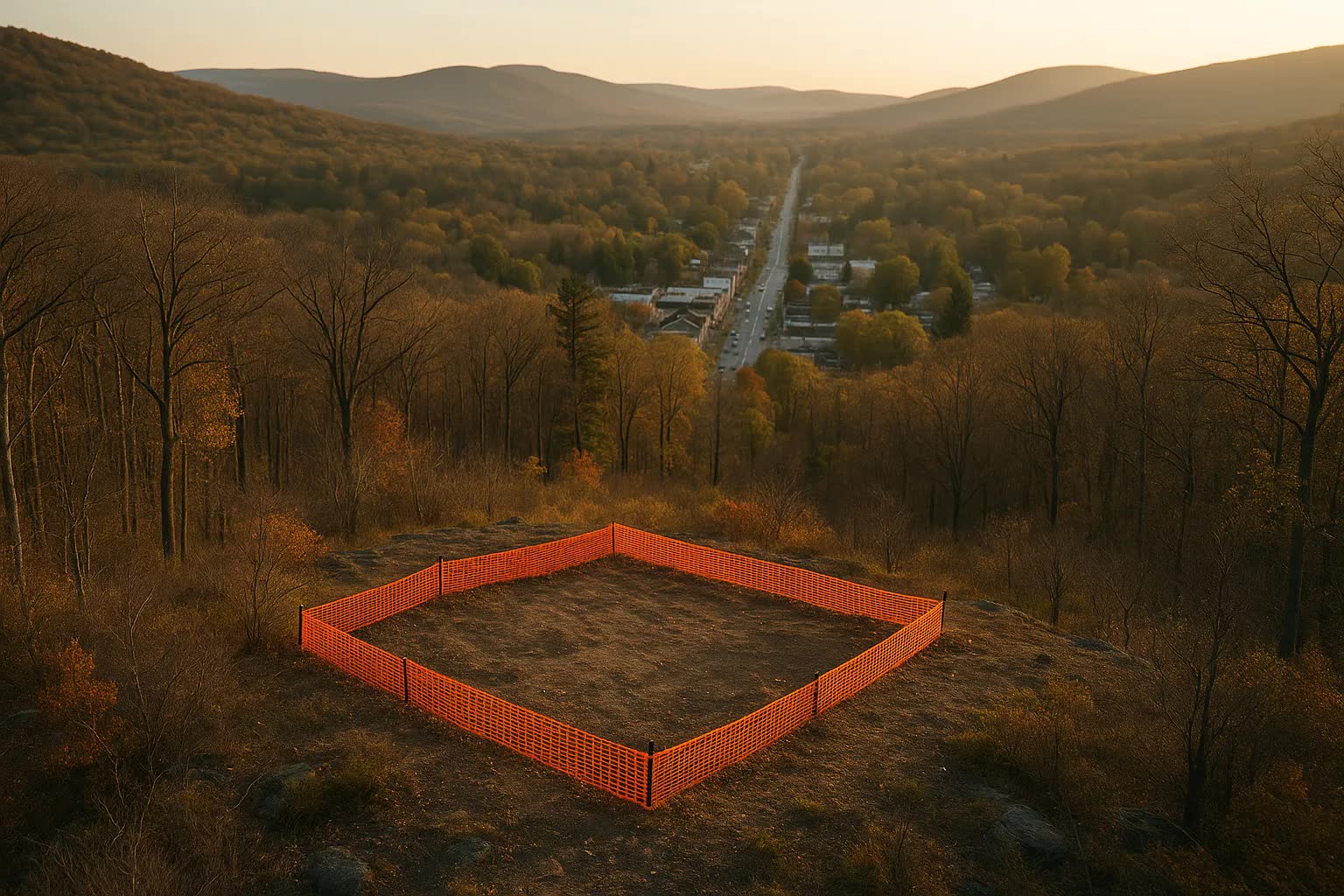
The license, granted last month by the New York State Gaming Authority, authorizes RiverLight Resorts LLC to build a 120-acre gaming complex on a waterfront parcel near the Beacon-Maritime corridor, adjacent to Metro-North’s Beacon station. RiverLight bills the project as the RiverLight Resort & Marina, a mixed-use development that will include a 250-room hotel, convention space, restaurants and a casino floor. State regulators say the site scored high on criteria for jobs and economic uplift; opponents say the review moved far too quickly and lacked meaningful community input for towns that border the Hudson River and the Taconic State Parkway.
“This felt like a done deal long before the community got to speak,” said Evelyn Torres, mayor of Beacon, who led a coalition of 10 municipal leaders pressing for a pause in the approval. “We were given a timeline that didn’t line up with our ability to study traffic impacts, our water infrastructure capacity or the addiction treatment resources our counties say they need. It looks like Albany cleared the path for a developer rather than for residents.” Torres spoke in Beacon’s Dutchess Street civic center, where handouts detailed emergency services and school district stress tests that towns compiled after the announcement.
State regulators reject the charge of favoritism. “The Gaming Authority conducted a rigorous, transparent review consistent with our statutory obligations,” said Laura Chen, deputy director of the New York State Gaming Authority. “We considered environmental impacts, economic benefits and mitigation measures. RiverLight met the criteria, and we included binding conditions meant to protect local infrastructure and fund addiction services.” Chen said the authority’s decision included requirements for traffic studies, a community benefits agreement and staged deployments of on-site amenities tied to milestones.
Residents and local electeds counter that the fine print matters more than promises. Concerns center on traffic through Poughkeepsie Road and Route 9, noise in riverfront neighborhoods, and whether the casino will pay property taxes or operate under a long-term payment-in-lieu-of-taxes deal. “We’re not against jobs, but we are against being sold a fiscal chimera,” said Priya Malhotra, director of the Hudson Valley Coalition for Responsible Gaming, a nonprofit that has campaigned for stronger addiction treatment standards. “If you create a 24-hour destination that draws 10,000 people on peak nights, and the state doesn’t require robust, enforceable contributions to local health and law enforcement, the costs will be borne by our residents.”
Concrete numbers underline the friction. RiverLight’s application projected 2,500 construction jobs over two years and 1,200 permanent jobs after opening, with an estimated $120 million in annual gross gaming revenue for the first five years. The site envisions a casino floor with 3,200 gaming positions, 200 table games and 1,200 parking spaces; traffic consultants hired by opposing towns estimate peak-night vehicle arrivals could exceed 9,000, straining Route 9 and I-84, and adding roughly 18,000 vehicle trips per day to corridor arterials. At least 12 towns and three county governments filed formal comments or objections during the comment period, and two counties have signaled intent to litigate over environmental review adequacy.
RiverLight executives counter that mitigation measures, merit and money will address local concerns. “We have designed a staged traffic demand management plan, we will fund off-site intersection improvements and we have committed $10 million over five years to addiction prevention and treatment in partner counties,” said Marcus Leighton, chief executive officer of RiverLight Resorts, in an interview at the company’s Manhattan office near West 57th Street. “We will pay community impact fees and negotiate a community benefits agreement that is enforceable.” A senior MTA planner who requested anonymity said the transit authority has seen similar projects create spikes in off-peak ridership that require schedule adjustments and capacity planning; “if those spikes happen at late-night hours, there are real costs we have to plan for,” the planner said.
Legal action has already begun. The towns of Beacon, Newburgh and Philipstown filed suit in Albany County Supreme Court seeking to overturn the authority’s environmental determination and force a supplemental environmental impact study. “Our legal challenge is not to stop economic development, it’s to ensure that state law was followed so residents’ health and safety are protected,” said Celia Hart, supervisor of Philipstown, who said her town’s volunteer fire department would face new calls for service and that school districts worry about inflated enrollment projections tied to new hospitality hires and transient workers applying for local schools.
The dispute crystallizes a broader political question about upstate influence in Albany decision-making. Local officials and activists say the pattern of quick approvals for large developers has eroded trust at the municipal level and jibes with a perception that state economic policy prioritizes headline job numbers over localized consequences. “This is a classic disconnect between the scale at which Albany measures success and the scale at which towns feel the fallout,” said Gregory Sims, a former state economic development advisor now advising several affected municipalities. Sims noted that prior gambling approvals in the Catskills and the Finger Lakes prompted similar fights over PILOT arrangements and town-level public services.
For now, the road ahead is procedural and political. The state gaming authority has set a compliance clock for RiverLight to finalize mitigation plans; meanwhile, courts must decide whether the environmental review was adequate. Community groups have scheduled a series of town-hall meetings in Beacon, Yonkers and Hastings-on-Hudson over the next six weeks, and the coalition of towns has asked for an independent audit of projected traffic and addiction-service funding. Whether mediation can bridge the gap between Albany’s statutory process and towns’ demands for binding, enforceable community protections will determine not only the fate of this project but the contours of state-town relations across the Hudson Valley in the run-up to next year’s budget cycle.