Crowded Primary Field Seeks to Replace Longtime Bronx Assembly Member
A contested primary reflects shifting priorities in one of the city's most diverse and politically consequential districts.
By Ezekiel Harris · March 28, 2026 · 4 min read
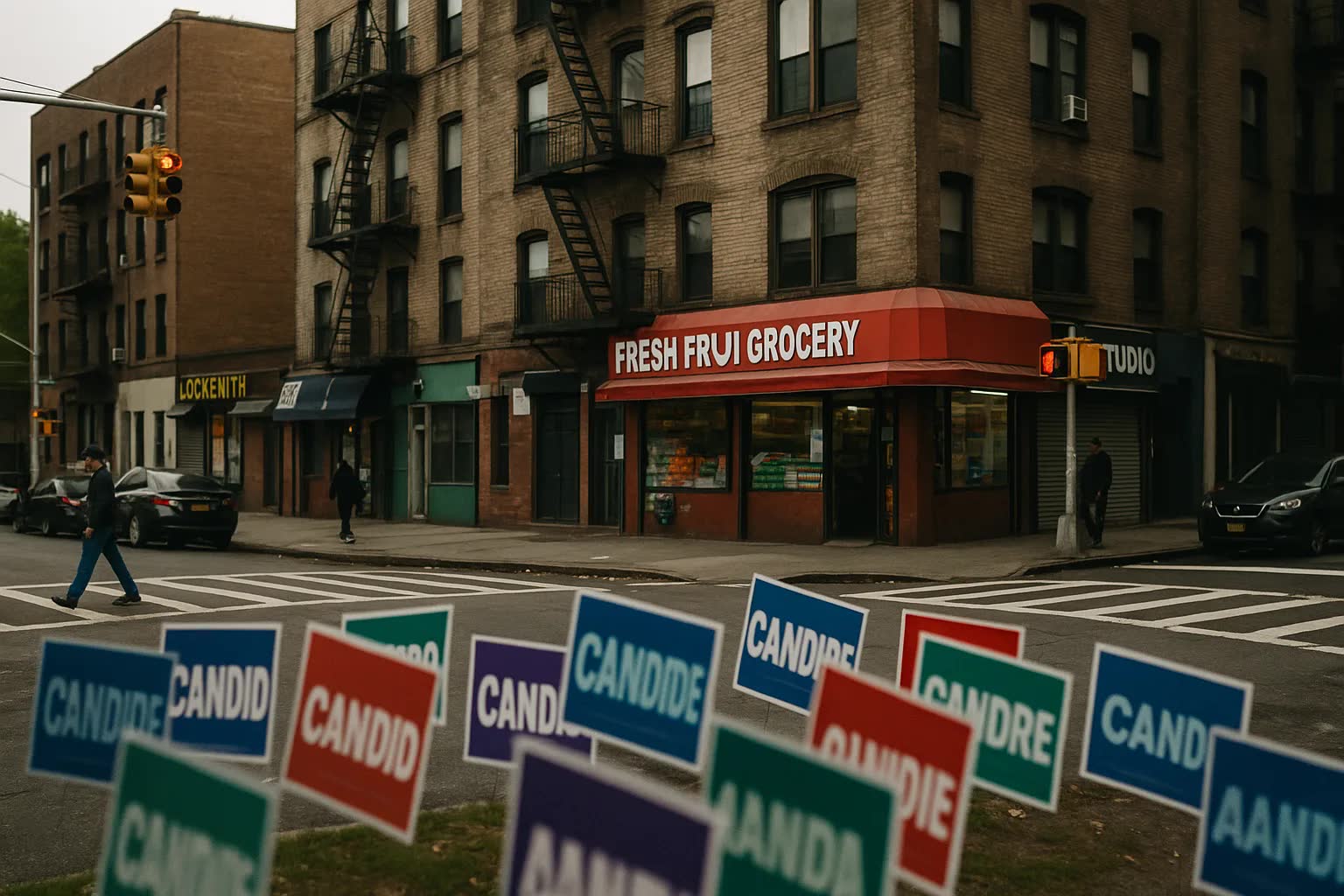
NEW YORK — In a borough long defined by entrenched incumbency and fiercely local politics, an unusually crowded Democratic primary in the Bronx is crystallizing a power shift along busy corridors from Fordham Road to the Bruckner Expressway, as neighbors and activists seek a successor to Assembly Member Tomas Calderon, who announced his retirement after more than two decades representing a district that spans Belmont, Hunts Point and parts of University Heights.
The open seat has produced a field of 11 candidates — from union leaders and teachers to small-business owners and former city staffers — each pitching different answers to a shared set of complaints: subway delays on the 4 and 5 lines along Jerome Avenue, recurrent street flooding near Rosedale and the Bruckner, rising rents along the Arthur Avenue retail strip and overcrowded classrooms near Fordham University and the Bronx Zoo corridors.
Campaign season in the Bronx rarely lacks heat, but this cycle feels distinct, residents and operatives said, because the neighborhood priorities reshaped by the pandemic have hardened into ballot-box issues: climate resilience for low-lying blocks in Hunts Point, mental-health services for returning veterans in Throggs Neck and investment in transit reliability for commuters who funnel through Yankee Stadium on game days and congested busways along Zerega Avenue.
"People I talk to on the bus to the train, at the bodega on East 187th, they want someone who'll deliver on day one — not promise for two years and disappear," said Marisol Vega, executive director of South Bronx Community Action, who has worked on affordable housing campaigns in the district. "This is about basic service and dignity — a representative who knows where the potholes are and who shows up when a basement floods after a rainstorm."
Candidates have aligned themselves along distinct coalitions: two are backed by local labor unions, including a transit-worker-backed organizer who emphasizes service restoration and safety; three court neighborhood groups advocating for inclusionary zoning and tenant protections; and at least one centrist business-backed hopeful emphasizing small-business recovery along Arthur Avenue and Southern Boulevard. Endorsements so far are piecemeal, reflecting the fractured nature of the electorate.
The math underscores why the primary is wide open: 11 declared candidates; roughly 45,000 registered Democrats in the assembly district; turnout in the last midterm primary was 21.3 percent, with about 9,600 ballots cast; the median household income in the district is estimated at $36,200; and the population is approximately 55 percent Latino, 30 percent Black, 8 percent White and 7 percent Asian. Fundraising totals vary widely, with the top three candidates reporting combined receipts near $420,000 and six trailing contenders still operating on shoestring budgets.
On the ground, precinct captains and block associations say door-to-door campaigning matters more than ad dollars. Lucas Rivera, a public school teacher and one of the candidates who has campaigned heavily along Mosholu Parkway, framed his pitch in those terms. "Families are ready for someone who will fight for smaller class sizes and after-school programs that keep kids safe and learning," said Rivera, who also served on a local school advisory council. "You can't legislate trust — you earn it neighborhood by neighborhood."
Local business owners are paying close attention, too. Carlos Mendoza, owner of a bakery near Arthur Avenue Market, said he is watching candidates' small-business plans closely. "We need straightforward help with rent relief, better sanitation services and less red tape for permits," said Mendoza. "Whoever wins needs to understand what happens when a grant takes six months to process and a lease is due next month."
Policy debates have sharpened around a pair of looming development projects: a mixed-use rezoning near Westchester Avenue that would add several hundred units, and a proposed resilience bond for flood mitigation along the Bronx River corridor. Housing advocates favor stronger tenant protections in any rezoning, while some neighborhood groups oppose large-scale development without explicit guarantees for permanently affordable units. Transit advocates, meanwhile, are pushing a platform of more frequent service and capital repairs for nearby subway lines and bus routes.
As the June primary approaches, organizers say turnout will be decisive in a race without an incumbent. Early voting and absentee-ballot campaigns are ramping up, and several candidates have pledged to prioritize constituent services on day one should they prevail. With so many names on the ballot, the winner will need concentrated support in key neighborhoods — Fordham, Belmont and Hunts Point — and a rapid ground operation to translate energized meetings at community centers and cafes into actual votes at firehouse and school polling sites. The district's next assembly member will be tested immediately on a simple demand that has animated the contest: turning neighborhood frustration into measurable improvement on the city's streets and subways.