Dog-Run Rules Spark Debate at Prospect Park
A recent push to limit off-leash hours divides regulars, trainers and families who use the park for socializing and exercise.
By Keisha Brown · March 31, 2026 · 4 min read
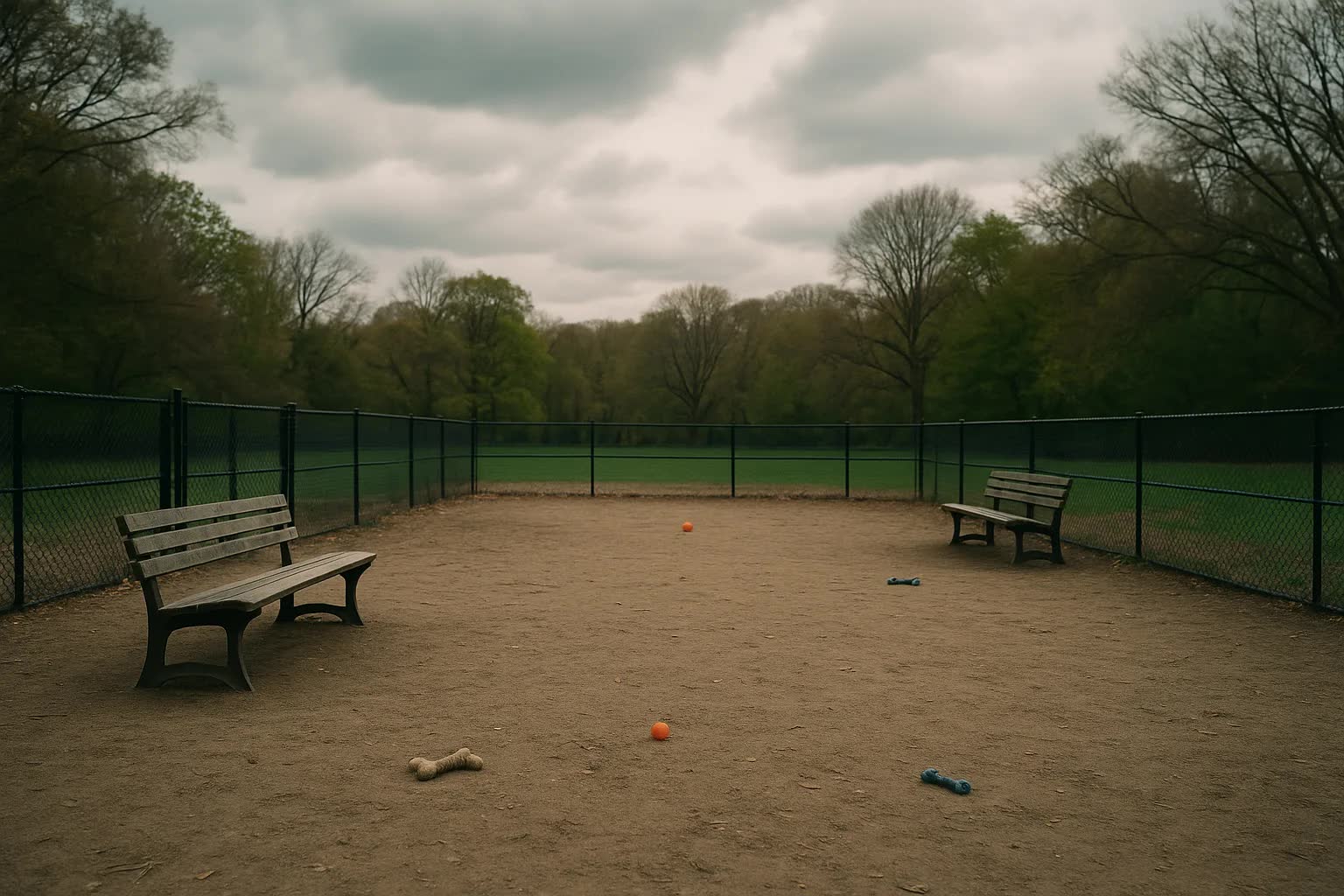
NEW YORK — A proposed narrowing of off-leash hours at several major dog runs in Prospect Park has touched off a neighborhood debate that reaches from the playgrounds by Grand Army Plaza to the stoops of Park Slope and Windsor Terrace, pitting longtime pet owners and trainers against parents, joggers and some seniors who say the change would shrink vital space for socializing and exercise in one of Brooklyn’s busiest green lungs.
The Parks Department proposal, quietly circulated last month to Brooklyn Community Board 6, would limit unstructured off-leash access in four of the park’s largest fenced areas to two daily windows: 6 a.m. to 8 a.m. and 6 p.m. to 8 p.m. That contrasts with current practice at many runs, where dogs are commonly off leash during most daylight hours under the supervision of their owners. Proponents say scheduled hours will reduce conflicts between dogs and people and make the runs easier to maintain; opponents call the change a one-size-fits-none fix that misunderstands how people actually use the park.
On a blustery Tuesday morning near the Long Meadow, a group of trainers unrolled agility equipment as parents pushed strollers along Prospect Park West and cyclists threaded toward the Loop. "This park is how I put food on the table," said Marcus Feldman, owner of Paws & Play, a local dog-walking and training company based in Park Slope. "My clients book morning and late-afternoon sessions because that’s when neighborhood residents can come. Narrowing the windows by more than half would cost us time, clients and the socialization dogs need to be well-adjusted."
Across from the Nethermead, a different chorus of voices has gathered. "We moved here for a safe place to walk our kids without having to constantly worry about loose dogs barreling into them," said Aisha Patel, 39, who lives near Prospect Heights and brings her 5-year-old son to the park three times a week. "I’m not against dogs, but I am for predictable rules that separate children's play from high-energy dog play, especially during the busiest hours when the playgrounds are full."
The contention has also ratcheted up in digital forums and at corner cafes: neighborhood listservs in Park Slope, Windsor Terrace and Flatbush have seen heated exchanges, and two petitions—one in favor of the limits and one opposed—collected more than 1,700 combined signatures in ten days. Local businesses that cater to dog owners, such as Barks & Bites, a bakery on Fifth Avenue, say sales ebb and flow with park traffic, and the owners worry a contraction in accessible hours could ripple into their bottom line.
Parks Department officials, who presented the draft plan to a small meeting of stakeholders last week at the Prospect Park Boathouse, said the policy aims to reduce injuries and clean up recurring disputes without closing runs entirely. "We’re aiming for balance—safety for everyone while preserving off-leash opportunity," said Aaron Mill, a Parks Department liaison for Brooklyn parks. He acknowledged staffing constraints in Parks Enforcement Patrol and said signage and a three-month pilot would precede any permanent rule change.
Numbers underscore why officials are pushing the change: Parks logs show 421 dog-related complaints across Prospect Park in 2025, up from 372 in 2024, with 58 percent categorized as human-dog conflicts occurring near playgrounds and pedestrian paths. There are 14 fenced dog runs inside or adjacent to Prospect Park, and volunteers estimate that on busy days as many as 200 dogs can cycle through the three largest runs combined. A Parks-conducted survey of 812 park users in January found 49 percent favored defined off-leash windows while 37 percent opposed restrictions and 14 percent were undecided.
Trainers and some long-standing owners argue that the plan misunderstands how dogs are socialized in New York City, where enclosed runs provide rare opportunities for off-leash interaction. "Dogs don’t read timetables," said Lena Morales, president of the Prospect Park Dog Owners Association, who lives in Carroll Gardens. "If we shrink access to two narrow windows we will see more overcrowding during those hours, not less. That’s a safety issue too. We want common-sense rules, but they have to reflect the daily rhythms of neighborhoods where parents work, shift schedules vary, and people rely on staggered hours to exercise their pets."
Neighbors raising safety concerns point to uneven enforcement as a central problem: some visitors flout the park’s leash laws outside fenced runs along Ocean Parkway and Prospect Park West, where children often play. Seniors who use the park for morning walks say they’ve been bumped by unleashed dogs exiting runs into crowded paths. Meanwhile, dog walkers who operate professionally say limits will increase the number of pets they must manage in smaller timeframes, heightening the likelihood of incidents rather than reducing them, and that the proposal would disproportionately affect people who live in small apartments without private yards in neighborhoods such as Prospect Heights and Flatbush.
The immediate next steps are procedural: Brooklyn Community Board 6 will take up the parks committee’s recommendation at an April 14 meeting, and the Parks Department intends to hold a public hearing in late April before any pilot program begins, officials said. Whatever the outcome, neighborhood advocates on both sides of the debate acknowledge the deeper question: how to share finite city green space in ways that respect the needs of dogs, their owners, children, seniors and local businesses. For many in the corridor from Grand Army Plaza to the Boathouse, the coming weeks will be a test of whether a compromise can be stitched from competing habits and hard-won routines.