East River Ferries Turn Into Pop‑Up Concert Stages
Private operators and promoters are testing short music runs aboard commuter ferries to reach evening and weekend crowds along the waterfront.
By Diego Alvarez · December 20, 2025 · 4 min read
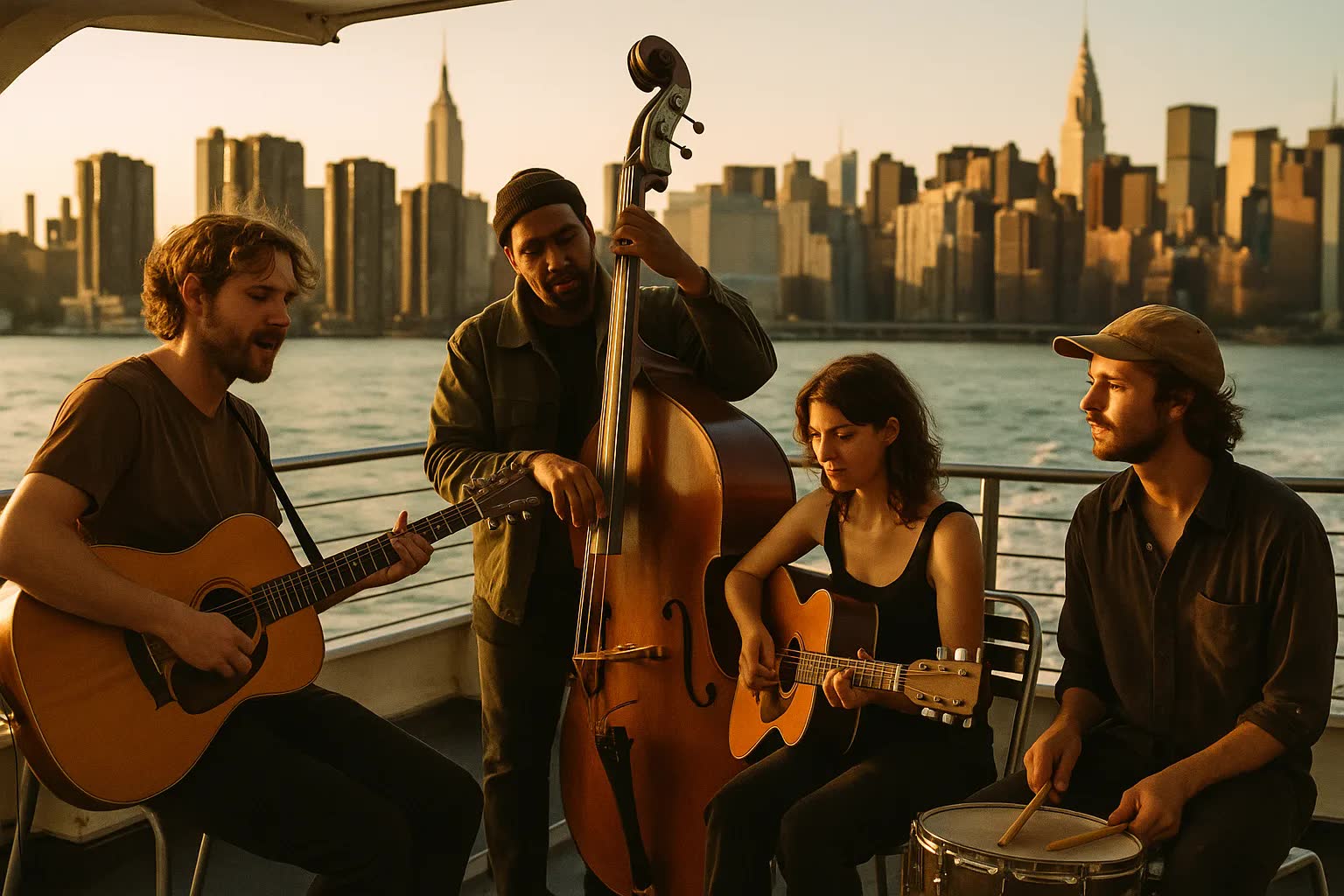
NEW YORK — On a blustery December evening, commuters stepping off the East 34th Street ferry found themselves stepping into a concert: a three‑piece indie band amplified over the river, LED lights framing the Manhattan skyline, and a crowd of 70 swaying between the bow and stern. What began as a handful of experimental runs this year has become a deliberate push by private ferry operators and independent promoters to turn short commuter sailings into pop‑up stages aimed at evening and weekend waterfront crowds from Long Island City to DUMBO.
The shows are small, mobile and hyperlocal. Boats leave from piers at East 34th Street, Hunter's Point South in Long Island City and the South Street Seaport, stopping at Roosevelt Island and a temporary landing near Williamsburg's North 6th Street on select nights. Promoters like HarborSound Collective hire local acts — jazz trios, indie folk duos and electronic DJs — and outfit the ferries with compact sound systems and safety‑approved lighting. The aim, organizers say, is to marry the city's commuter patterns with a craving for neighborhood‑scaled nightlife.
“We wanted to meet people where they already are, instead of asking them to make a long trip into Manhattan,” said Maya Chen, creative director of HarborSound Collective. “A 45‑minute ride with skyline views and a 10‑song set turns a ferry into an intimate venue and keeps money circulating in waterfront neighborhoods.” Chen said the Collective curated artists based in Queens, Brooklyn and the Lower East Side to highlight local talent and keep logistics simple.
Operators have had to balance artistry with safety. EastFlow Ferries, a private operator that runs supplemental East River routes on weeknights, refitted three of its 149‑passenger boats with secured risers and nonintrusive rigging for small PA systems. “We don't want to compromise capacity or emergency procedures,” said Anthony Ruiz, operations manager at EastFlow Ferries. “Shows are limited to one deck, sound levels are capped, and our crew runs rehearsed egress drills before every event.” Ruiz said the company's insurance premiums rose during the pilot but were offset by charter and ticket revenue.
Neighborhood reactions have been mixed. In DUMBO, shop owners welcomed the extra foot traffic; in parts of the Lower East Side near the South Street Seaport some residents raised concerns about amplified sound late into the evening. Lorenzo Vega, owner of Vega Records on Bedford Avenue in Williamsburg, said the ferry concerts have brought new customers into his shop on weekend nights. “I've had people come in after a ferry set and buy vinyl; it helps that the train ride from the ferry to Bedford is short,” Vega said.
Concrete data supplied by promoters and operators outlines the scale of the experiment: between May and November, three private operators ran 62 music sailings across 22 weekends; total attendance averaged 96 people per sailing, with ticket prices ranging from $12 general admission to $40 for limited VIP seating. On targeted sailings the operators reported a combined 14 percent bump in ridership over comparable evening runs, and ancillary spending — food trucks at piers, bar sales on board and nearby retail — generated an estimated $78,400 in local revenue over the pilot period.
City regulators are watching closely. The Department of Transportation and the New York City Economic Development Corporation have held briefing sessions with operators to discuss pier allocations, noise mitigation and marine safety. A senior city planner who reviewed the program on condition of anonymity said officials are interested in how temporary cultural uses of ferry infrastructure might dovetail with waterfront revitalization plans, but cautioned that full expansion would require clearer rules on noise, crowd control and pier access times.
Promoters argue the model can be lucrative and culturally expansive. HarborSound and two independent promoters have split revenues from ticketing, onboard concessions and modest sponsorships from waterfront restaurants; artists receive guarantees plus a share of door. “This isn't competing with Lincoln Center or large clubs,” Chen said. “It's an alternative ecosystem: low‑overhead runs that pay local bands and bring new patrons to waterfront neighborhoods like Astoria, South Williamsburg and the Seaport.”
Challenges remain: winter weather constrains schedules, amplified sound raises complaints in historic districts, and not every pier can handle quick turnarounds. Operators also flagged last‑mile transit issues; some passengers need an extra subway or bus ride from the piers to reach neighborhood venues, and late ferry schedules must align with subways that thin out after midnight. Insurance and city permit costs, meanwhile, have kept smaller promoters from scaling up beyond a handful of monthly sailings.
Organizers say the pilot will continue into 2026 with refinements: more daytime family programming on weekend afternoons, heat‑enabled cabins for winter sets, and a proposed partnership with the Department of Cultural Affairs for a seasonal series on Governors Island and the Hudson River. If regulators approve eased sound windows and clarified pier access, the pop‑up concert ferries could become a fixture along the East River and beyond, knitting together neighborhoods with music as much as transit.