East Village Community Gardens Fight to Stay Green Amid Development Pressure
Organizers have launched legal challenges and volunteer drives to protect pocket parks that provide free programming and food access to residents.
By Anika Bose · January 31, 2026 · 5 min read
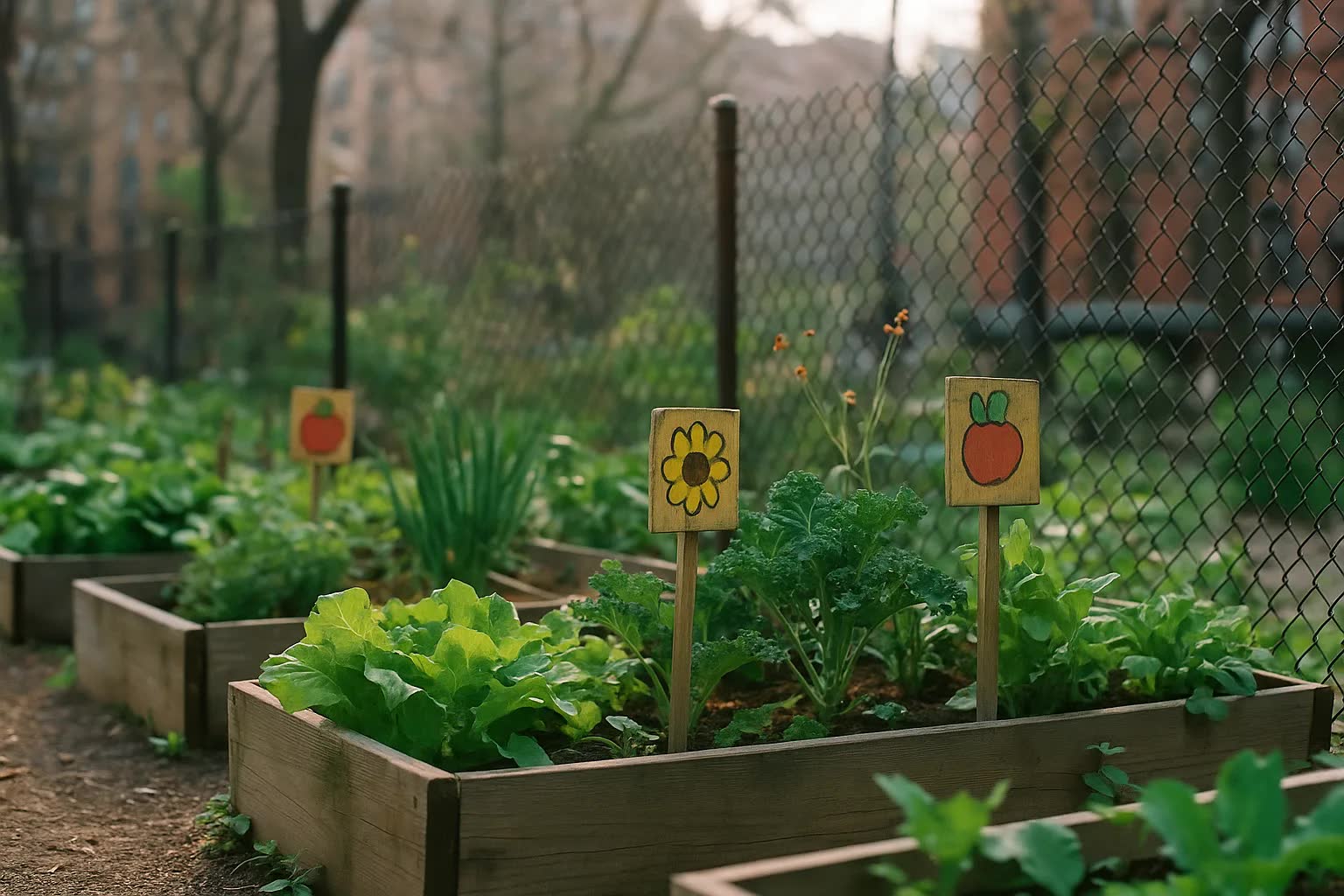
NEW YORK — A network of small, volunteer-run community gardens that dot the East Village and Alphabet City are scrambling to stay intact as a new wave of real estate proposals and city planning changes threatens increasingly scarce open space in the neighborhood. Organizers and longtime neighbors say the pocket parks on side streets like East 6th between Avenues A and B, behind storefronts off St. Mark's Place and in alleys near Tompkins Square Park provide free after-school programming, emergency food distributions and summer cooling relief that will be difficult to replace if developers buy the lots and build anew.
Many of these gardens were created in the 1970s and 1980s, when vacant lots left by fires and construction were repurposed by residents into playgrounds and urban farms. Over the decades the spaces matured into multiuse community anchors, with raised beds, tool sheds, small stages, and rainwater cisterns. They operate as informal hubs for neighborhood networks: senior exercise classes, language exchange meet-ups and trusted distribution points during heat waves and transit disruptions. To locals, they are part of the social infrastructure of the East Village, not expendable parcels for profit.
Organizers have responded with a two-track approach: legal challenges to contest the transfer or sale of garden lots and intensified volunteer recruitment to demonstrate the sites' community value. "These gardens are not vacant land waiting for development; they are working parts of the neighborhood, feeding kids, seniors and neighbors," said Marisol Vega, co-director of East Village Roots, a collective that runs three community beds and a free Saturday market. "We have decades of evidence that these spaces reduce isolation and improve local health."
The scale of the issue is measurable in local administrative filings and community activity. There are 18 small garden plots under active stewardship across the East Village and parts of the Lower East Side, occupying roughly 2.4 acres in total; organizers estimate they serve more than 6,200 residents each year through programming, distribution and garden plots. Volunteer rosters exceed 1,100 unique sign-ups annually and groups report more than 12,000 combined volunteer hours last year. Since September, residents say they have filed four administrative appeals and two lawsuits challenging proposed transfers of two named lots; developers have proposed one mixed-use project with 96 dwelling units and 14,000 square feet of retail across from Tompkins Square Park.
Developers and some city planners argue the projects could deliver sorely needed housing and retail amenities to the neighborhood, including units priced for low- and middle-income households. "We understand the cultural importance of these spaces, but we also have to consider broader housing needs," said Ethan Cole, senior planner at the Manhattan Bureau of Urban Planning, a city advisory office. "The intent behind redevelopment is to increase supply and fund public benefits; the challenge is finding a balance that protects community assets while addressing affordability."
At a recent hearing in a crowded community center on Avenue C, attorneys and community leaders sparred over legal protections for the gardens. Friends of East Village Gardens, a new nonprofit formed this year, argues that several lots are subject to deed restrictions or long-ignored covenants created when the city transferred land decades ago to community groups, and that those restrictions must be enforced. "We are not trying to stop sensible development, but the city cannot simply unring the bell on deeds and promises made to residents," said Sandra Liu, legal director for Friends of East Village Gardens, after filing a petition in Manhattan Supreme Court challenging one proposed sale.
For residents who rely on the gardens, the legalese feels remote but the stakes are immediate. Ramon Ortega, 68, who tends a plot behind a bodega on East 7th Street and uses vegetables in a soup kitchen shift once a week, said losing the lot would mean fewer fresh options for seniors on fixed incomes. "This patch of land gives us cucumbers and basil and a place to be outside," Ortega said. "If they put up another building, where will we meet? Where will the kids learn about the soil? It is not just about plants — it's about where we belong."
The volunteer and fundraising effort has picked up pace. Local businesses, including a coffee shop on Stuyvesant Street called Bean & Basil and a catering cooperative on Second Avenue, have sponsored seed drives and benefit dinners. Schools in the area have pledged curricular support: a local elementary school is running a pilot composting class that will use one of the garden sites as a classroom. Organizers estimate they will need $180,000 in legal fees, site improvements and programming support over the next 18 months to both defend and sustain the gardens, and they have set an initial crowdfunding and grant target of $60,000 for the coming quarter.
Citywide policy shifts complicate matters. A pending review of zoning-enabling incentives and an uptick in small-lot redevelopment across Manhattan have emboldened proposals that convert single-story community use parcels into multi-story residential complexes. Precedents elsewhere in the city have been mixed: in one Brooklyn neighborhood a compromise preserved a rooftop garden above newly built housing, while in another a long-standing lot was sold and redeveloped despite community opposition. Those outcomes, advocates say, underscore the need for clearer protections, such as explicit community land trust provisions or permanent conservation easements for urban green spaces.
The immediate calendar provides some benchmarks. The court will hear consolidated arguments on two related cases in late March, and community groups have scheduled a large planting and volunteer day in mid-April to showcase the gardens' benefits during the spring growing season. If advocates prevail in court or secure dedicated funding through the municipal budget cycle, the gardens could gain new protections; if not, several plots may face the slow process of sale and redevelopment. Either way, organizers say the fight to keep backyard green spaces in the East Village will continue to define how low-rise neighborhood character and public need are weighed against the pressure to add housing and commercial space in a city that still lacks enough of both.