Electric Ferries Run Trials Between Manhattan and Long Island City
Battery-powered vessels are testing passenger runs as an alternative to packed subways and congested road bridges.
By Maya Singh · December 10, 2025 · 4 min read
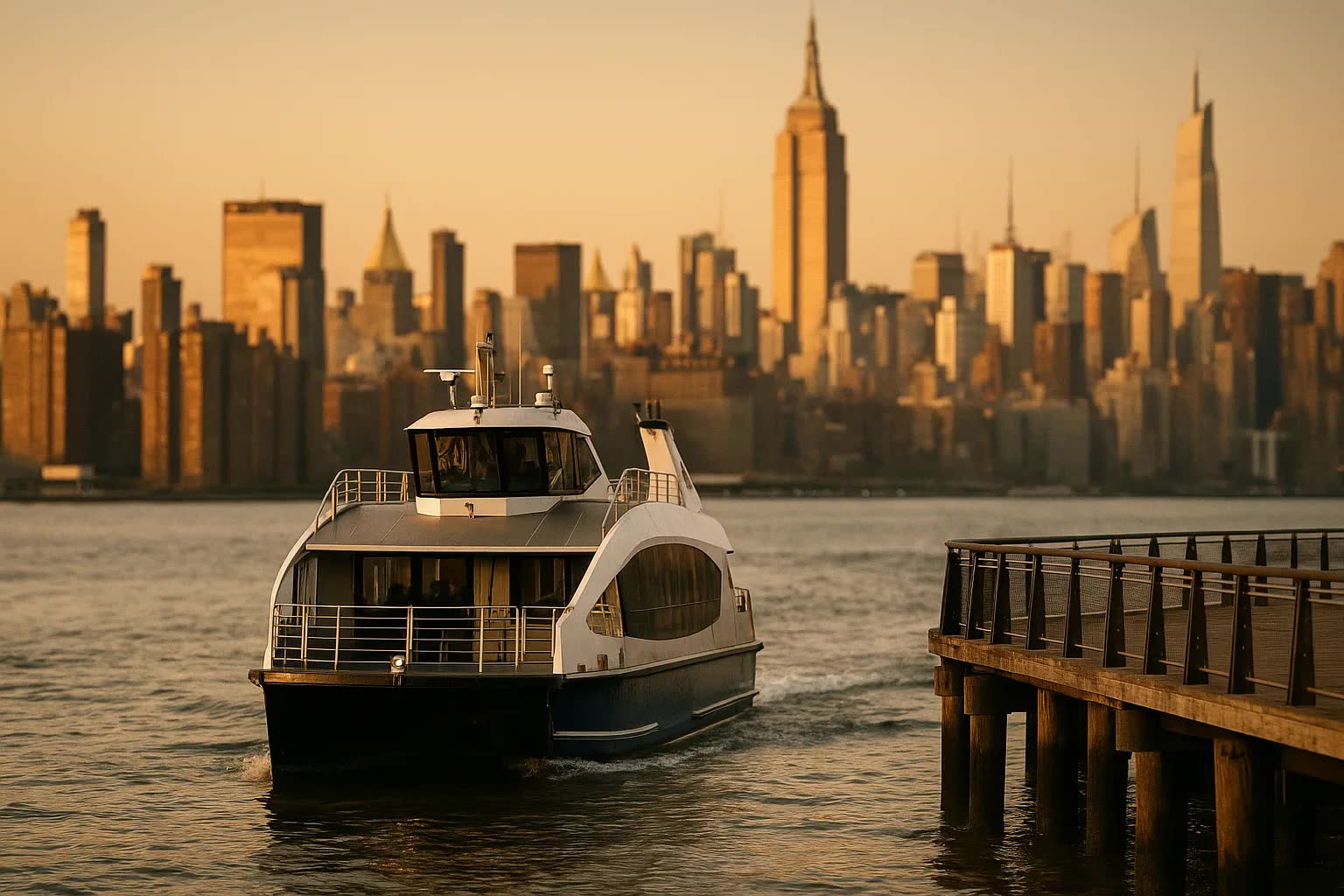
NEW YORK — As thousands squeeze onto the 7 train and the Queensboro Bridge chokes with rush-hour traffic, battery-powered ferries are beginning on-water trials between Midtown Manhattan and Long Island City that backers say could offer a quieter, cleaner and faster commute for Queens residents and Manhattan office workers alike.
The five-week pilot, run by startup HarborVolt Ferries in partnership with regional operator CityWave Transit, is staging morning and evening runs between a temporary slip at Pier 79 on Manhattan’s West Side and the Hunters Point South ferry landing in Long Island City, near Vernon Boulevard and 49th Avenue. "We've designed these vessels to fit into the tight turnaround windows commuters expect while producing zero emissions in the East River corridor," said Daniela Ruiz, chief operating officer of HarborVolt Ferries. The vessels use modular battery packs and automated shore chargers installed beneath the Gantry Plaza State Park walkway.
Commuters and local businesses in Queens are watching closely. Marcus Lin, owner of the Queens Dock Café, which fronts the Hunters Point landing, said his breakfast crowd could double if schedules stay reliable. "People already ask us where to wait for the ferry; if service is frequent and fast, we'll see a lot more weekday foot traffic," Lin said. Riders may be drawn to a seven- to 10-minute water crossing that avoids the bottlenecks at Queens Plaza and the Long Island Expressway, he added.
The technical and operational profile is modest but specific: HarborVolt's demonstrator vessel seats 120 passengers and carries a 2,200 kilowatt-hour battery pack with an advertised range of roughly 30 nautical miles under typical East River conditions. Shore-side charging uses two 1.2-megawatt high-voltage gantries that can top the battery to 80 percent in about 18 minutes, according to HarborVolt materials; the company says the battery cycle supports 150 round trips before a deeper maintenance charge is required. Fares for the pilot are set at $4.50, comparable to subway fares after a subsidy from a $9.4 million public-private grant that covers infrastructure and initial operations.
City and state regulators have been engaged from the start. The U.S. Coast Guard and New York State Department of Environmental Conservation signed off on the safety envelope for the trial, while the city’s Department of Transportation allowed the temporary Manhattan docking arrangement at Pier 79. "We have to balance rapid decarbonization with navigational safety and equitable access," said Eleanor Price, director of the New York Office of Sustainable Transit. "This pilot gives us operational data we didn't have before, particularly on charging demand and pier turnaround times."
Not everyone is fully convinced. "The MTA is watching closely but remains cautious about diverting limited waterfront real estate and capital toward services that might duplicate existing transit," said a senior MTA planner who requested anonymity. The planner added that labor considerations, interagency fare integration and long-term maintenance of fast-charging infrastructure are open questions that will shape whether electric ferries become a permanent fixture in the regional network.
The economics are a central part of the debate. HarborVolt executives estimate capital cost at roughly $18 million per vessel for the first generation, including charging infrastructure, with a target to push that below $12 million through production scale and standardized piers. The company projects a break-even farebox recovery rate of 55 percent under a model of 2,000 average weekday riders per vessel; public subsidies and congestion-pricing transfers could cover the remainder, company financial models show. Labor unions and local maritime crews have sought assurances that electrification won't lead to job cuts, with discussions underway about retraining for battery technicians and shore-power maintenance.
Neighborhood impacts in Long Island City and along the Midtown waterfront are already visible. Hunters Point, with its new waterfront parks and high-rise apartment blocks around 47th Avenue, could gain a daytime population spike that benefits retail but also strains curb space and Citi Bike docks. The pilot includes coordination with the city's bike-share program to add 40 temporary docking spaces and a microtransit shuttle loop connecting the Hunters Point landing to Queens Plaza subway entrances during peak hours, officials said.
Operational feedback during the first week has been largely positive: on-time performance hovered around 92 percent despite windy conditions midweek, and onboard passenger surveys showed 78 percent of riders would prefer the ferry to a bus for cross-river trips. "We had one short electrical fault and the captain handled it quickly; passengers appreciated the smooth ride and the view," said Captain Theo Morales, master of HarborVolt's demonstrator vessel. Weather remains a limiting factor — high winds and river debris could force temporary suspensions — but HarborVolt says predictive scheduling and tug escorts in adverse conditions should limit disruptions.
If the pilot fulfills its promise, HarborVolt and CityWave hope to seek permanent certification and expand service to Roosevelt Island, Astoria and an additional Manhattan slip near 34th Street by summer 2026, while applying for a larger tranche of federal transit funds to support fleet expansion. Planners emphasize that ferries are not a panacea but could be another piece in a multimodal solution to the city's transit crunch. For commuters from Long Island City, Sunnyside and Astoria peering across the East River, the test runs are a tangible sign of whether a quiet, battery-powered glide across the water can unclog the city’s bridges and pack trains in the years ahead.