Ferry Ridership Surges as Manhattan Commuters Rediscover the East River Route
Service expansions and the appeal of less-crowded commutes have pushed several Brooklyn-to-Manhattan ferry lines to near pre-pandemic capacity.
By Malik Johnson · February 22, 2026 · 4 min read
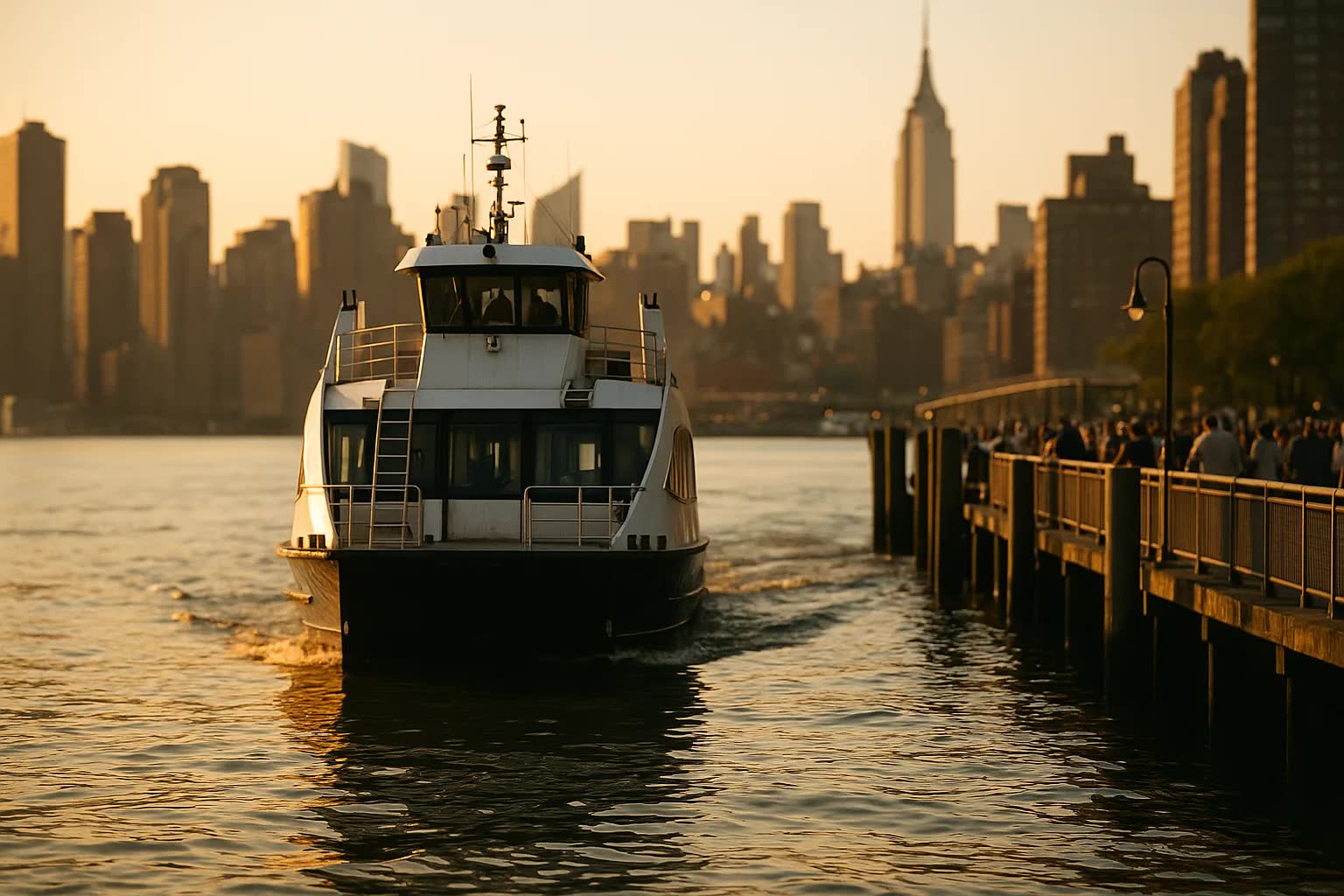
NEW YORK — After years of pandemic-era uncertainty, a steady stream of commuters on weekday mornings and evenings is reclaiming Manhattan’s East River shoreline, as expanded schedules and a new generation of riders push several Brooklyn-to-Manhattan ferry lines back toward pre-pandemic capacity, officials and passengers say.
Service increases on the East River corridor — which links Williamsburg, DUMBO, Greenpoint and the Brooklyn Navy Yard with Manhattan landings at Pier 11/Wall Street, the East 34th Street Ferry Landing and a midtown stop near the United Nations — have cut headways during rush hour to as little as 10 minutes on the busiest runs, operators say, providing a less-cramped alternative to packed F and L trains.
"We saw a clear pattern last fall that riders were choosing the ferry not just for the view but for reliability," said Aisha Delgado, general manager of HarborLink Ferries, the private operator contracted this year to run additional peak trips on the East River routes. "When boats come every 10 minutes, people can make that split-second decision to walk to the pier instead of waiting underground for a delayed train."
Among those who switched back is Tanya Alvarez, 34, a graphic designer who lives on Bedford Avenue and commutes to an office near East 23rd Street. "I used to squeeze onto the L and dread the smell and the crowd," Alvarez said as she disembarked at the East 34th landing last week. "Now I can get a seat, work on my laptop, and be at 23rd in 18 minutes without battling the subway stairways in Union Square. It’s changed my mornings."
Systemwide figures released to neighborhood partners this month show weekday boardings on East River routes averaging roughly 22,400 in January 2026, up 38 percent from January 2023 and at about 88 percent of the system’s January 2019 peak; weekday boardings at Pier 11 rose to an average of 8,700, while East 34th averaged 6,200. The fleet grew by three vessels in 2025 to a total of 27 boats, and on-time departures during peak periods improved to 92 percent from 76 percent two years earlier, according to internal HarborLink and city scheduling data shared with community boards.
A senior MTA planner who requested anonymity said the uptick has prompted an internal reassessment of pier capacity and transfer options, particularly in neighborhoods where waterfront landings feed into narrow streets. "We’re looking at how to make first- and last-mile connections work better — more bus shuttles, safer bike lanes to the landings, even modifications to curb space in DUMBO and along Kent Avenue to reduce pinch points," the planner said.
Local businesses along the waterfront say they are already seeing the benefit. Coffee shops on Water Street near Pier 11 and bodegas on Kent Avenue reported brisker morning traffic, while a bike repair shop near the Greenpoint landing said weekend service increases have helped stabilize revenue swings that once followed commuter patterns. Real estate brokers say interest from tenants seeking a commute option outside the subway has nudged rental demand in parts of Williamsburg and Long Island City.
But growth has not been without friction. Community groups in DUMBO and on the Lower East Side have complained about overcrowded approach sidewalks at peak times, and environmental advocates worry that, despite newer engines, diesel emissions remain a concern for near-shore neighborhoods. Dock management in the South Street Seaport area has been particularly contentious this winter as municipal officials juggle tourist season planning with commuter needs.
Tech and ticketing improvements are part of the city’s response. Marcus Bell, co-founder of DockPass, a Brooklyn-based commuter app that aggregates ferry schedules and mobile ticketing options, said newer integrations have reduced boarding times and improved load balancing across runs. "When riders can see real-time capacity and get notified of the next boat with an open seat, we remove a lot of the uncertainty that used to send people back to the subway," Bell said. City officials are also piloting contactless fares that sync with a regional transit pass to make transfers smoother.
City planners and operators say more changes are coming: proposals under discussion include adding a dedicated East River lane at Pier 11 to speed loading, trials of all-electric vessels on quieter routes in 2027 and a study into a new mid-Brooklyn landing near the Navy Yard to capture more riders from north Brooklyn. For now, commuters and businesses along the waterfront are treating the ferry’s resurgence as a welcome recalibration of how New Yorkers move across the river — and officials say they will keep tweaking service and infrastructure to sustain the momentum into the next year.