Film Production Is Followed by School Programs as Hudson Valley Becomes an Industry Magnet
The rise in location shoots upstate has led to new training partnerships between regional colleges and production companies to develop local crews.
By Sofia Martell · April 8, 2026 · 4 min read
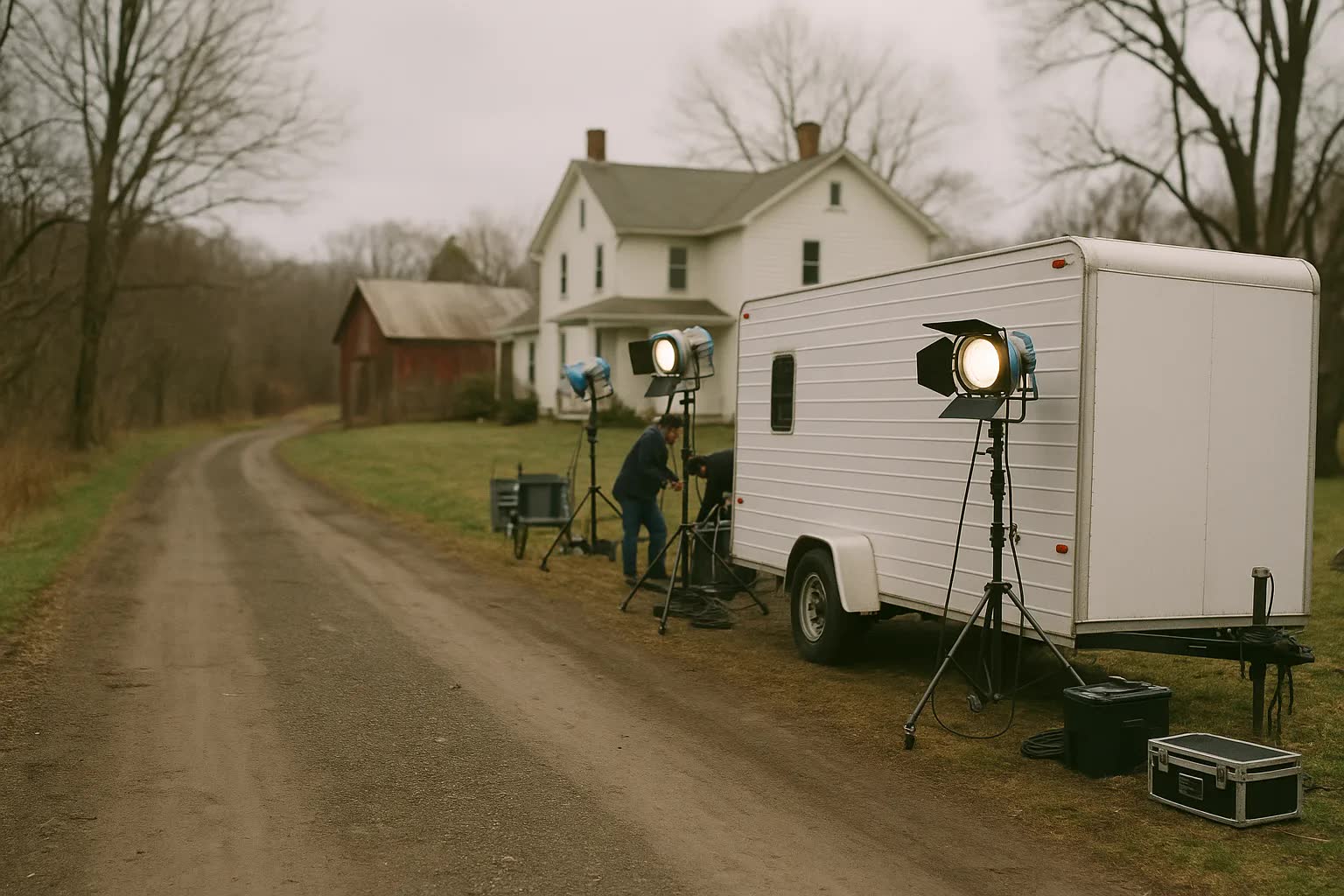
On a rainy afternoon along 14th Street in Chelsea, a convoy of grip trucks and generators idled outside a storefront while a production assistant checked permits on a clipboard; the scene has become increasingly common as crews shuttle between Manhattan and the Hudson Valley, turning the region into an extension of the city’s filming ecosystem and prompting colleges and companies to build formal training pipelines for local hires.
Producers say the Hudson Valley’s mixture of quick rail access to New York City, diverse small-town streetscapes and a growing number of soundstages has made it a practical choice for location shooting that wants the economic and logistical advantages of proximity to the city. Smaller production companies such as Peregrine Pictures and Tannery Road Productions now routinely stage short shoots in Beacon, Kingston and Poughkeepsie, while boutique studios in Hudson and Newburgh are expanding their equipment inventories and soundstage hours.
In response, educational institutions upstate have started partnering directly with production houses to supply trained labor. Hudson Ridge Community College last fall launched a 12-week production apprenticeship with Peregrine Pictures that combines classroom instruction in camera and lighting with on-set mentoring. The Catskill Film Institute, a nonprofit training center in Kingston, has opened a hands-on prop and set construction workshop that feeds a rotating roster of local hires into shoots that return to the valley seasonally.
Local businesses are already feeling the difference. At Beacon Bean on Main Street, owner Maya Ortiz said weekday breakfasts now see early-morning crews grabbing coffee before heading to Metro-North trains. "We used to get arts students and tourists; now we get people with walkie-talkies buying five-pound bags of beans for craft services," said Ortiz, who manages the cafe and lives two blocks from the riverfront train station. "It’s put more money on Main Street, but it’s also changed our rhythms."
The surge in filming is measurable. According to data compiled by the Hudson Valley Film Commission, location shoots in the seven-county region rose to 125 in 2025, up from 48 in 2019, generating an estimated $72 million in local direct spending last year; 240 residents enrolled in college-affiliated production programs in 2025 compared with 82 in 2019, and three new soundstages with a combined 60,000 square feet of production space opened between 2023 and 2025. Trainers report that about 58 percent of program graduates found paid work on-set within six months of completing their courses.
School officials emphasize that the training goes beyond technical skill-building to address wellness and safety on set. "Our curriculum includes fatigue management, stress response and basic mental-health first aid for crewmembers who work long days and irregular hours," said Dr. Ellen Harrow, dean of applied media at Hudson Ridge Community College. "We want people to have sustainable careers, not just a single gig. That requires attention to physical safety and emotional resilience."
The new labor pool has also altered commuting and housing patterns in New York neighborhoods. Crew members living in Inwood, the East Village and Williamsburg now rely on early-morning Metro-North runs and overnight staging to make 12-hour shoot days in Beacon or Poughkeepsie practical. "I can be at the Gansevoort Street set in Chelsea one week and build a set in Hurley the next," said Tanya Brooks, a grip who completed the apprenticeship program and now splits time between Manhattan and a shared house in Kingston. "Having a base in the valley cuts my living expenses and gives me steadier work than hanging around union hiring halls in the city."
That steadiness comes with growing pains. Municipal officials in Hudson and New Paltz have fielded complaints about parking shortages and noise when large productions move into residential neighborhoods; local conservation groups have raised concerns about heavy vehicle traffic on rural roads. At the same time, unions and long-established city vendors have pushed back against nonunion crews finding work upstate. "We’re trying to strike a balance so communities benefit economically without being overrun," said Mateo Alvarez, director of the Hudson Valley Film Commission. "That means clearer permit rules, designated load-in zones and partnerships that prioritize hiring locally and protecting sensitive sites."
Advocates say the training partnerships also aim to expand access to a historically insular industry. Programs have reserved slots for veterans, recent community college graduates and residents of majority-Black and Latino neighborhoods in Poughkeepsie and Newburgh; several initiatives include placement assistance and tuition stipends. Early results suggest a modest diversification of crew compositions on smaller productions, with producers reporting higher retention when apprentices are mentored by experienced department heads and receive continuing education stipends for tool purchases and safety certifications.
Producers and educators say the momentum is likely to continue as California-style studio complexes remain expensive and filmmakers seek variety within a day’s travel of Manhattan; Hudson Ridge is negotiating with two production partners to launch an accredited associate degree in production technology next academic year, and Peregrine Pictures plans to increase its apprenticeship slots by 50 percent. For residents of both Manhattan neighborhoods and river towns, the film industry’s migration northward brings new jobs—and new questions about how to keep growth sustainable and broadly shared as the cameras keep rolling.