Flushing's Chinatown Fights Cultural Erosion As Chains Move In
Community leaders say rising rents and new developments are displacing long-standing mom-and-pop businesses along Roosevelt Avenue.
By Diego Alvarez · April 12, 2026 · 4 min read
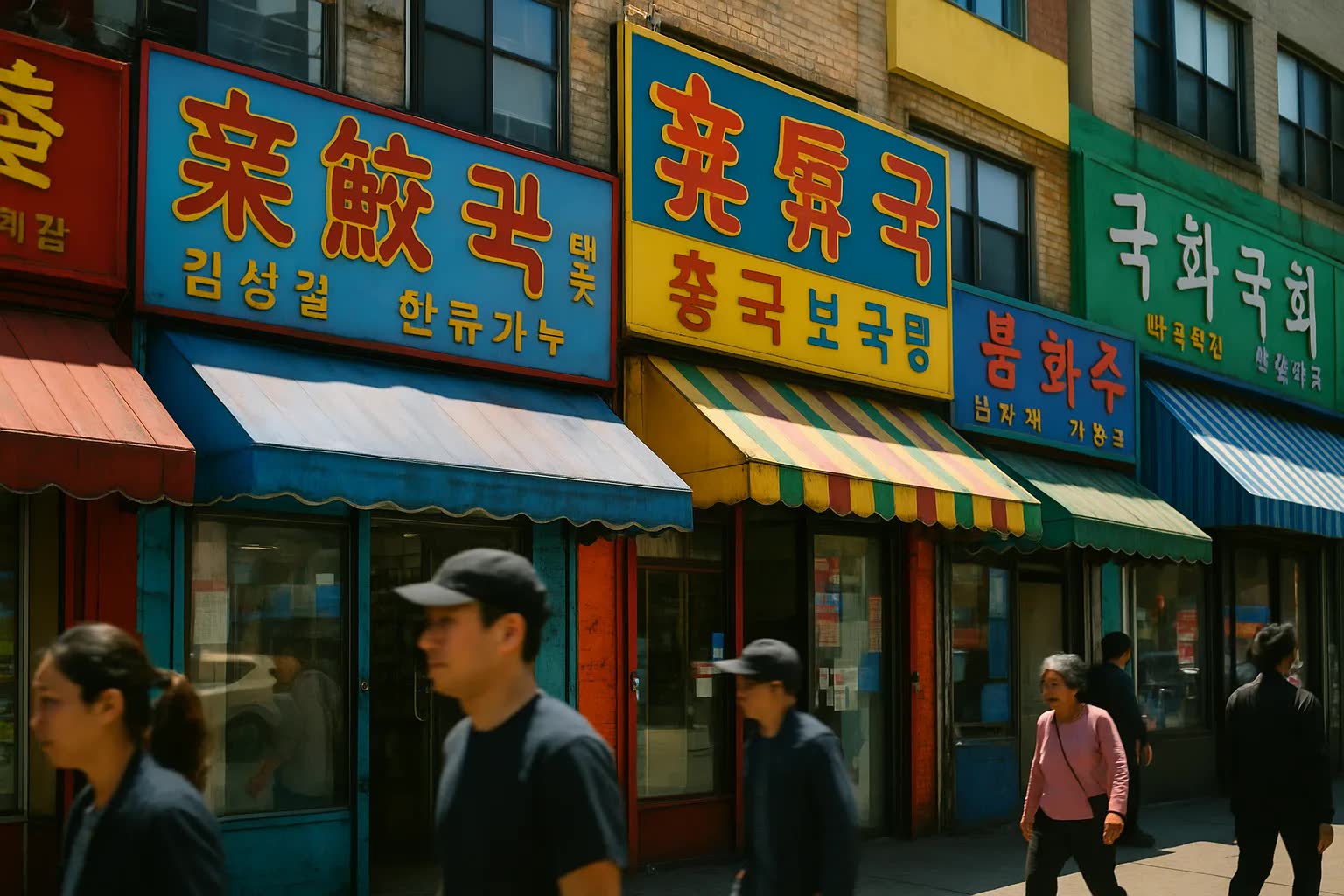
NEW YORK — Along a three-block stretch of Roosevelt Avenue in Flushing, mom-and-pop storefronts that once hummed with Cantonese and Mandarin conversation now sit adjacent to glass-and-steel facades leased by national chains, a visible shorthand for a neighborhood in flux as rising rents and new development reshape Flushing’s Chinatown.
Longtime residents say the change is not merely aesthetic: longtime restaurants, herbal shops and family-run grocers that anchored blocks between Main Street and Kissena Boulevard are being priced out, replaced by brands with deeper pockets and corporate lease teams. The shift has sparked alarms among community leaders who argue that the cultural fabric of Flushing — one of the city’s most vibrant immigrant enclaves — is under threat, and that Roosevelt Avenue, once the neighborhood’s commercial spine, is becoming homogenized.
“Our elders used to know every face on this block; now they ask for directions to places that weren't here last year,” said Mei Lin, president of the Flushing Merchant Association and owner of the Golden Lily Bakery on Roosevelt Avenue. “We’re not against new businesses, but when rent increases force out a shop run by a family for 30 years, you lose more than a storefront.”
Small-business owners describe a cascade of pressures: rising property taxes, a limited supply of affordable retail space, and landlord demands for multi-year triple-net leases. Daniel Kwan, who founded Wing Sing Grocery on College Point Road and operates a satellite stall on Main Street, said his rent rose 28% after his last lease renewal. “I’m looking at debt two ways,” Kwan said. “Debt to keep my store open and debt to walk away and let a chain move in.”
Data collected by the Flushing Merchant Association and shared with NYDailyWatch show concrete shifts: a survey of 312 storefronts along Roosevelt Avenue and the nearby Main Street corridor found 64 new corporate-branded locations opened between 2016 and 2025, while 87 independently owned businesses closed in that same period. Average asking rent for ground-floor retail on Roosevelt climbed from roughly $45 per square foot in 2016 to $82 per square foot in 2025. Foot-traffic patterns at the Flushing–Main Street station on the 7 train have remained robust, but spending at small independent merchants has lagged behind traffic growth by an estimated 15% year over year, according to the association’s estimate.
The visible face of change is exemplified by Roosevelt Plaza, a recently completed mixed-use development on the block between Sanford and 39th Avenues, where street-level units leased quickly to national chains offering formulas designed for high-volume commuter neighborhoods. While developers and some elected officials praise the project for bringing investment and modern retail options, residents worry that amenities are not tailored to the community’s needs — and that higher rents set new benchmarks across the corridor.
Urban planners and advocates point to zoning and leasing practices as levers that could protect cultural businesses. “There are tools in city policy and private-sector practice that can sustain neighborhood character,” said Ari Blake, executive director of the Queens Asian Business Alliance, which supports a proposed pilot program to subsidize ground-floor rents for legacy businesses. “Without intervention, market forces will continue to favor national footprints over family-run operations.”
Not all observers agree on the causes or solutions. A senior city planner at the Department of City Planning, who requested anonymity because they were not authorized to speak publicly about ongoing zoning talks, noted that demographic changes across Flushing — younger residents with different spending patterns and a diversification of the immigrant population — also influence what types of retailers succeed. “Supply and demand is changing the mix,” the planner said. “Policy can help, but it can’t reverse broader economic trends overnight.”
At street level, the tension is personal. Inside Lotus Herbal on Roosevelt, proprietor Chen Zhao shelves dried roots and prescription packets while recounting the day a national coffee brand opened two doors down and began offering free Wi-Fi and seating. He said foot traffic briskly shifted away from his store during midday hours. “We try to adapt,” Zhao said. “But our customers come for things you can't find in a chain: a medicine made from your grandmother's recipe, conversation in the right dialect, someone who remembers your family.”
Community leaders are mobilizing a suite of responses: drafts of a cultural district designation for parts of downtown Flushing, a proposed small-business rent stabilization ordinance under consideration at a forthcoming borough board hearing, and a coalition to purchase commercial properties as permanently affordable spaces. Activists also plan a February 2027 public forum to push the city for targeted subsidies. Whether those efforts will stop the tide remains uncertain, but organizers say the next year will be decisive for Flushing’s Chinatown and the cultural life that has long defined Roosevelt Avenue.