Flushing’s Emerging Asian‑American Film Scene Returns With A Festival Spotlight
New programming in Flushing highlights local Asian-American filmmakers and community narratives overlooked by mainstream city festivals.
By Zoe Kaplan · February 20, 2026 · 4 min read
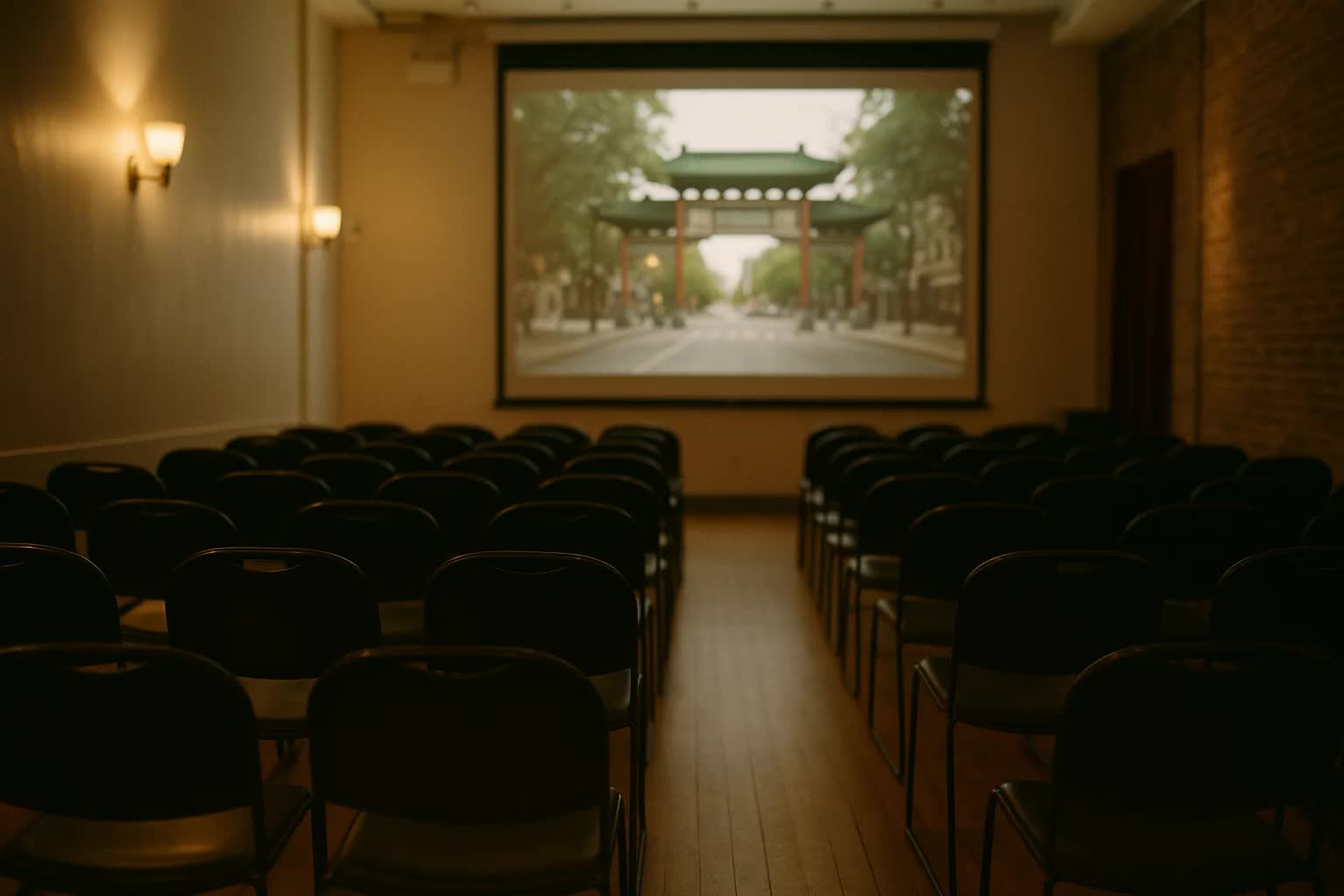
New York’s borough-by-borough cultural map is being redrawn in the corner of Queens where Main Street meets the elevated subway: Flushing’s emerging Asian‑American film scene returned this month with a slate of screenings, stand‑up showcases and performance pieces that organizers say finally put neighborhood stories on equal footing with Manhattan and Brooklyn festivals that have long ignored them.
The weeklong Flushing FrameFest — a grassroots festival launched in 2023 and expanded this year with new programming aimed squarely at comedy and live performance — deployed venues from Flushing Town Hall to a pop‑up screening room above a Main Street bodega, turning a stretch of downtown Flushing into a test case for decentralized festival life in the city.
Programmers filled rooms on Kissena Boulevard and College Point Boulevard with short films, feature comedies and hybrid pieces that blend stage and screen. Lotus Cinema, a refurbished single‑screen theater on northern Main Street, hosted late‑night stand‑up sets followed by short reels; Queens Library’s Flushing branch ran afternoon family screenings with Cantonese and Mandarin subtitles; and a small stage at Bowne Park welcomed experimental performers whose work riffs on immigrant life and neighborhood commerce.
“We weren’t trying to replicate what already exists in Midtown,” said Mei‑Lin Zhou, festival director and co‑founder of Flushing FrameFest. “Our goal was to make space where people who grew up here could see themselves without having to travel to Manhattan, and to build audiences who recognize that comedy, grief and joy in these neighborhoods speak in different dialects.”
This year’s festival quantified that ambition: organizers accepted 78 films from 12 countries, a 45 percent increase in submissions compared with last year, and reported total on‑site attendance of roughly 6,900 across 72 events. Approximately 62 percent of the submitted projects were from Queens‑based filmmakers or residents; the festival operated on a budget of $185,000, supported by a $60,000 municipal arts grant, several small business sponsors and ticket sales that covered about 28 percent of expenses.
Local talent supplied much of the humor. Daniela Huang, a comedian who grew up in Murray Hill and now films sketch work in a converted Laundromat on Roosevelt Avenue, premiered a short about two cousins running a failed karaoke bar. “People laugh because they recognize the details,” Huang said. “It’s not just the punchline — it’s the fluorescent lighting, the folded plastic chairs, the way my aunt folds her scarf. Those are the things festival organizers in Manhattan rarely ask to see.”
Business owners on Main Street said the festival has become an unexpected boost. “Friday night screenings mean people come early to eat and stay late to shop,” said Andrew Cho, owner of Lotus Cinema and a former projectionist, who added that concessions for festival nights were up nearly 40 percent. The increased foot traffic, Cho said, also brought a different demographic to a corridor long defined by younger restaurant patrons and weekend visitors from Flushing Meadows–Corona Park.
The programming also emphasized accessibility and multilingual storytelling: panels on subtitling, a workshop on performing Cantonese stand‑up, and screenings with audio descriptions drew crowds across ages and language groups. “We had elderly residents from nearby senior housing asking where they could watch more of these films,” said Jasmine Park, curator and co‑director of community engagement. “Representation isn’t just who’s on screen; it’s whether grandparents can laugh and weep in their language.”
Organizers acknowledged ongoing hurdles. Funding remains fragile and there are only three small cinemas in Flushing with digital projection; many screenings relied on borrowed equipment and volunteer labor. Citywide festivals still command most press attention and sponsorship dollars, leaving borough efforts to cobble together partnerships with Queens College, local churches and small businesses. Yet the festival’s volunteer base has tripled since last year, and the producers have secured a two‑year partnership with Flushing Town Hall to stabilize programming and rehearsal space.
If Flushing FrameFest’s success this month is any indication, its leaders hope the model will spread to other neighborhoods long left at the margins of the city’s cultural circuits. Festival organizers are already planning a touring series for next year that would bring selected films to senior centers in Pomonok and to outdoor screenings near Flushing Meadows; Mei‑Lin Zhou said the aim is modest but clear: “We want these films to live in the neighborhoods that made them.”