Flushing's Korean Rock Scene Grows Along Main Street
Late‑night bars and indie venues in Flushing are cultivating a Korean‑language rock circuit that keeps late crowds plugged into local culture.
By Olivia Park · January 15, 2026 · 4 min read
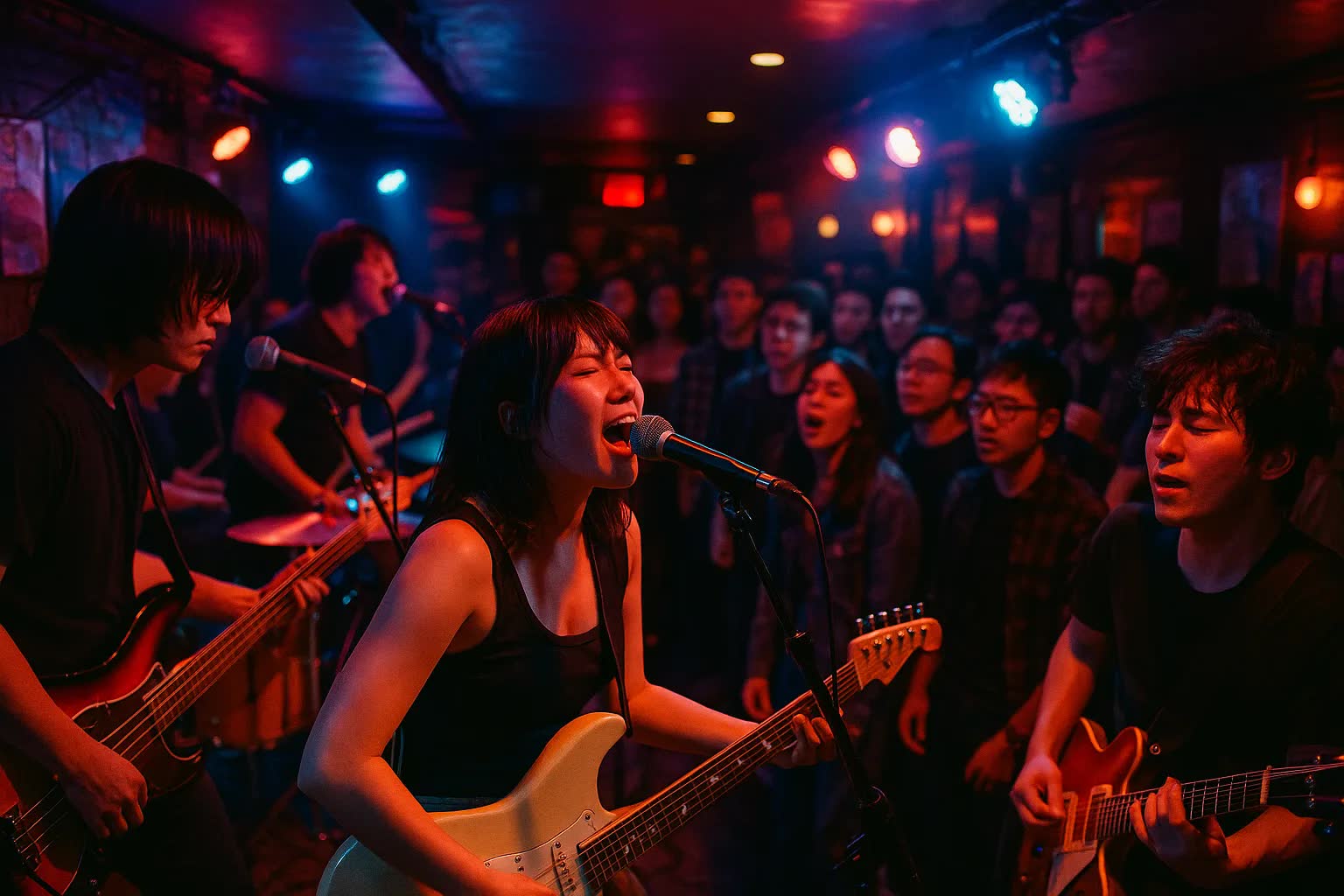
Under the neon signs that line Main Street in Flushing, where the No. 7 train unloads a steady stream of commuters and late‑night buses rattle past corner bodegas, a Korean‑language rock circuit has quietly sprouted into a distinct cultural ecosystem that keeps neighborhood nights alive well past midnight.
From a two‑room bar wedged between a karaoke joint and a fried chicken place to a converted printing shop that doubles as a weekend showcase, the scene blends old‑school grit with a new, bilingual energy; posters for bands in hangul and English crowd telephone poles near Flushing–Main Street station while the smell of tteokbokki drifts out from nearby stalls on Roosevelt Avenue.
Ji‑won Han, owner of Moonlight Bar, a dimly lit venue on the corner of Main and Kissena Boulevard that hosts Korean rock three nights a week, said the circuit grew from musicians who needed stages that spoke to them. "People were playing in basements or going to Manhattan every week, but we wanted something in our neighborhood where parents and students could see a show without taking the 7 into the city," Han said. "This is about keeping music rooted here in Flushing."
Bands range from scrappy four‑piece outfits fronted by college students from nearby Queens College to veteran singer‑songwriters who cut their teeth in Itaewon clubs and moved to Queens in the 2010s. Rehearsal rooms have multiplied on low‑rise streets off Northern Boulevard, and a handful of artists are moonlighting as promoters, booking lineups that alternate Korean‑language set lists with English songs to draw both Korean‑speaking crowds and wider Queens audiences.
The growth is measurable: since 2022 the number of dedicated late‑night venues programming Korean rock on Main Street and adjacent blocks has risen from three to eight, with at least 20 separate shows each week and an estimated 2,400 to 3,000 attendees weekly across the circuit; average door covers range from $8 to $20, and a small cohort of promoters say gross ticket and bar receipts have climbed roughly 35 percent over three seasons. City records show that 12 new tavern and small‑performance liquor licenses were filed in the Flushing local community district between 2023 and 2025, a sign of the commercial momentum behind the scene.
Marcus Lee, artistic director of the Queens Indie Collective, a nonprofit that curates local showcases and connects bands with venues, framed the rise as both organic and practical. "Musicians here wanted audiences that spoke their language and venues that treated shows like community events, not just background noise," Lee said. "We're keeping artists in Queens, and that keeps the neighborhoods vibrant at night."
The crowd is often multigenerational and mixed: parents in work boots who grew up listening to Korean rock in Seoul, high schoolers in band hoodies who discovered groups on streaming platforms, and curious local residents from Flushing, Murray Hill and College Point exploring an unfamiliar sound. On weekday nights, students from St. Francis Preparatory School and commuters from the Flushing–Main Street station spill into venues after 10 p.m., while on weekends the circuit draws late‑night foot traffic that benefits adjacent restaurants and bodegas along Main Street and nearby Kissena Park.
The boom has not been without friction. Noise complaints to Community Board 7 doubled in sections of downtown Flushing in 2024, and local officials have grappled with balancing nightlife and residential quality of life. A senior licensing official with the city’s Department of Consumer and Worker Protection, speaking on background because they were not authorized to comment publicly, said the agency has been reviewing permit applications more closely and coordinating with the police department on decibel limits and operating hours to address neighborhood concerns.
Beyond bars and basements, a small infrastructure is forming: an independent label called Han River Sound has released two compilation albums of Main Street bands; Main Street Records, a vinyl shop near 41st Avenue, hosts listening parties; and Flushing Town Hall has begun offering grant support for music education workshops aimed at bilingual students. Local boosters say the cluster is starting to feed local economies — rehearsal rents remain far lower than Manhattan and Brooklyn, and the scene provides a pipeline for technicians, promoters and small‑business owners.
Looking ahead, organizers and venue operators say they plan to chart a careful course: more weekend matinees to reduce overnight strain on residents, a boroughwide showcase next fall that could link Flushing to Jackson Heights and Astoria, and partnerships with Queens cultural institutions to formalize paths for youth musicians. If the past three years are any guide, the Korean‑language rock circuit along Main Street will keep evolving, a late‑night current that tests how neighborhoods can grow without losing the rhythms that made them home.