Garment District Tailors Turn to 3D Body Scanning to Compete with Fast Fashion
Small tailoring shops are investing in body-scan kiosks and digital pattern software to offer faster, custom fits and reduce waste amid retail pressures.
By Mateo Ruiz · April 5, 2026 · 5 min read
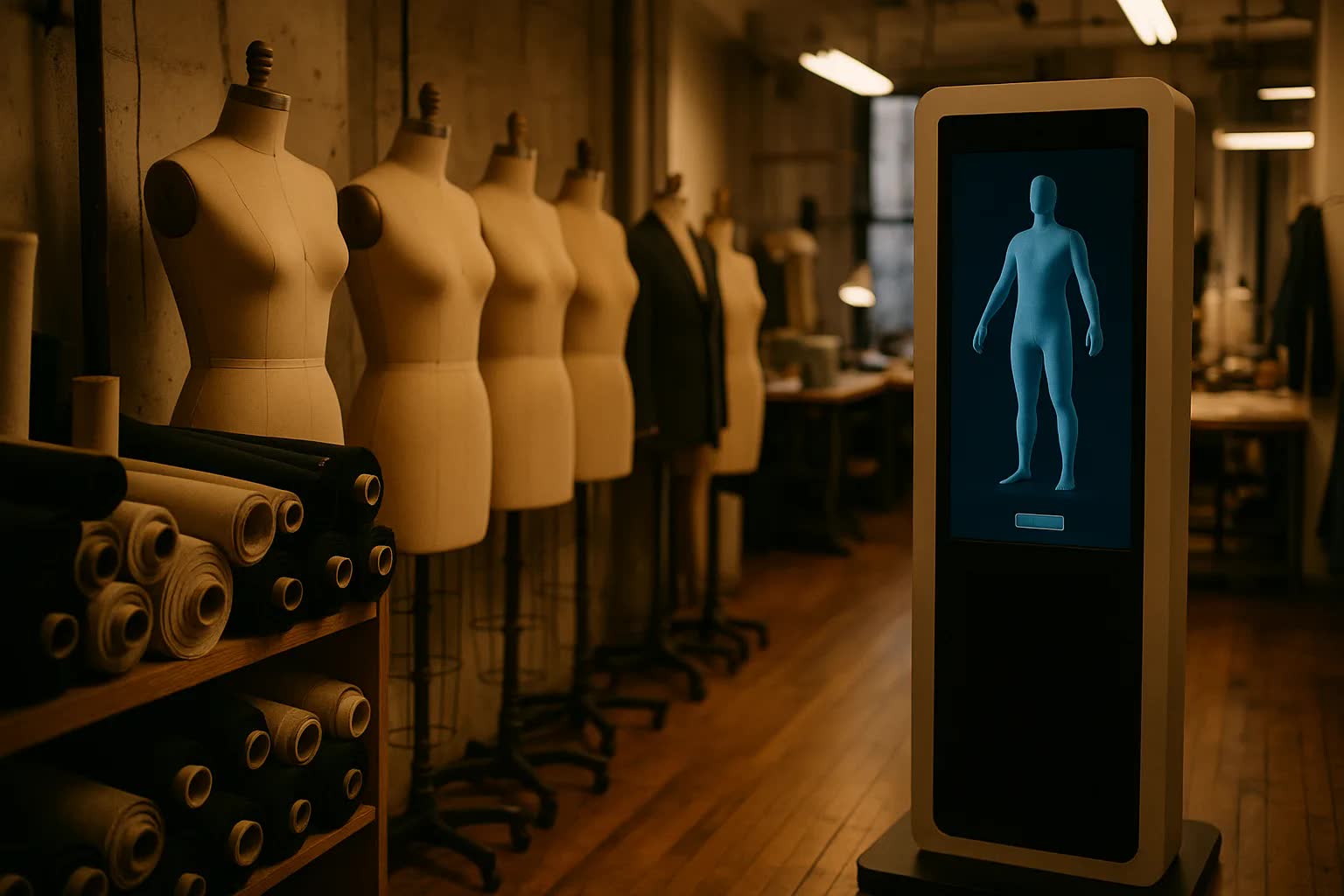
In a neighborhood built on measurements and hemming chalk, small tailoring shops in Manhattan’s Garment District are turning to 3D body scanning to survive the twin pressures of fast fashion and rising rents. From a narrow storefront on West 36th Street near Seventh Avenue to a two-room atelier off Eighth Avenue by Penn Station, tailors who once relied on tape measures and remembered fits are now asking customers to step into kiosks that capture dozens of precise body points in seconds, then feed that data into digital pattern software that can cut turnaround times and cut material waste.
The technology migration is modest but noticeable: a handful of family-run tailors have embedded scanners and pattern systems into their workflow, offering custom fits with fewer in-person adjustments and promising shorter waits for altered garments. At Stitch & Slate, a three-person shop on 39th Street, owner Lana Rivera says the machines help compete against cheap, rapid-turnaround retailers and online return headaches. "We can't out-price the big brands, but we can out-fit them — and faster than before," Rivera said. "The scanner lets me deliver a jacket that needs only one final tweak instead of three fittings."
The shift is being enabled by a new generation of vendors that combine scanning kiosks with cloud-based sizing engines and digital pattern-making tools. Marco Lin, chief technology officer at PatternFlow, a Chelsea-based startup that works with independent shops, described the software as a bridge between old-world craft and modern retail expectations. "Tailors know cloth and silhouette. Our job is to translate a scan into a pattern that respects that craft while shaving days off the production cycle," Lin said. He added that the systems also create a reusable size profile so repeat customers can be fitted virtually from a saved scan.
For many businesses, the math is a key selling point. Typical upfront investment for a kiosk, the accompanying camera array and the annual pattern software subscription ranges from $8,000 to $20,000, vendors say. Early adopters in the district report measurable operational gains: average turnaround for a bespoke suit dropped from 14 days to seven; fabric waste on average fell by about 27 percent; and shops saw revenue increases of 12 to 25 percent in the first six months after installation. So far, about 20 of roughly 200 small tailoring businesses in the Garment District — the cluster of businesses between 34th and 40th Streets from Fifth Avenue to Ninth Avenue — have installed scanning systems, according to figures compiled by the Garment District Alliance.
Not everyone is rushing in. Some veteran cutters worry that a reliance on digital tools could erode hand skills that have defined the neighborhood since the early 20th century. "There’s a craft to how cloth behaves on a living body that the human eye still catches better than any sensor," said Eddie Morales, president of the Garment District Alliance, which represents merchants and designers in the Midtown area. Morales said the alliance is encouraging a hybrid model in which technology amplifies, rather than replaces, traditional tailoring expertise and apprenticeships continue to teach hand-finishing techniques.
Shop owners also described practical benefits with local specifics. On a rainy Thursday in Herald Square, Baker & Fifth Tailors reported that commuters from Hell’s Kitchen and Chelsea who work near Hudson Yards have begun booking lunchtime scans for shirts and pants that will be ready the next morning. "We get people in at noon and they pick up at eight the next day — if it were only alterations, that wouldn’t be possible," said Rivera. The faster cycle has helped reduce the number of box returns from online retailers, she added, since customers are getting clothes that fit the first time.
The sustainability argument carries weight in a city where landfill space and textile waste are visible concerns. Vendors and shop owners estimate that if the current cohort of adopters maintains reduced waste levels, the district could avoid discarding roughly 30 tons of offcuts and unused fabric per year across those shops. PatternFlow’s Lin said that better fitting also means fewer discarded returns at the consumer level, pointing to a secondary environmental benefit. "We’re not solving fast fashion, but precise fit means less churn and fewer garments sent straight to the landfill," he said.
Labor and training remain open questions. Installing a kiosk is only the first step; shops must also train staff to interpret scans and tweak digital patterns. Smaller operations on narrow side streets off Broadway told reporters that space constraints make it hard to house a standalone kiosk; several businesses have formed an informal co-op to share a scanning booth on West 35th Street, offering appointments by neighborhood blocks so workers from Midtown West and Midtown East can pop in. Apprentices at two local schools have begun workshops on digital patterning as a complement to traditional cutting classes, signaling an industry pivot toward blended skills.
There are business-model wrinkles, too. Tailors must balance the cost of technology with clients’ willingness to pay for custom work, even when it’s faster. Some shops have introduced tiered service — express digital fittings with standardized fabric choices, and fully bespoke services for clients who want multiple hand fittings — a model that appeals to white-collar workers in Midtown and fashion-conscious shoppers from the East Village and Williamsburg who commute in. The digital profiles also open new revenue streams: several shops now offer virtual fittings to repeat customers who travel, enabling alterations coordinated remotely and shipped to a New York address.
Looking ahead, the Garment District faces a test of scale and will: whether modest technology investments can preserve the neighborhood’s tailoring ecosystem as commercial rents and fast-fashion convenience continue to press in. Local leaders say they are exploring partnerships with neighborhood business improvement districts and fashion incubators to subsidize shared scanning hubs and training programs. "This tech is not a panacea, but it gives our shops a fighting chance," Morales said. If the district can marry measurement and craft, the alleyways off Seventh Avenue may yet remain places where clothing is not just sold but meticulously made to fit the city itself.