Google’s $15 Billion Finland Bet Shows AI’s Power Race Is Becoming an Energy Race
The company’s largest European investment links data centers, nuclear power, wind and batteries—and offers a concrete look at what the next phase of AI expansion requires.
By Leo Wang · September 9, 2026 · 4 min read
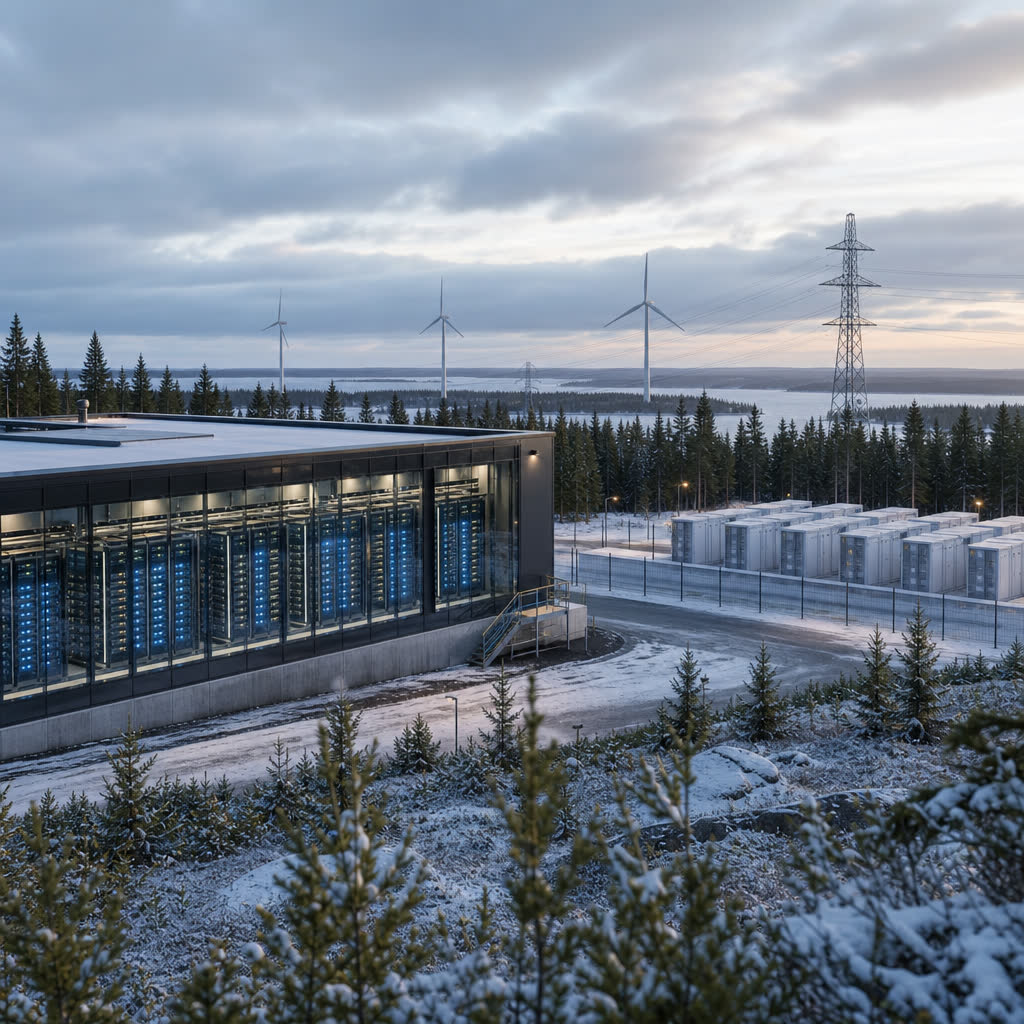
NEW YORK — Google said Wednesday that it will invest at least €13 billion, or about $15.1 billion, in Finnish artificial-intelligence infrastructure over the next two years, pairing a major data-center expansion with an unusually broad package of energy agreements, job commitments and local spending.
The announcement is significant not only for its scale. It offers a detailed view of the physical systems behind products often described as if they existed only in software: power plants, transmission capacity, batteries, cooling equipment, fiber networks and a workforce able to build and operate all of it.
Google called the plan its largest single investment in Europe. The company said the money, scheduled for 2027 and 2028, will support infrastructure used by services including Gemini, Search and Maps. Reuters reported that the program also covers data centers, grid improvements and clean-energy and battery projects.
The centerpiece is energy. Google signed a 22-year agreement tied to the life extension of Fortum’s Loviisa nuclear plant. Reuters reported that the purchase agreement covers as much as half of the output from one of the plant’s two units and is Google’s first nuclear-power contract outside the United States. Fortum said the long-term commitment would provide greater economic certainty for upgrades and continued operation through 2050.
Google also said it would add onshore wind capacity and contract for a new 94-megawatt battery system. The battery is intended to help balance Finland’s grid during cold periods when wind output is low, according to the company. Taken together, those arrangements show how large computing buyers are trying to secure steady electricity while also limiting emissions and exposure to volatile prices.
Finland offers several advantages for that strategy. Reuters noted the country’s ample low-carbon electricity and cold climate, which reduces the energy needed to remove heat from data centers. Google has operated a facility in Hamina for 15 years and has used seawater cooling there. It has also pursued a project to redirect recovered heat to nearby homes and businesses.
The company’s claims about economic impact are substantial, though they remain projections. Google said the construction phase would support more than 37,000 jobs nationwide and contribute €3.6 billion annually to Finland’s gross domestic product in 2027 and 2028. Reuters separately reported the company expects the completed facilities to support about 7,000 jobs a year. Those figures come from Google and should be assessed as company estimates rather than guaranteed outcomes.
Google said the jobs would extend beyond specialized computing roles to electrical and mechanical engineering, security, catering and facilities management. It also announced €31 million for communities in Hamina, Kajaani, Muhos and Vaala over four years. That package includes AI training for more than 4,400 workers and data-center career programs for 100 Finnish students.
For workers and policymakers far beyond Finland, including in New York, the announcement supplies a useful framework for evaluating AI investment. The relevant question is no longer simply how much a company will spend on servers. It is also where the electricity will come from, whether the grid can deliver it, how communities will share in the benefits and which jobs will remain after construction crews leave.
Google’s plan attempts to answer each part at once: long-duration nuclear supply for reliability, new wind generation, a battery for grid flexibility, training programs and community funds. Whether the package delivers its projected benefits will depend on permitting, construction, power-market conditions and execution over several years. Wednesday’s announcement sets out commitments, not completed facilities.
The consumer implications are indirect but important. More computing capacity can support greater use of AI tools and established services, yet the cost of that expansion ultimately includes electricity, land and infrastructure. Google said its energy portfolio is aligned with keeping power affordable for consumers, but the details disclosed Wednesday do not by themselves establish the eventual effect on Finnish power bills.
CNBC also reported the €13 billion commitment and described it as Google’s largest investment in Europe, underscoring how aggressively major technology companies are competing for the resources needed to run AI systems. The Finnish package suggests that access to dependable, lower-carbon power may now be as decisive as access to chips.
That is the larger takeaway from Wednesday’s news. AI expansion is becoming regional industrial policy: a negotiation among technology companies, utilities, governments, schools and local communities. Finland secured a very large commitment by offering a combination of climate, energy and existing infrastructure. Other jurisdictions seeking similar projects will be judged on the same fundamentals—and on whether the public gains are concrete enough to justify the demands those projects place on the grid.