Green Data Center Planned for Meadowlands Promises Renewable Power
Developers propose a low-carbon facility in northern New Jersey to attract cloud tenants and create construction jobs.
By Dominic Russo · December 5, 2025 · 4 min read
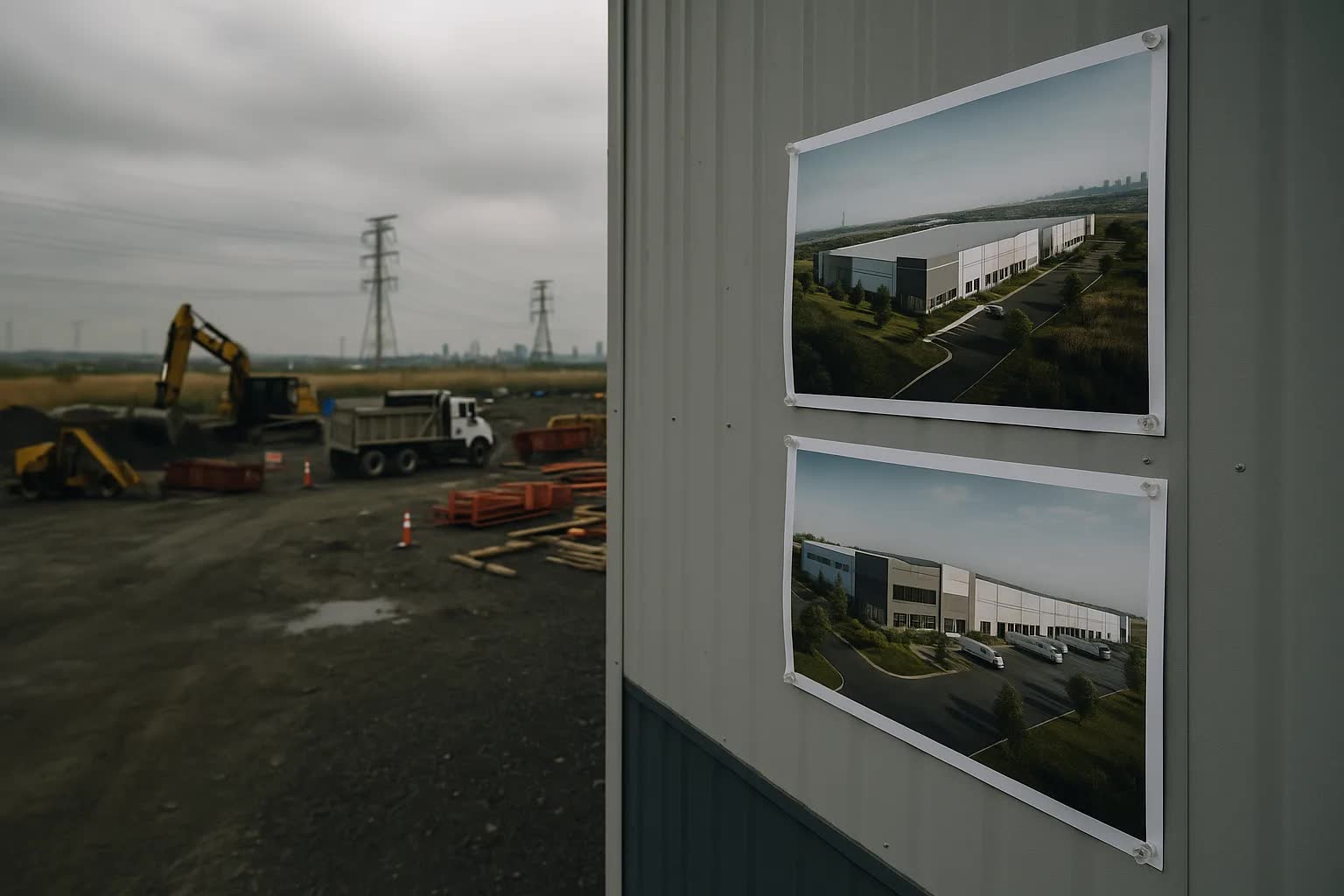
NEW YORK — Dec. 5, 2025 — As Manhattan's tech and media industries from Chelsea and Hudson Yards to the financial firms clustered in Lower Manhattan continue to push latency-sensitive services into the cloud, developers on Friday unveiled plans for a low-carbon data center in the Meadowlands designed to serve the New York market while drawing power from renewables in northern New Jersey. The proposal, lodged near Secaucus and the Meadowlands Sports Complex, promises a mix of proximity to Manhattan's critical fiber routes and on-site clean energy that backers say will set a new standard for regional data infrastructure.
The project, by a consortium called MeadowGrid Developers, would occupy roughly 40 acres off Route 3 near the Secaucus Junction rail hub and within sight of MetLife Stadium in East Rutherford. MeadowGrid says the campus is aimed at cloud providers, media companies and financial firms that need both capacity and low latency to Manhattan. "Being 10 to 20 minutes from Midtown instead of hours away changes the equation for our customers," said Alyssa Chen, director of development at MeadowGrid Developers. "We designed the site to be a New York-area node for the era of real‑time computing."
Engineering plans filed with local authorities describe a campus that blends large solar canopies, a battery-energy-storage system and a direct route to newly expanded transmission that will be supplied in part by offshore wind and regional renewable projects. "We are not building another fossil backup plant; we are building a microgrid-first facility with BESS and dynamic load controls," said Michael Alvarez, chief sustainability officer at GreenLoop Engineering, the lead designer. "The goal is to demonstrate continuous operations with a very low carbon intensity even during grid stress events."
Concrete figures in the proposal include an initial IT capacity of 150 megawatts across three heavily insulated halls, a 200 megawatt-hour battery system, compressed construction costs estimated at $1.2 billion and a footprint of approximately 40 acres. MeadowGrid projects about 1,200 construction jobs at the peak of work and roughly 120 permanent technical and operations positions once the site is operational. The design team says the data center would target a power usage effectiveness, or PUE, of 1.12 and draw at least 90 percent of its annual power from renewables, reducing regional emissions by an estimated 120,000 metric tons of CO2 equivalent a year compared with a conventional fossil-backed facility.
Local reaction in Secaucus and East Rutherford has been mixed as officials parse traffic, wetlands and tax implications. At a packed town council meeting in East Rutherford on Thursday, Councilwoman Tara Malik said neighbors had reasonable questions about construction traffic and emergency access along Route 17 and Route 3. "We want the jobs, and we want clean power, but we also need guarantees on wetlands protection and truck routing," Malik said. Several residents raised alarms about potential impacts on the Meadowlands' sensitive marshes, prompting the developers to promise a community oversight panel and stricter buffers than required by state rules.
Proponents argue the site brings a technical advantage to New York City customers because of fiber and power routing. MeadowGrid's plans call for a dense set of fiber trunks under the Hudson that feed into Manhattan meet‑me rooms serving neighborhoods from Tribeca and the Financial District to DUMBO and Long Island City. "This location gives carriers the option of sub‑3 millisecond round‑trip latency to core Manhattan exchange points," said Lena Park, senior network architect at CloudWave Systems, which has pre‑booked space in the proposed campus. "For trading platforms, video streaming and interactive media, that latency profile is a real competitive edge."
Economic development officials say the project includes a package of community benefits intended to distribute some of the economic upside locally. MeadowGrid has proposed a $5 million workforce fund to underwrite apprenticeships and partnerships with Hudson County Community College and local high schools, and estimates the operations phase could generate $10 million to $15 million a year in local tax revenue and utility payments. "We want to be part of the economic fabric here, not a fenced compound," said Aaron Delgado, a MeadowGrid community liaison, noting plans for internship pipelines and procurement set‑asides for local contractors.
Environmental groups welcomed the emphasis on renewables but urged scrutiny of site preparation in a landscape that includes remnant wetlands and critical bird habitat. "Clean energy on paper does not erase the impact of grading and impervious surface on Meadowlands hydrology," said Dr. Emeka Nwosu, director of the Meadowlands Ecology Center. "We will press for rigorous stormwater capture, native plant buffers and a genuine net‑habitat gain before we endorse a project of this scale." MeadowGrid's environmental impact statement includes stormwater retention ponds, green roofs, reclaimed water for noncritical cooling tasks and a commitment to restore 12 acres of degraded wetlands nearby.
The Meadowlands proposal is part of a broader Northeast trend toward more sustainable data centers as power grids incorporate more offshore wind and large on‑site batteries make renewables more dispatchable. Northern Virginia, upstate New York and parts of Massachusetts have seen a spate of similar projects in recent years as cloud providers balance location, cost and carbon. New Jersey officials point to recent state incentives that favor projects able to integrate offshore wind and invest in grid resilience, an attraction for developers who want to market low‑carbon compute to customers in Manhattan and beyond.
Developers said they expect to file final permit applications in early 2026 and, if approvals proceed on schedule, to break ground by mid‑2026 and bring the first halls online in late 2027. The plan calls for phased construction so new capacity can be occupied as it comes online while the larger campus is completed. As reviews continue and neighbors convene oversight and training committees, the Meadowlands site will be watched closely by New York City network operators, media companies and municipal officials who hope the project can deliver capacity without sacrificing the region’s fragile ecology.