Hackensack River Murals Turn Industrial Corridors into Open-Air Galleries
Artists, municipalities and advocacy groups are collaborating on large-scale works that rebrand formerly neglected waterfronts along the NJ-NY commuter belt.
By Mei Lin · March 27, 2026 · 4 min read
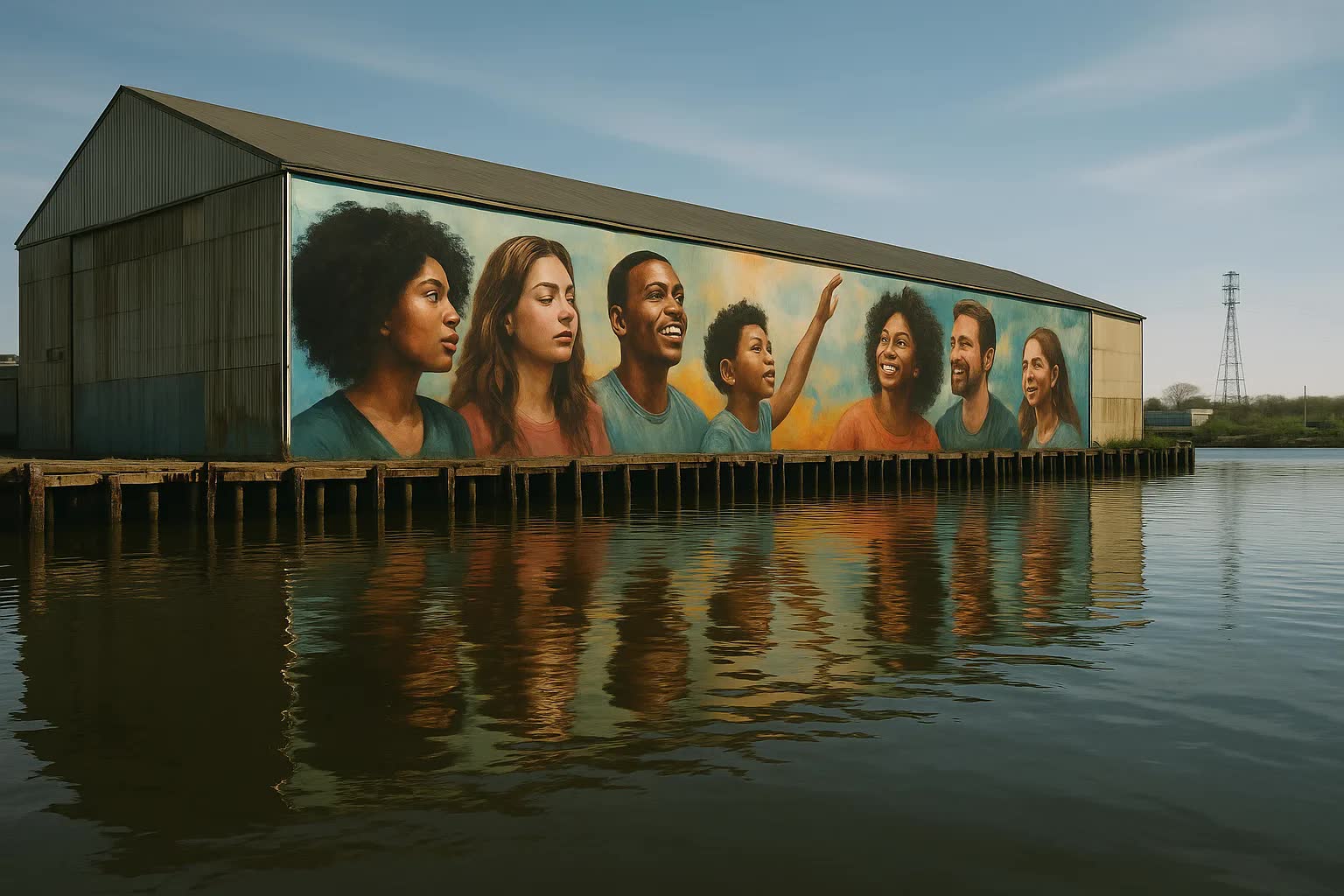
For commuters who ride the Midtown Direct into Penn Station or the PATH from Hoboken, the morning rush now comes with an unexpected gallery: a string of large-scale murals painted along the Hackensack River's industrial spine is turning rusting warehouses and concrete bulkheads into vibrant canvases visible from trains, ferries and the waterfront promenades of Hudson County and northern Jersey City.
The transformation is the result of a loose coalition of municipalities, artist collectives and advocacy groups that have spent the last three years negotiating permissions, lining up funding and recruiting painters to rebrand formerly neglected waterfront blocks as open-air galleries. Organizers say the effort reclaims a neglected corridor that sits squarely within the NY-NJ commuter belt, offering both commuters from Manhattan and residents of western Queens new visual anchors when they look out across the water.
The murals stretch along River Road and the Meadowlands industrial district from little-known industrial pockets in Little Ferry and Moonachie through Secaucus and into the Hackensack municipal waterfront, with secondary sites on former factory walls facing the Pulaski Skyway and the approaches to Route 3. Many of the surfaces are owned by logistics firms and small manufacturers; project coordinators negotiated temporary easements and painting schedules to avoid disrupting evening freight operations and weekend highway closures.
"We wanted the work to be site-specific, to speak to the river's ecology and the people who built these corridors," said Ariella Ramos, director of the Hackensack River Arts Initiative, a nonprofit that served as fiscal sponsor for the murals. "The murals are a way of remembering labor and habitat without writing over it — and they give commuters a human story to look at in between stations."
The scale of the undertaking is substantial: 58 murals completed or underway across roughly 14 miles of riverfront, painted by a roster of 45 artists and collectives; combined public and private funding of $3.7 million raised in grants and donations since 2023; and an estimated 200,000 annual viewers who pass within direct sightlines on weekdays and weekends, organizers say. The initiative generated about 120 short-term jobs for scaffolders, sign painters and conservators and established a $150,000 maintenance endowment to cover touch-ups for the first five years.
For some artists the project has been an opportunity to move beyond smaller street pieces into complex, layered narratives. "My mural folds migration routes of shorebirds into shipping lanes and annotated maps of the river's industrial past," said Marcus Delling, a Secaucus-based muralist who led a five-person team on a 12,000-square-foot project beneath the Route 1&9 overpass. "We used color to make visible the species that use the river at dusk and dawn, and to remind people that industry and ecology have always been entangled here."
County and municipal officials played a hands-on role in smoothing bureaucratic hurdles, issuing temporary art permits and funding traffic mitigation during painting. "This is not just beautification; it's infrastructure for community identity," said Carmen Liu, commissioner of Hudson County Cultural Affairs. "We see the murals as placemaking that can attract small business investment without prescribing displacement. It takes close coordination with property owners, environmental regulators and transit operators to pull that off."
Not everyone is unreservedly enthusiastic. Small-business owners in the Kearny industrial corridor said they worry that public art will accelerate redevelopment pressures and push up rents for long-standing tenants. There were also technical concerns about safety and sightlines: "Transit agencies insisted on review because some murals sit close to tracks and vessels' sightlines," said a senior MTA planner who requested anonymity. "We had to ensure paint and scaffolding operations didn't interfere with rail schedules or create visual clutter that could distract operators at critical junctions."
Organizers point to early results as evidence of impact: weekend art walks organized by neighboring towns have drawn hundreds of visitors to previously dormant streets, and local vendors near newly painted facades report modest increases in weekend foot traffic. Ferry operators between Paulus Hook and midtown terminals have seen a noticeable uptick in rider inquiries about mural locations, and the arts initiative says it is in talks with three civic groups in Queens and the Bronx about pilot projects to replicate the model on other commuter-belt waterways.
Planners and artists say the next phase will focus on stewardship: mapping each work into a digital catalog with conservation timelines, expanding community workshops to teach mural conservation, and piloting an augmented-reality layer that will let riders learn about artists and ecology through smartphone prompts. "This is the start of a long conversation between the river and the commuters who move past it, not a finished statement," Ramos said. "If we do it right, these walls will keep telling new stories for decades."