Halal Carts and Food Trucks Are Rebalancing Street Food Scenes
Shifts in licensing and neighborhood demand are forcing mobile vendors to rethink routes, cuisine and community partnerships.
By Evelyn Torres · April 12, 2026 · 4 min read
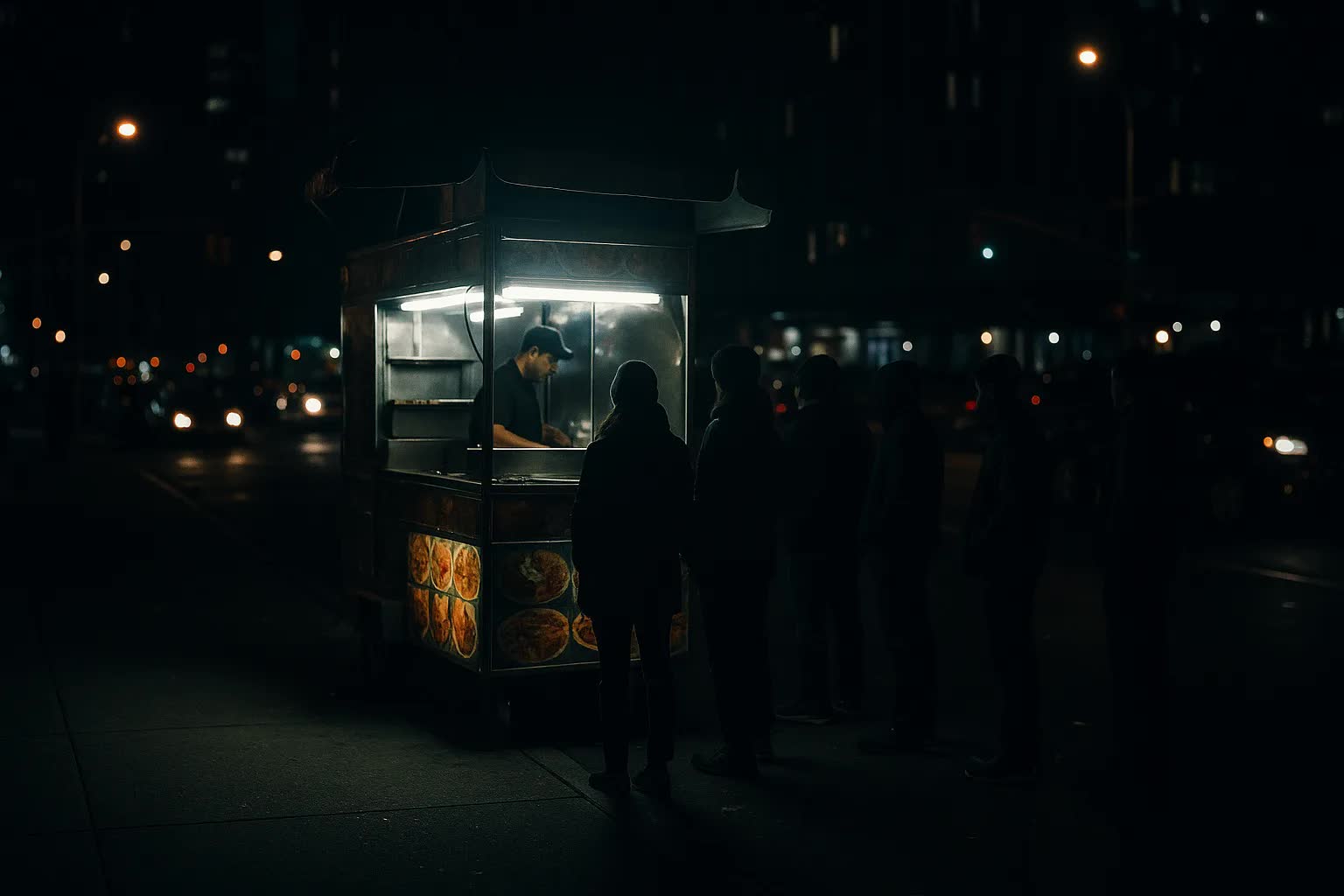
NEW YORK — On a blustery April morning, a line snakes around a halal cart on Roosevelt Avenue in Jackson Heights, while a bright blue food truck that once parked near Union Square now turns up each Thursday at a produce market in Bed-Stuy. Once concentrated in Midtown and the Lower East Side, halal carts and larger food trucks are being nudged into new corners of the city — and many of their operators say it’s by design, not chance. Changes to licensing, neighborhood demand and a small but growing number of municipal pilot programs have vendors rethinking routes, menus and partnerships with local businesses and community groups.
The Department of Health and Mental Hygiene and the Department of Consumer and Worker Protection introduced a revised mobile food vehicle framework last year that limits long-standing curbside monopolies and opens temporary corridor permits in under-served neighborhoods, city officials say. The shift, vendors and advocates add, is prompting a practical redesign of the street-food economy: shorter routes, rotating schedules and a heightened emphasis on compliance. "We’re not trying to leave the places that built us," said Ramon Delgado, president of the Mobile Food Vendors Association. "But the rules changed, and vendors are learning to move where customers and compliance both align."
For many operators the change has been immediate. "I used to be on 14th Street three days a week and on weekends in Midtown, but now I’m at the Elmhurst farmers market and Saturday pop-ups in Flushing," said Farah Malik, who runs Sultan’s Halal Cart and a catering side business out of a shared kitchen in Astoria. Malik said she has simplified her menu to speed service and added vegetarian options to appeal to broader crowds. "We had to think about who’s walking by: office workers, students, mosque congregations. The food had to flex with that."
Data gathered by a consortium of vendor groups and two neighborhood business alliances shows visible shifts: an estimated 3,320 active mobile food permits citywide as of March 2026, down from about 4,700 in 2017, while the number of permits issued in Queens rose 18 percent between 2023 and 2025. The consortium reports that halal-designated carts now represent roughly 22 percent of remaining active permits, up from 16 percent five years earlier. Average weekly gross receipts reported in voluntary surveys rose from $1,200 to $1,560 in outer-borough locations over two years, while fines and compliance costs — including a new $450 annual corridor permit fee — shaved an average of 7 percent from vendors’ net incomes.
Neighborhood demand has driven many of the menu and routing decisions. In Sunset Park, halal carts selling biryani and roasted vegetables have found a loyal lunchtime roster of factory workers and school staff, while in Williamsburg and DUMBO younger diners are ordering vegan kebabs and halal falafel paired with craft sodas. Vendors say the diaspora communities of Jackson Heights and Bay Ridge still form an economic backbone, but new clientele in Chelsea and the East Village are reshaping expectations, prompting familiar dishes to be tweaked or rebranded to reach a wider palate.
To reach those new customers, vendors are forging concrete partnerships. Malik’s cart now supplies sandwiches to a Park Slope bodega on Saturdays, and a group of Bangladeshi-owned trucks in Astoria coordinate schedules with a mosque to serve post-Friday prayers. Local restaurants have contracted trucks to feed outdoor dining plazas on Atlantic Avenue, and a nonprofit in Harlem has paired three halal carts with cooking classes at a community center. "We’re seeing more mutual aid-style arrangements where property owners and community groups invest in steady slots for vendors," said Aisha Rahman, a Jackson Heights community organizer who helps run a neighborhood vendor cooperative.
Financial pressures have driven innovation as well. Commissary and storage rents jumped an average of 15 percent in 2025 in boroughs where demand for shared kitchens spiked, vendors reported, and insurance premiums for trucks rose sharply after a string of accidents on major thoroughfares. In response, some operators turned to ghost-kitchen partnerships and online preorders to reduce cash-on-hand time and shrink inventory needs. Others swapped traditional gyro meat for higher-margin, locally sourced proteins and added laminated QR menus to speed throughput on crowded sidewalks like Canal Street and near Times Square.
The regulatory landscape remains a flashpoint. Community boards in several neighborhoods have pushed back on expanded corridor permits, citing pedestrian congestion, while vendors of color and immigrant operators argue enforcement is uneven. "Many of our members feel targeted on busy sidewalks where other businesses have private loading zones," Delgado said. A senior City planning official, speaking on background, acknowledged that balancing pedestrian safety, retail needs and vendors’ livelihoods was complicated and said the city planned more data-driven allocations of street space this summer.
Culinary experimentation has been the visible payoff. On weekends in Union Square and along Bedford Avenue, chefs who started as halal-cart cooks now serve Afro-Peruvian shawarmas, kimchi-spiced kebabs and halal-Chinese combos that riff on dumplings and lamb. That experimentation is attracting food writers and curious tourists, but vendors say their priorities remain steady: predictable pitches, reliable supply chains and respectful enforcement. "We love that people come for the fusion stuff, but what matters is a spot where my kids can stay in school and I can pay the commissary bill," Malik said.
Looking ahead, vendors and city officials say the balance between innovation and stability will define the next chapter of New York’s street-food scene. The city plans to evaluate the corridor permit pilot in July and may expand it to an estimated 150 additional slots, while community coalitions push for clearer complaint processes and affordable commissary access. For now, halal carts and food trucks are crisscrossing the boroughs, testing routes and recipes in real time — an uneven but energetic rebalancing that may redraw where New Yorkers eat lunch for years to come.