Harlem Readers Buy Their Bookstore — Literally
Facing closure, a beloved Harlem bookshop reopened this summer as a cooperative owned by hundreds of neighbors who each bought a small share.
By Aspen Young · July 19, 2026 · 5 min read
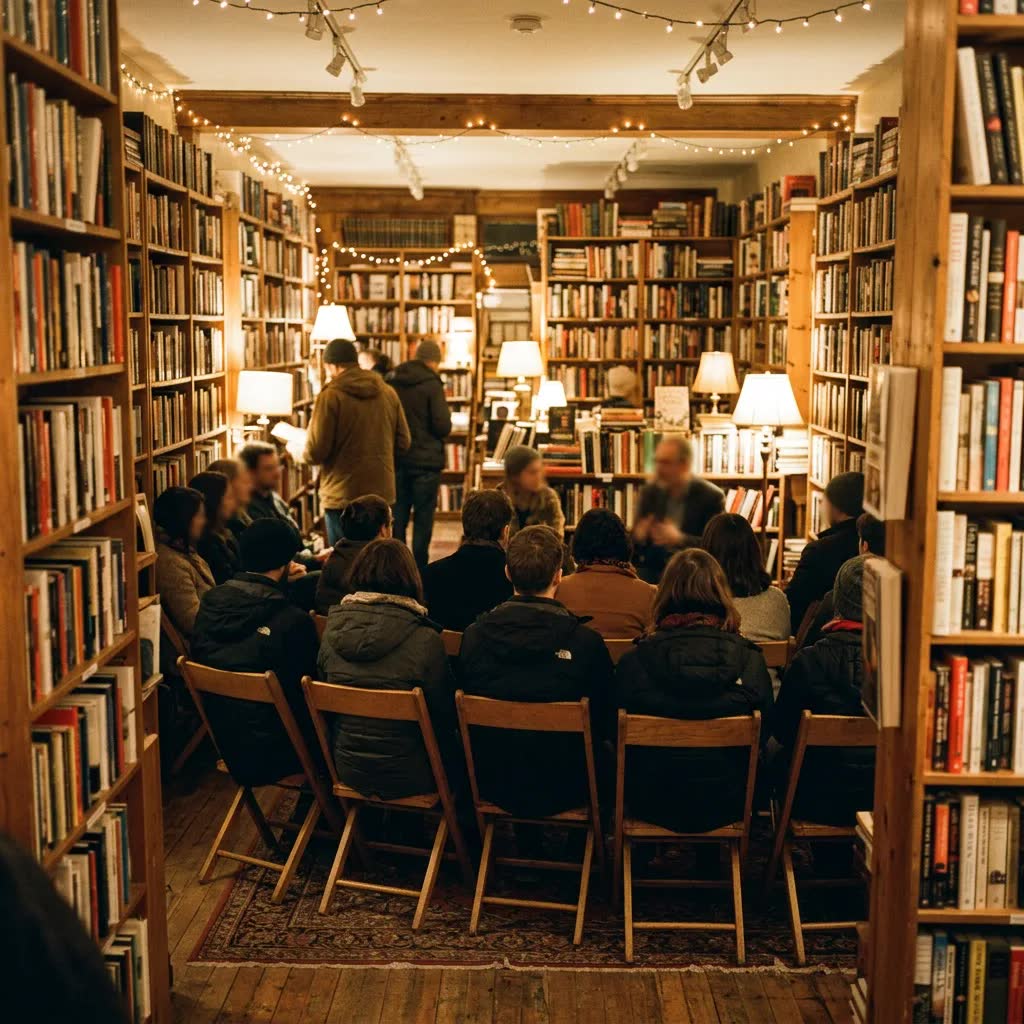
NEW YORK — When the owner of a small Harlem bookstore announced last winter that she could no longer keep the doors open, the news landed like a death in the family for a neighborhood that treated the shop as a living room. What happened next was less predictable: rather than mourn, a group of regulars proposed buying the store themselves, dividing ownership into hundreds of small, affordable shares. This summer, the reborn cooperative held its first meeting of member-owners, and the shelves are stocked again.
The model is straightforward in principle and complicated in practice. Roughly four hundred neighbors each purchased a share, with the price kept deliberately low so that ownership would not be limited to the well-off. Members elect a small board, vote on major decisions, and volunteer shifts behind the register in exchange for a modest discount. Day-to-day operations remain in the hands of the original owner, who agreed to stay on as manager once the community stepped in to shoulder the financial risk.
"I spent thirty years terrified that one bad month would end everything," the manager said, standing amid the reorganized fiction section. "Now there are four hundred people who won't let that happen. It's the first time in decades I've slept through the night." She described the transition as bittersweet — a loss of sole control traded for something she had never had, which was security and the certainty that the store would outlast her.
The cooperative's founders drew on models from grocery co-ops and worker-owned businesses, adapting them to the peculiar economics of bookselling, a trade with famously thin margins. Early results have been cautiously encouraging: membership dues provide a cushion the store never had, and member-owners, unsurprisingly, buy a lot of books. The shop has also leaned into its communal identity, hosting members-only readings, a children's story hour, and a monthly forum where owners debate everything from staffing to which local authors to feature.
The revival has drawn attention from independent booksellers elsewhere in the city, several of whom have visited to study whether the cooperative approach might rescue their own imperiled shops. The founders are careful to temper the enthusiasm, noting that the model demands an unusual level of neighborhood commitment and only works where a genuine community already exists to be mobilized. "You can't manufacture four hundred people who love a store," one board member said. "We were lucky that they were already here. We just gave them a way to prove it."
On a recent evening, the store hosted a poetry reading packed shoulder to shoulder with member-owners, several of whom had brought folding chairs from home. Between readers, a woman who had bought one of the first shares looked around the crowded room with visible satisfaction. "People say Harlem is losing everything," she said. "So we decided to keep at least one thing. We didn't ask anybody's permission. We just bought it."