High-Tech Greenhouses in Brooklyn Scale Up to Supply City Supermarkets
Vertical-farming startups are signing wholesale contracts with chains as they ramp production in industrial spaces.
By Marcus Thompson · February 24, 2026 · 4 min read
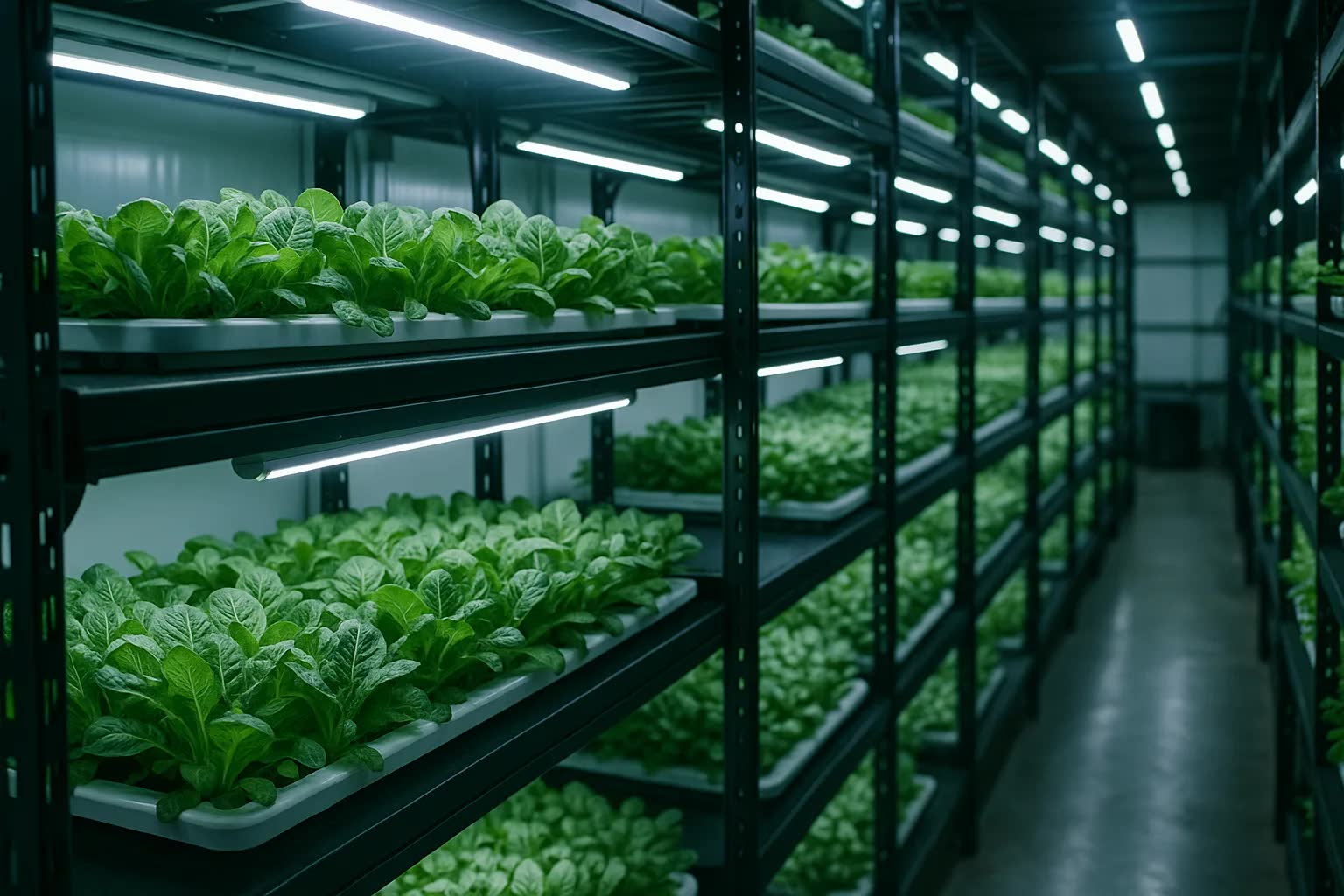
NEW YORK — In converted warehouses from Sunset Park to Gowanus, high-tech greenhouses are moving beyond novelty to become a steady source of produce for city supermarkets, promising fresher salads and herbs for Brooklyn shoppers while reshaping an urban food supply chain long dependent on distant fields and long hauls over the bridges into Manhattan.
Startups such as SkyRoot Farms, Brooklyn GreenGrid and Verdant City Foods have taken over former manufacturing floors in Industry City and the Brooklyn Navy Yard, stacking vertical racks under LED lights and running water on timed nutrient cycles to grow lettuces, basil and microgreens year-round. The systems use sensors and automation to manage humidity and nutrient delivery so plants mature in as little as three weeks, executives say.
"Our goal is to deliver harvests in the same day from our warehouse to neighborhood shelves," said Maria Alvarez, founder and CEO of SkyRoot Farms, which operates a 42,000-square-foot facility off Third Avenue in Sunset Park. "That speed means better flavor and less waste, which is why regional grocers are signing contracts with us even though our per-unit costs are higher than field-grown produce."
CityHarvest Markets, a 45-store chain with locations across Brooklyn and lower Manhattan, this winter signed a three-year wholesale contract with Verdant City Foods to supply packaged salad mixes and herbs to 18 stores, including branches along Atlantic Avenue and near Borough Hall. "We see this as an investment in consistency," said Daniel Kim, procurement director for CityHarvest Markets. "When a storm closes highways, our shelves can still be stocked from plants grown within borough lines."
The scale-up is measurable: SkyRoot Farms reports capacity to produce roughly 1.2 million heads of leafy greens annually at its Sunset Park site; Brooklyn GreenGrid says its three warehouses combined span about 130,000 square feet and can supply 150 supermarkets and 200 independent grocers at peak production. Wholesale prices in recent deals ranged from $2.25 to $3.75 a head for specialty lettuces and microgreens, and startup executives say energy and labor account for roughly 60 percent of per-unit costs.
Location choices are strategic. Industry City on 39th Street sits near the BQE and Brooklyn-Queens Expressway and offers loading docks and lower rents than Manhattan, while a Verdant City Foods site on Flushing Avenue in the Navy Yard keeps trucks a short run to downtown Brooklyn and the Fulton Street corridor. Proximity reduces drive time, refrigeration needs and spoilage, company logistics managers say, a selling point in negotiations with neighborhood grocers from Bay Ridge to Bushwick.
But financial and environmental trade-offs remain. LED-powered vertical farms consume large amounts of electricity, leading operators to seek on-site solar, battery storage and utility agreements to blunt costs. SkyRoot closed a $28 million series B round last year, and Verdant City Foods says it is in talks for a municipal energy-efficiency incentive that could reduce operating expenses by an estimated 15 percent. "Capital intensity and power bills are still the primary hurdles to scaling profitably," said Jamal Reeves, director of the Brooklyn Food Policy Center.
Investors and grocers point to other advantages beyond shelf life: traceability and reduced food waste. The startups embed QR codes on packaging so shoppers can see harvest time and farm location — a feature that appeals to customers in neighborhoods such as Carroll Gardens and Williamsburg. Pilot programs with smaller chains also allow grocers to order smaller, more frequent deliveries timed to demand, cutting the volume of unsold produce returned to distributors.
The expansion has prompted questions about labor and neighborhood impact. Factories turned farms create different jobs — more technicians and fewer field hands — and startups are partnering with Kingsborough Community College and the Workforce Training Center in Red Hook to train workers in controlled-environment agriculture. Community Board 7 in Sunset Park has asked for regular reports on truck traffic and energy use, and some small growers on Staten Island worry about losing market share to locally based but well-capitalized competitors.
Backers and founders say the next 18 months will test whether urban high-tech farming can be both a commercial supplier and a resiliency tool for the city. SkyRoot plans to open a second facility near Atlantic Terminal, Verdant City Foods is piloting rooftop microfarms above a Gowanus distribution center, and several supermarket chains are expanding pilot orders. If the costs of power and capital come down as predicted, the Brooklyn model could become a template for other boroughs and cities looking to shorten supply chains and keep greens on local plates year-round.