Hoboken–Midtown Ferry Adds Peak Trips to Ease PATH Crowding
Operators say the expanded schedule is temporary but could become permanent if commuters shift from trains to boats.
By Rachel Cohen · January 17, 2026 · 5 min read
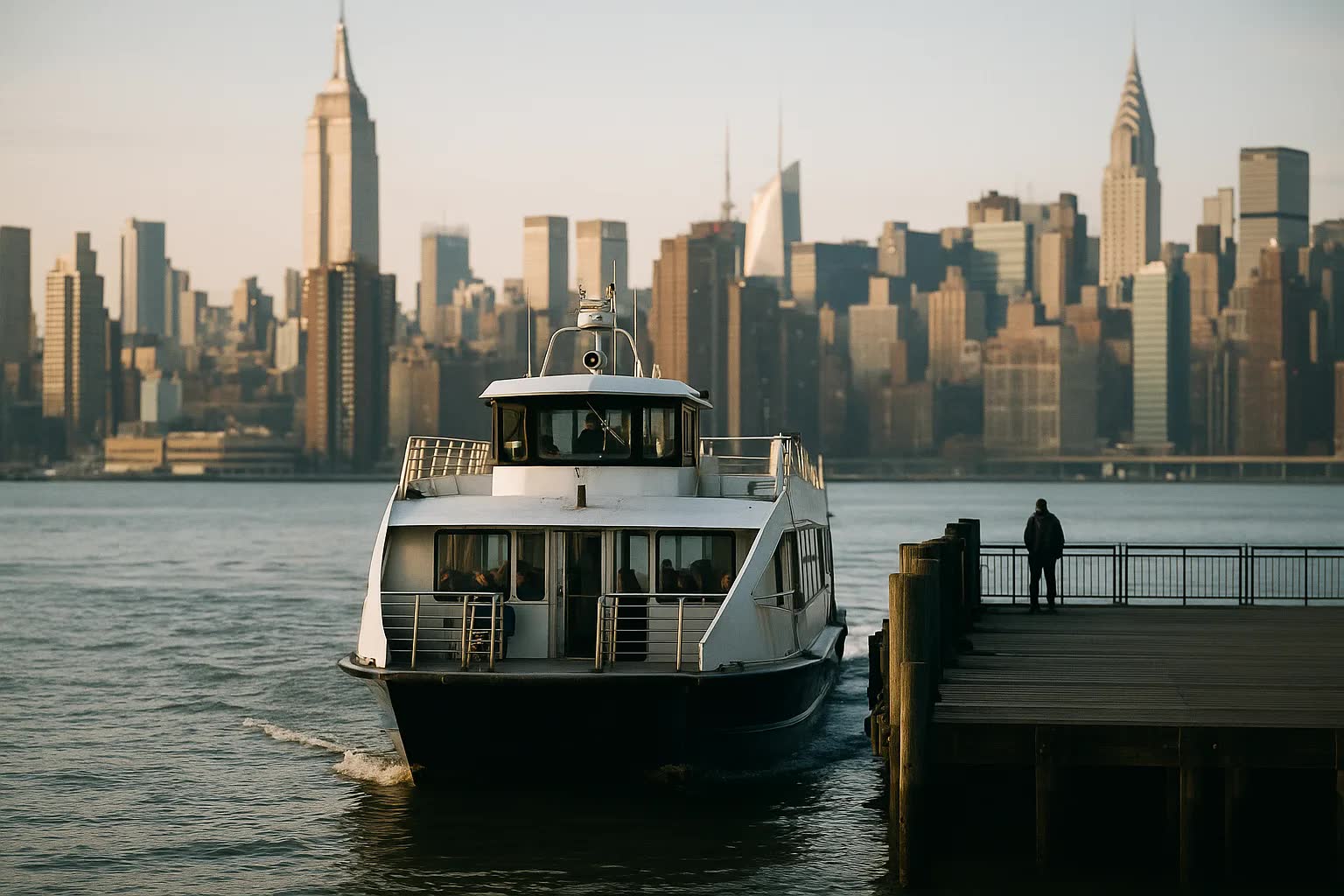
Commuters stepping off PATH trains into a crush of bodies at Hoboken Terminal on weekday mornings will now find a new option: extra ferry sailings to Midtown, aimed at trimming platform congestion and giving riders an alternative to the packed 33rd Street line that snakes under the Hudson. Beginning Monday, HarborLink Ferries added a slate of additional peak trips between Hoboken's waterfront and the West 39th Street/ Pier 79 ferry terminal, responding to what operators and local officials described as a surge in demand since late 2025 and persistent crowding that has frustrated commuters and strained transit infrastructure linking Jersey City, Hoboken and Manhattan.
The expanded schedule is part of a six-month pilot that HarborLink says is designed to test whether riders will shift some commutes from steel to water. "We saw consistent overflow on the platforms and an appetite among riders for a faster, more comfortable option into Midtown," said Ellen Park, chief operating officer of HarborLink Ferries. "These added peak trips are a targeted response—temporary by design, but we will consider permanency if the numbers justify it." The company will run additional morning sailings leaving Hoboken between 6:30 a.m. and 9:30 a.m. and mirrored evening returns.
Hoboken officials and neighborhood businesses welcomed the move as relief for Washington Street and the surrounding residential corridors, where many commuters spill out from PATH and local buses. "People are fed up with the squeeze on the trains and they're voting with their feet," said Leah Morales, chair of the Hoboken Transportation Committee. "If even a few thousand commuters take the ferry instead, it changes the rhythm on our platforms and on local buses, and it gives residents more reliable options when the trains are delayed."
The pilot adds 12 extra peak roundtrips on weekdays—six in the morning and six in the evening—boosting peak-day seating capacity by roughly 2,520 seats, HarborLink officials said. The company estimates the additional trips will serve about 1,800 to 2,400 passengers on a typical weekday at first, with fares set at $8.50 per one-way trip; monthly pass integration discussions with regional transit agencies are underway. HarborLink said operational funding for the pilot includes a $3.2 million subsidy provided by a coalition of county and municipal transportation funds and private partners tied to waterfront development projects.
PATH riders have faced a delicate balance of capacity and reliability since service recovered from pandemic-era lows, and the Hoboken–33rd Street connection is one of the busiest weekday corridors from New Jersey into Midtown. Transit planners point to periodic surge events—morning service disruptions, convention traffic at the Javits Center and Hudson River commuter flow—that push trains past design capacity during peak windows. Operators say that by shifting some discretionary riders onto ferries, they can ease platform density at Hoboken Terminal and at the 33rd Street mezzanine in Manhattan without reducing train frequency.
The Midtown terminals in play put riders within striking distance of major employment and amenity centers: Pier 79 at West 39th Street sits steps from the Midtown West office strip and the Javits Center; the ferry landing is a short walk from Hudson Yards and the Port Authority Bus Terminal for last-mile connections. Downtown, Hoboken's ferry slips are minutes from the Terminal's multilevel concourse, local buses on Observer Highway and convenient bike-share docks along Sinatra Park. "The geographic fit is strong; we're not offering a novelty tour, we're offering a commuter-grade alternative that drops people near where they work," said Dr. Amir Qureshi, director of the Center for Urban Transit Studies, a transportation research nonprofit. "That alignment is crucial if operators want a long-term behavioral shift."
Integration with existing transit fare systems and ticketing technology has been a focus since HarborLink first announced the pilot. Officials said the ferry operator has enabled contactless card readers and mobile ticketing compatible with major third-party transit apps, and is negotiating a discounted transfer option for monthly commuters who also use regional rail or bus services. Port-side logistics — dock scheduling, slip assignments and crew rostering — were coordinated in consultation with municipal waterfront offices in both Hudson County and Manhattan to minimize disruption to sightseeing and excursion services that also use Pier 79 and Hoboken's slips.
Commuters who have already tried the added sailings report a trade-off between longer shoreline walks and a far calmer trip to Midtown. "I used to cram onto the 8:34 PATH and stand all the way to 33rd; now I walk a few extra blocks to the Hoboken ferry and I'm seated the whole way," said Marissa Giordano, a Hoboken resident who works in a Midtown law office. "It costs a bit more, but on days with a train delay it's worth it." Local cafe owners on Washington Street say the later morning peak has tempered the sharp rush for coffee, spreading demand slightly later into the morning and giving small businesses room to serve customers.
The pilot does face constraints. Ferries are subject to weather cancellations more often than underground rail, and harbor traffic can complicate schedules. Dock capacity at Hoboken Terminal is finite, and some critics question whether subsidies should be directed to ferries when long-term investments in PATH capacity — signaling upgrades, station platform work or additional rolling stock — might yield larger systemwide benefits. "Ferries are part of the solution, but they're not a cure-all for structural underinvestment in rail," said Marcus Flynn, senior planner at the Hudson County Transportation Authority. "Planners need to measure net shifts carefully and avoid one-off fixes that don't address root causes."
The HarborLink pilot will be monitored through March, with ridership, on-time performance, transfer rates and platform crowding among the metrics under review. Officials said a multi-agency review team plans to release preliminary findings in April and will recommend whether the additional peak trips should be extended, scaled back or made permanent. For commuters who have adopted the ferry, the new option has already changed morning calculus; for planners, the experiment will test whether a seaworthy solution can reshape one of the busiest river crossings into Manhattan on a lasting basis.