Hoboken-NYC Ferry Subsidy Fight Escalates as Hoboken Seeks Higher Operating Aid
City and Hudson County officials are at odds over whether New York should increase payments to sustain a cross-Hudson commuter ferry route.
By Dominic Russo · January 30, 2026 · 5 min read
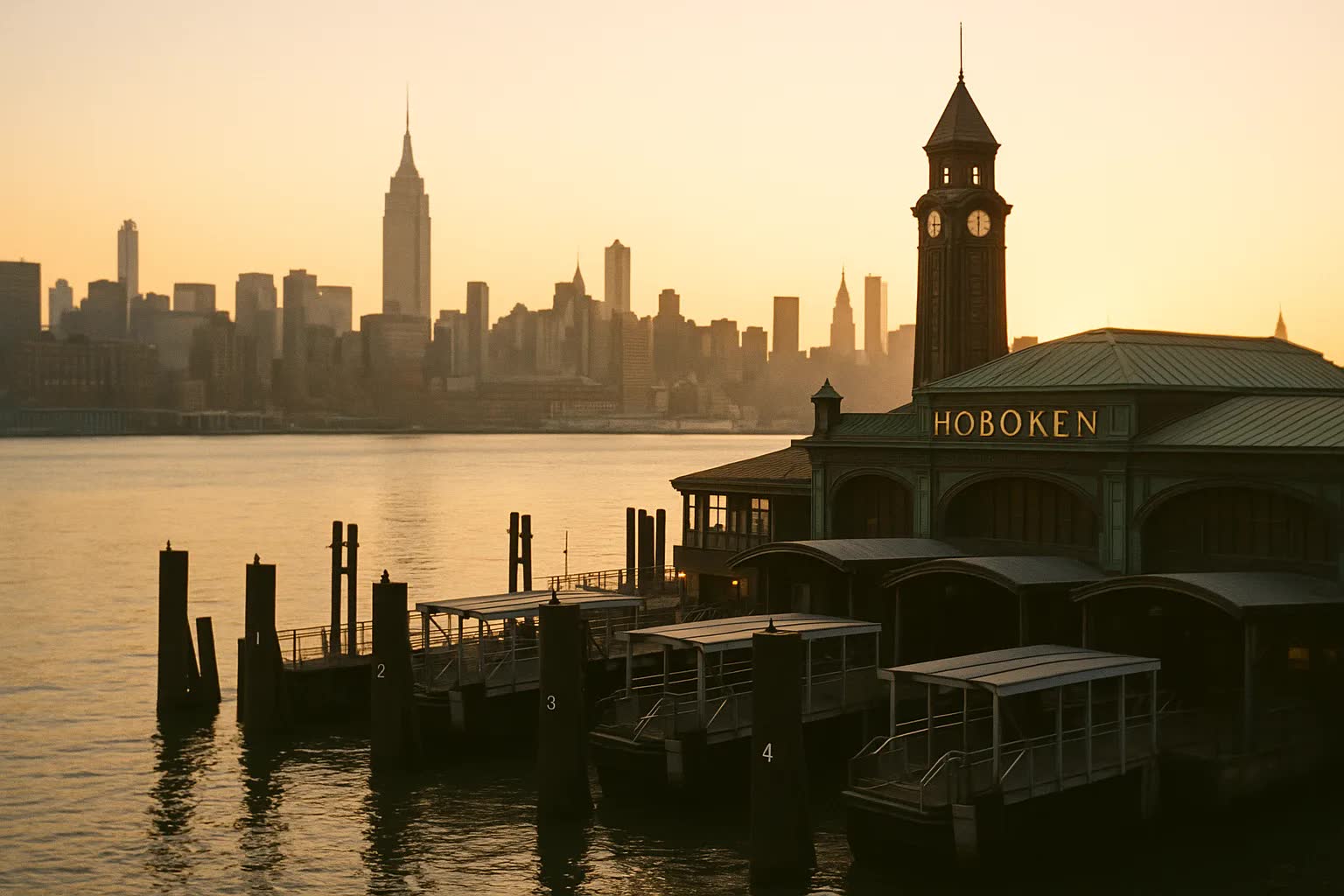
NEW YORK — A bitter funding fight over a single commuter link between Hoboken and Manhattan is pitching two governments and a private operator into a public standoff that could reshape cross-Hudson commuting patterns for tens of thousands of daily riders who rely on piers along the East River and the Financial District. The dispute centers on Hoboken officials’ demand that New York City increase its operating aid for the Hoboken–Pier 11 route after the operator warned that current payments — borne unevenly by Hudson County, the city of Hoboken and the operator itself — are unsustainable without a larger municipal subsidy from the city across the river.
The service, branded as HudsonLink Ferries, runs a string of peak and off-peak sailings linking Hoboken Terminal with Pier 11/Wall Street and a Midtown West landing near West 39th Street, serving commuters who work in neighborhoods from the Financial District and Battery Park City up through Chelsea and Midtown. The route grew in popularity after a series of PATH and tunnel disruptions in the early 2020s and became a regular alternative for residents of Hoboken, Jersey City’s Paulus Hook and portions of Union City. Riders routinely swap the pier crowds for short walks to Broad Street or the West Side piers, and local businesses around Pier 11 say the ferry’s presence has become integral to their weekday traffic.
At the center of the fight is a proposal from Hoboken officials to rebalance costs so that New York City picks up a larger share of the ferry’s annual operating deficit. Hoboken Mayor Rosa Delgado said during a meeting at Hoboken City Hall last week that the route provides essential access for her constituents and that the city cannot absorb another round of cuts. "We cannot let this route fold on our watch — it connects Hoboken residents to jobs in Manhattan and relieves pressure on packed PATH trains," Delgado said. Hoboken’s position has put it at odds with New York officials who contend that the city already subsidizes a wide ferry network and cannot be the sole backstop for commuter services that begin outside its borders.
"New York cannot be the default funder for services wholly operated by another jurisdiction without clear metrics and accountability," said Malik Rahman, deputy commissioner for ferry services at the New York City Department of Transportation. Rahman cautioned that any increase in the city’s contribution would require adjustments elsewhere in a budget that faces competing claims from subway maintenance to school transportation. He added that the city is open to targeted arrangements but said the current ask is premature without a formal performance-based agreement.
The numbers at stake are specific and stark. HudsonLink Ferries reported an average weekday ridership of about 3,200 boardings on the Hoboken–Pier 11 run in 2025, down from a pandemic-era peak but up 12 percent from two years earlier; weekend ridership averaged 850 boardings. The operator says the route requires roughly $16.8 million a year to operate — including fuel, crew wages, maintenance and terminal fees — and that projected farebox revenue covers approximately $12.1 million, leaving an annual shortfall of $4.7 million. Current annual subsidies are split with Hudson County contributing $1.2 million, the city of Hoboken $400,000 and New York City $600,000; Hoboken now asks the city to increase its payment by $2.3 million to bring total public aid to $4.5 million while the operator is pressing for a $3.5 million increase to eliminate the deficit entirely.
Local businesses and community groups on both sides of the Hudson have weighed in, reflecting how localized the impacts have become. "The ferry is a lifeline for small restaurants and service businesses around Pier 11 and in Hoboken’s Washington Street corridor; reduced frequency or higher fares will harm commerce," said Aisha Conteh, executive director of the Hudson Waterfront Chamber, which represents merchants in Hoboken and the Jersey City waterfront. Battery Park business owners also expressed concern that commuters who switch back to car or rail during peak hours could increase congestion on FDR Drive and local streets in the West Village and Tribeca.
Labor advocates and ferry employees have sounded alarms about potential layoffs if subsidies aren’t increased. "Our members are bracing for cutbacks in evening and off-peak runs that will cost jobs and reduce safety margins," said Thomas Rivera, president of Local 214, Marine Transport Workers. An operator spokesperson said that without new funding it would be forced to reduce midday frequency and eliminate late-night sailings starting in late spring, a move Rivera said would disproportionately affect hospitality and service workers who rely on those shifts. "We need a secure funding path that protects workers and keeps service reliable," Rivera added.
The political dimensions have complicated negotiations. Hudson County Executive James Callahan — a figure whose office has become the lead negotiator for the county’s transit investments — has urged New York City to consider the regional nature of modern commuting. "This is not Hoboken versus Manhattan; this is a bi-state network that keeps the regional economy moving," Callahan said. City budget officials, however, point to tight constraints in the municipal ledger and competing priorities for investment in subway accessibility projects and school transportation reforms. "Any new commitment must be scrutinized within the context of our entire transit portfolio," said Caroline Vega, the city’s budget director, who said the administration would present options to the mayor next month.
The dispute has also touched on legal and contractual deadlines. The current intergovernmental memorandum of understanding that governs operating aid for the route is set to expire at the end of March, and HudsonLink’s operating contract requires a confirmed funding plan for the summer schedule by the second week of April to secure vessel leases and crew assignments. If no agreement is reached by that deadline, the operator signaled it will file a notice to reduce services by up to 30 percent, a move that would ripple through commuter patterns in neighborhoods from the Lower East Side to Midtown West and pressure PATH and bus routes during peak hours.
Negotiations are expected to continue into the spring, with a public hearing scheduled for March 9 at Manhattan’s Municipal Building and talks between county and city negotiators slated for the week afterward. State legislators have begun informal outreach to both sides, encouraging a short-term bridge funding mechanism while a performance-based contract is hammered out. For commuters who watch the ferries slip past the skyline each morning, the outcome will determine whether the service remains a steady alternative or becomes a casualty of regional budget politics; officials say a compromise that ties increased aid to service reliability and ridership targets appears to be the likeliest path forward.