Hotel Lobbies in Midtown Are Becoming Daytime Work Hubs for Remote Professionals
From micro-meet rooms to pay-per-hour desks, formerly transient spaces are being redesigned to capture a new class of daytime patrons.
By Keisha Brown · January 20, 2026 · 4 min read
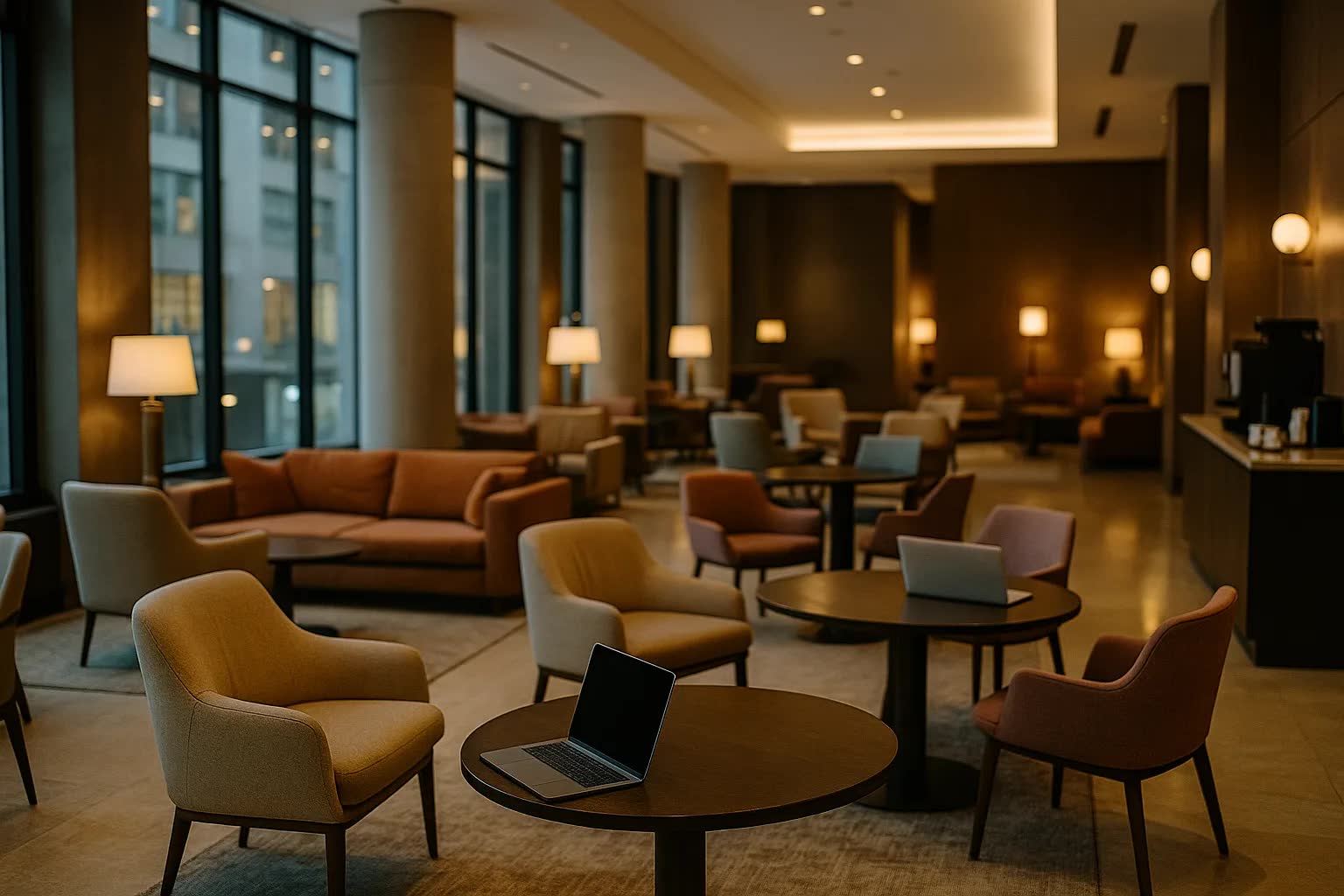
NEW YORK — On a Tuesday morning in midtown Manhattan, hotel lobbies that once emptied after check-out now swell with a different kind of transient guest: remote workers, freelancers and visiting teams staking out daylight hours for focused work. From a row of plug-friendly banquettes at The Lennox on West 44th Street to the soundproofed micro-meet rooms tucked behind the concierge desk at the Halcyon near Bryant Park, spaces designed for brief stays are being retooled to capture a steady, daytime clientele who want coffee, Wi-Fi and a place to hold a video call between meetings on Fifth Avenue and lunch in Koreatown.
Hoteliers say the shift is both strategic and pragmatic: the decline of overnight corporate travel since 2020 left underused public spaces that can be monetized without the cost of new construction. “We’re no longer just selling rooms,” said Leila Moreno, director of guest experience at The Lennox. “We’re selling a place where people can accomplish real work, whether that’s an hour-long client call or a concentrated half-day at a pay-by-the-hour desk.” Her property installed modular desks and privacy pods in January 2025, and Moreno said daytime revenues have filled a predictable slump between breakfast and late check-in.
Design trends have followed demand. The micro-meet rooms — typically 6-by-8-foot soundproof booths with glass fronts, a monitor and a small table — are proliferating in lobbies from Herald Square to the Garment District. Hotels in Midtown West and East are layering in subscription kiosks where locals can swipe in for a flat hourly rate, reservable through apps that mirror co-working platforms but keep the brand aesthetic of traditional hospitality. Plush sofas and rugs remain, but now they’re paired with abundant outlets, ambient lighting calibrated for video calls and signage that politely discourages long phone calls in communal lounges.
Business operators and neighborhood stakeholders are watching the economics closely. Marcus Chen, founder of WorkPort Labs, a Manhattan-based consultancy that advises hotels and landlords, said the new daytime model reduces volatility for properties hit by fluctuating nightly demand. “A hotel can count on a baseline of daytime purchases — coffee, snack, bandwidth, meeting room time — that stabilizes staffing and ancillary income,” Chen said. “It’s a fundamentally different way of viewing the lobby: as retail real estate with hourly turnover.”
The numbers are concrete and proliferating. In a survey of 42 midtown hotels conducted by WorkPort Labs in December, 60 percent reported adding at least one dedicated work zone since 2023; average hourly desk sales ranged from $8 to $18; and the median number of daytime, non-guest visits rose from 14 per day in 2022 to 48 per day in 2025. Hotels that introduced subscription passes reported an average 22 percent increase in weekday food-and-beverage spend and a 15 percent lift in on-site printing and meeting services. Real estate data firm Midtown Metrics estimates that daytime occupancy of public hotel space in the 34th to 59th Street corridor has increased roughly 35 percent over three years.
Not all neighborhoods are seeing the same effect. In Hell’s Kitchen and the blocks around Penn Station, the demand skews toward short, drop-in use by shift workers and gig-economy employees seeking reliable Wi-Fi between shifts. Around Grand Central and Park Avenue, hotels market midweek privacy pods to traveling consultants and legal teams needing a base for half-days. Local businesses sometimes push back: cafe owners near Bryant Park worry that hotels offering $3 drip coffee and a washroom are undercutting independents who rely on turnover, while neighborhood groups in Murray Hill have raised concerns about noise and spillover into residential lobbies.
Staff training and operational changes are part of the calculus. Hotels have reassigned concierge staff to manage bookings for conference pods and installed turnstiles at some properties to track usage. “We added a front-of-house coordinator position dedicated to daytime memberships,” said Aaron Feldman, general manager of the Astor Suites on Lexington Avenue. “We also tightened our cleaning schedule, because turnover occurs every 45 to 90 minutes now instead of every few days.” Feldman said the property has partnered with a local caterer in Koreatown for boxed lunches sold to day-pass users, creating a small revenue stream that benefits nearby restaurants.
Privacy and safety are recurring themes. Hoteliers have loaded booths with acoustic insulation and white-noise generators, and some are using badge systems to limit access to verified members. Yet the increased daytime foot traffic forces managers to balance hospitality with a quasi-commercial operation. “There’s a continuum between being a welcoming hotel lobby and a co-working space operating on a business model,” said Dr. Simone Adebayo, an urban sociologist at a private research institute in Manhattan who studies public-use spaces. “How hotels navigate that line will affect urban conviviality, street-level retail and neighborhood dynamics.”
City regulators and local business improvement districts are taking note. The Midtown Alliance has convened discussions between hoteliers, co-working operators and small-business representatives to examine zoning implications and sidewalk access. Some proposals under consideration include clearer signage rules for commercial activity in publicly accessible lobbies and guidelines for sanitation and security standards tied to daytime admissions. Meanwhile, a handful of boutique hotels are exploring cross-promotions with transit-pass apps to market day passes to commuters avoiding long transfers at Times Square and Grand Central during rush hours.
As hotels in Midtown reimagine lobbies for daytime use, the result will likely be a hybrid model that blends hospitality, retail and shared office functions. For workers, that promises more flexible, amenity-rich alternatives to crowded subways and storefront cafés. For hotels, the midday pivot may become as critical as room rates in future business plans. Observers say the next year will test whether this adaptation becomes an enduring fixture of Midtown life or a cyclical response to current work patterns, as operators track metrics, tweak offerings and weigh partnerships with local businesses and city agencies to shape what New York’s public rooms will look like at 10 a.m. on a weekday in 2027.