How Brooklyn's Rooftop Cinemas Rebounded After the Pandemic
Independent organizers converted laundromats and parking lots into seasonal screening series that are now becoming year-round cultural fixtures.
By Hana Kim · April 22, 2026 · 4 min read
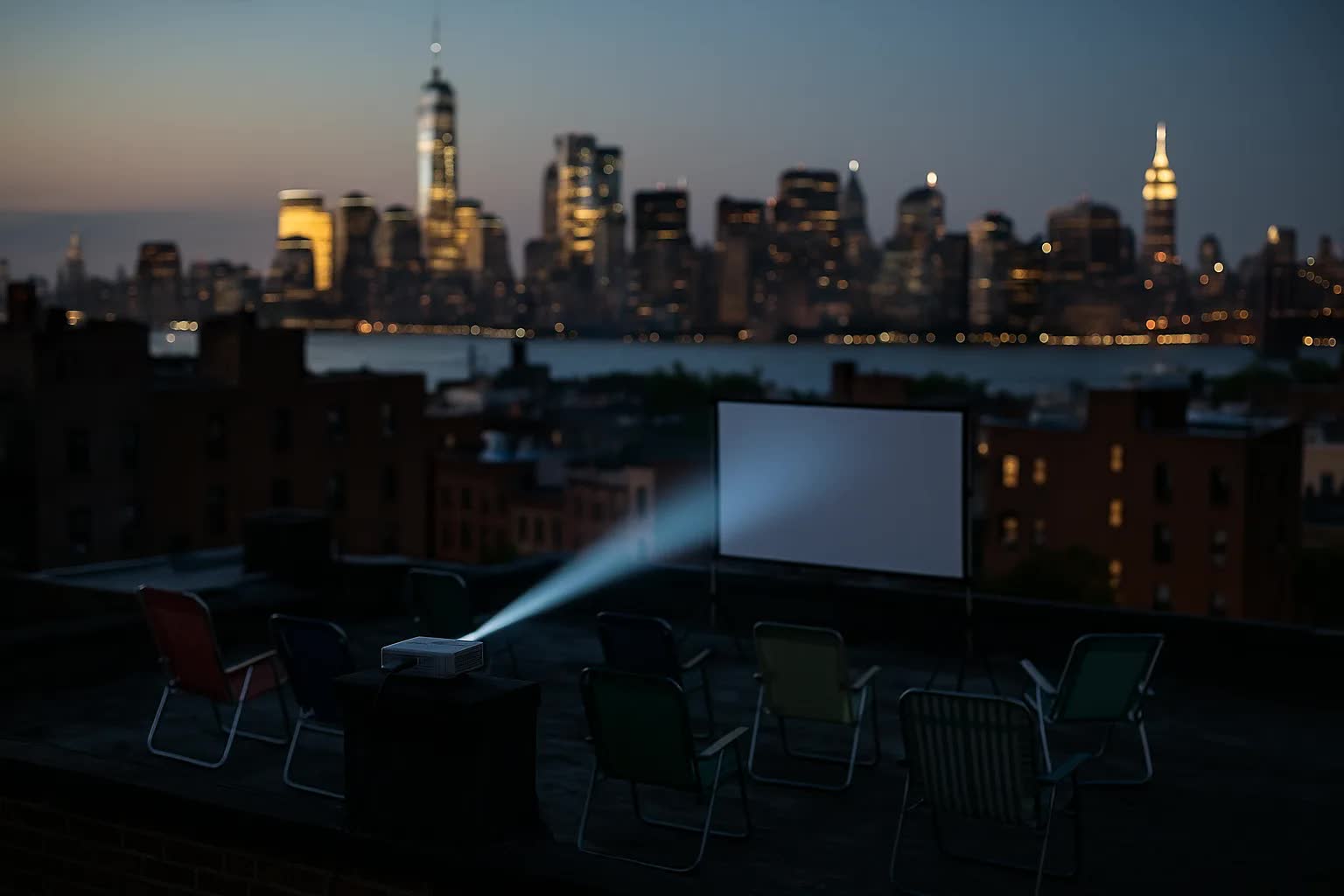
On a warm June evening in Williamsburg, the ritual feels improbably familiar: neighbors queue at a food cart on Bedford Avenue, someone unfurls a blanket on a rooftop overlooking the Williamsburg Bridge and a scratchy projector roars to life as the credits roll. What was improvised at the height of the pandemic — pop-up screenings in laundromats, converted parking lots and makeshift rooftops — has hardened into a new layer of Brooklyn culture, with independent organizers turning seasonal series into year-round fixtures from DUMBO to Sunset Park.
The shift began in plain view. When theaters shut in March 2020, small event producers spotted empty real estate: laundromats with rear courtyards, forsaken parking lots behind strip malls on Atlantic Avenue, even the flat roofs of turn-of-the-century walk-ups near the Gowanus Canal. Equipment that once belonged to art-school kids — 35mm projectors, inflatable screens, battery-powered sound systems — suddenly became the province of entrepreneurs and neighbors who wanted to salvage communal experience from isolation.
"We started with a rooftop on Flushing Avenue because the landlord wanted the place lit up and people to feel safe outside," said Marisol Vega, founder of Skyline Screens and a former community organizer. "It was about claiming space where people could gather without the bar tabs or the VIP ropes. Audiences wanted cinema that felt like theirs again, and the buildings we worked with wanted life back on their blocks."
Spin City Laundromat on Bedford Avenue became one such nucleus. "Our washers were quiet for months; projectors were louder than the spin cycle, but it brought people back into the neighborhood," said Jonah Adler, owner of Spin City and co-founder of the Wash & Watch Collective. "We ran three nights a week at first, then seven, and what surprised everyone was how many of those audiences were older residents who’d never go to a midnight screening downtown. It became intergenerational, fast."
The numbers underline that surprise: by the end of 2024 there were 38 rooftop and open-air screening series operating in Brooklyn, up from six in 2019; 14 of those had introduced winter programming and identified as year-round by early 2025. Organizers reported an average attendance of roughly 110 people per screening and a cumulative attendance of about 45,000 across the borough in 2024. Median seasonal revenue for small producers was about $42,000, with ticket prices typically ranging from $12 to $18 and concessions accounting for nearly 30 percent of on-site income.
Neighborhood economies have adapted. In Park Slope and Prospect Heights, pop-up bars source beer from nearby microbreweries; in Bay Ridge and Sunset Park, food trucks and bodega partnerships have turned screenings into late-night marketplaces. A rooftop behind a furniture warehouse off Atlantic Terminal rents its space to LotLight Cinema for weekend series, while a parking lot adjacent to the Brooklyn Navy Yard hosts curated international-film nights that feed a modest summer tourism trade.
Curation has become a point of distinction. Program directors favor queer cinema in Bushwick, restored 16mm nights in DUMBO and local-filmmaker showcases in Bedford-Stuyvesant, often co-producing with community organizations like the Prospect Screens Collective. "We try to balance crowd-pleasers with riskier programming; putting a new filmmaker next to a classic gets people talking," said Isaiah Carter, cultural programmer at Prospect Screens. "It’s about creating a season that reads like the neighborhood — layered and slightly unpredictable."
The rebound has not been frictionless. Organizers contend with zoning and noise complaints, the expense of winterization — temporary domes and heated seating add up — and ongoing insurance hurdles. "This is a new regulatory frontier for a lot of us," said a Department of Buildings compliance officer who asked not to be named. "We want gatherings to be safe, but the rules were not written for pop-up cinemas on rooftops and behind laundromats, so there’s a lot of catch-up work between city agencies and organizers."
Still, the cultural and economic impact is measurable at the block level. Lucia Mendes, chair of the Prospect Heights Community Arts Council, said her group tracked vendor revenues and informal job creation tied to screening series. "A little series can buoy a food cart operator through the slow months and create part-time gigs for projectionists and stagehands," Mendes said. "At the same time, boards are vigilant about equity; we negotiate sliding-scale tickets and charity nights so the culture doesn’t cater only to newcomers."
Organizers and building owners say the next phase is consolidation rather than expansion: investing in hybrid indoor-outdoor permits, winter-ready infrastructure and sustainable energy solutions like solar-charged projection rigs. "We’re forming a small coalition to help standardize permits and share equipment," Vega said. "If rooftop cinema is going to be part of Brooklyn’s year-round cultural calendar, we want it to be resilient, accessible and rooted in the neighborhoods that made it possible."