How Chinatown Clinics Are Using Mobile Translation Tools to Improve Telemedicine
Local providers adopt AI-powered interpreters to expand access for Mandarin- and Cantonese-speaking patients.
By Marcus Thompson · January 18, 2026 · 4 min read
On a chilly January morning on Mott Street, between the neon signs of herbal shops and the steam rising from corner dumpling stalls, clinicians at several Chinatown clinics were finishing back-to-back telemedicine appointments with patients who speak little or no English — without a human interpreter on the line. Instead they relied on smartphones, earbuds and AI-powered mobile translation tools that render Mandarin or Cantonese into live captions and synthesized voice in near real time, a shift that providers say is making virtual care more practical for immigrant communities across Lower Manhattan and beyond.
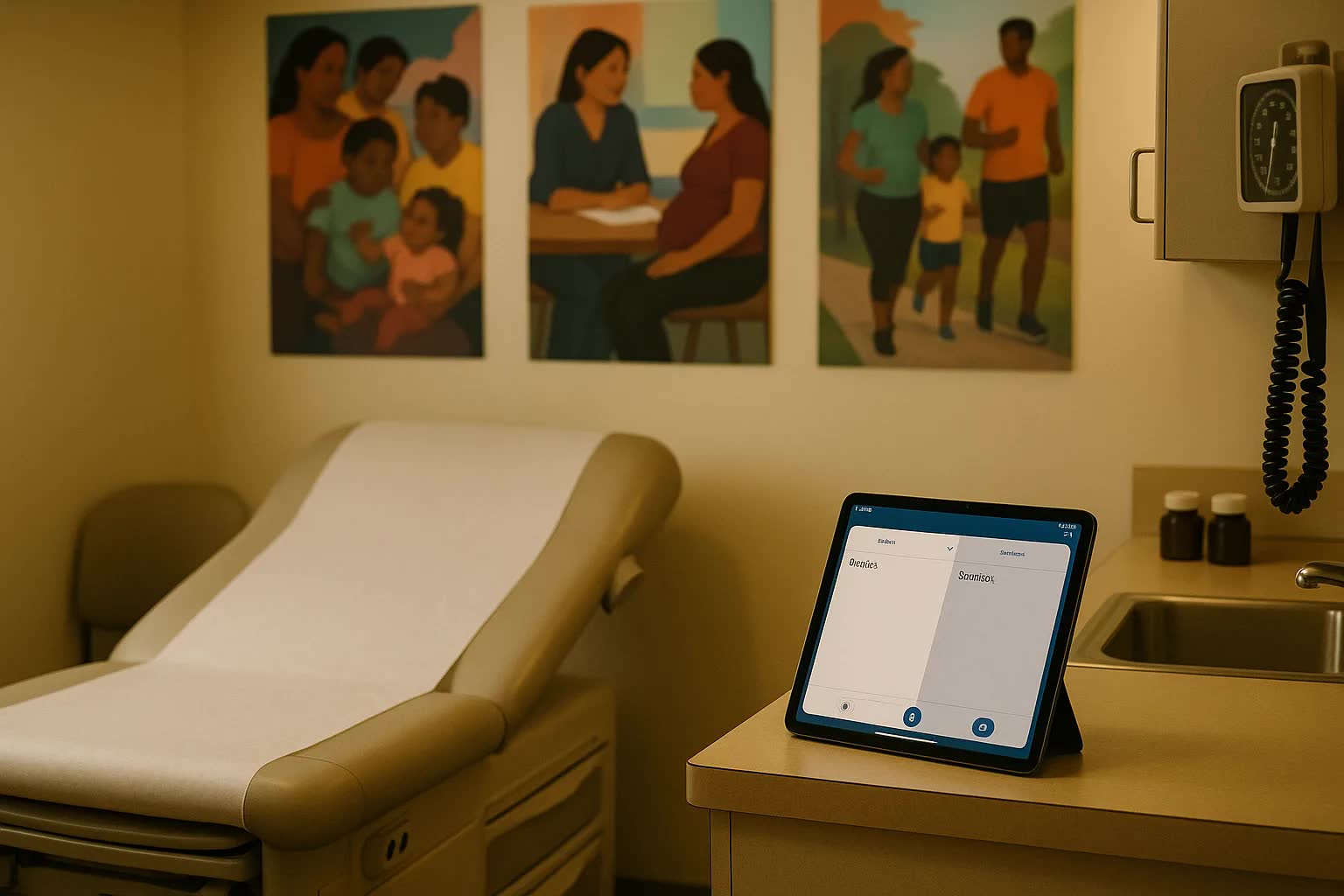
The new generation of interpreter apps — products with names like LinguaBridge and HuaTalk used in the pilot — do more than transcribe. They sync with secure video platforms, allow clinicians to flag medical terms, and deliver line-by-line playback so family caregivers can check what was said afterward. Tablets in clinic lobbies, offered alongside paper intake forms translated into Chinese, give patients the chance to practice the apps with bilingual staff before starting a telehealth visit; the goal is to reduce confusion and speed clinical workflows for routine chronic-care checks, medication reconciliations and mental health follow-ups.
“For years we relied on three-way calls or on-demand telephone interpreters that arrived late or dropped the connection,” said Dr. Mei Lin, medical director of the Chinatown Health Collective, which operates clinics on Canal Street and Division Street. “Now we can have an accurate live interpretation while keeping the visit private and on our own secured platform. It’s not perfect, but the difference in patient comfort and clinical detail is obvious.”
Adoption has required changes to scheduling and staff roles. Telehealth coordinators train front-desk workers to launch the interpreter app and pair patients’ phones with clinic tablets; they also teach clinicians how to correct phrases on the fly and log translations into the electronic health record. “We used to spend 10 to 15 minutes arranging a human interpreter for every routine diabetes check,” said Carlos Rivera, telehealth coordinator at Lower East Side Family Clinic. “Now we save that time for counseling and actually listening to the patient, and we use human interpreters selectively for complex cases.”
Early data from a six-clinic pilot conducted July through December 2025 show measurable impacts: 4,287 interpreted telemedicine encounters, 68% of them in Mandarin, 22% in Cantonese and the remainder in Fujianese and Hakka dialects; no-show rates for interpreted visits fell from 22% to 14%; clinicians reported having to request a human interpreter in 7% of appointments; and internal audits found that machine-assisted interpretation matched clinician-approved translations in 92% of reviewed cases. The pilot, funded by a $350,000 grant from the City Health Innovation Lab and supplemented by a $100,000 contribution from the nonprofit Asian Health Fund, also estimated average interpreted visit costs at $4.20 for app-based interpretation versus roughly $48 for telephone-based human interpreters.
Patients and caregivers say the tools can be liberating. “My mother was scared of telemedicine because she doesn’t speak English,” said Eunice Li, 52, who lives on Eldridge Street and helps her 78-year-old mother manage congestive heart failure. “When we used the app, she could see the words and hear them in Cantonese, and she could repeat what the doctor said. She felt more in control. After the visit she said, ‘I understand.’ That is huge.”
Still, clinicians caution about limits. AI models sometimes stutter on regional idioms or medical subtleties, transcription errors can alter medication names, and elderly patients who are not comfortable with smartphones still need human help. Privacy advocates raise questions about how voice data are stored and whether vendors fully comply with health privacy rules. Clinics in Sunset Park and Flushing that have begun using the apps insist on encrypted connections and frequently purge local audio files; they also keep a human interpreter on call for mental health evaluations and informed-consent conversations.
The economics have driven interest beyond Chinatown. Clinics that once spent tens of thousands of dollars a year on on-demand interpretation services now see a path to reallocate some funds to community outreach and digital literacy training. Citywide health planners and several local insurers have begun discussions about reimbursement codes that would cover AI-assisted interpretation in telehealth, and several community organizations are offering free workshops at Confucius Plaza and Columbus Park to teach seniors how to use earbuds and tablet interfaces before clinical appointments.
Scaling the system raises practical questions about dialect coverage, quality assurance and equitable access in neighborhoods like Flushing and Bensonhurst, where groups speak a wider variety of regional dialects. Some vendors are adding dialect-specific language packs and offline modes for patients with limited data plans. Clinics say the work also requires stronger community partnerships so that caregivers and local volunteers can bridge the gap for patients uncomfortable with any technology, ensuring that the move to AI does not inadvertently widen existing disparities.
Clinicians and technologists say the next phase will focus on rigorous validation, regulatory guidance and broader rollout: the Chinatown pilot plans to expand to 50 neighborhood clinics across four boroughs by mid-2027, add simultaneous visual aids for medication management and fund a randomized study to compare clinical outcomes with and without AI interpreters. If those studies confirm early gains, advocates hope the model will inform state telemedicine standards and bring more timely, linguistically appropriate care to immigrant communities throughout the city.