How Gentrification Is Rewriting Manhattan's Chinatown
Longtime residents and businesses are wrestling with rising rents and shifting cultural landscapes in one of the city's oldest immigrant enclaves.
By Amina El-Sayed · February 27, 2026 · 4 min read
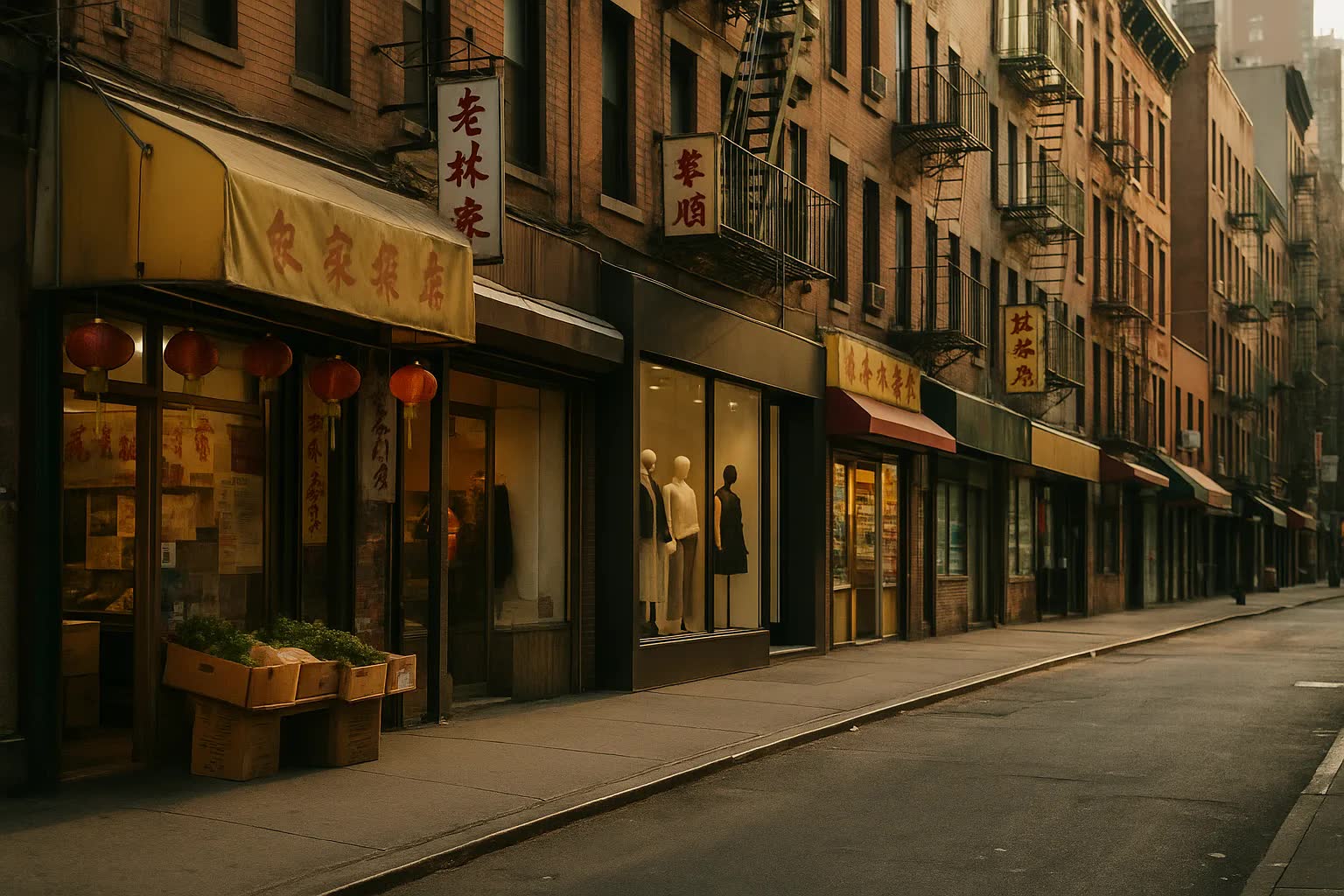
For decades the scent of soy, warm sesame and sizzling scallion pancakes announced Manhattan’s Chinatown long before its red lanterns came into view; on a recent February morning, that familiar bouquet mixed with the new, metallic tang of construction dust as cranes and glass towers rose where family-run shops once lined Canal, Mott and Pell streets, a visible sign that gentrification is rewriting one of the city’s oldest immigrant enclaves.
Chinatown, which grew around the docks and the Lower East Side in the late 19th and early 20th centuries, has been a dense tapestry of family businesses, social clubs and elder centers that anchored new arrivals from Guangdong and later Fujian and other provinces; today those institutions are under pressure from escalating commercial rents, new luxury housing projects edging east from SoHo and creeping tourism that treats authentic markets as backdrop rather than neighborhood life.
Walk past Columbus Park on a weekend and you still find elders playing mahjong beneath sycamores and vendors selling herbal teas, but head two blocks south to Canal and Baxter and you’ll see glass-fronted fitness studios and a cocktail bar that replaced a 30-year karaoke parlor; longtime tailors like Moonlight Tailor, which sat on Mott Street for 42 years, shuttered last spring and its space is now occupied by a boutique that advertises “curated Asian-inspired goods,” a phrase that rankles residents who see it as cultural packaging.
“We are not a weekend theme park,” said Mei Chen, co-owner of Golden Pagoda Bakery, which has operated on Pell Street for 28 years. “My rent went up 60 percent in three years. We had to cut staff, shorten hours and we still can’t compete with landlords who prefer one short-term lease over an owner-operator who keeps the neighborhood fed.”
The numbers help explain why. Between 2016 and 2025, commercial rents on key corridors such as Canal and Mott rose an estimated 72 percent, according to a neighborhood retail study produced by the Chinatown Preservation Coalition; residential median rents in a three-block slice between Worth and Canal climbed from about $2,300 a month in 2016 to roughly $3,200 in 2025, and city permits show at least 230 small-business closures in Manhattan’s Chinatown during that period, while new developments added an estimated 1,400 luxury units within a half-mile radius of the neighborhood.
“Evictions are happening in plain sight,” said Ramon Ortiz, executive director of the Lower Manhattan Tenants Union. “We’re seeing buyouts, harassment and no-fault evictions that push elders and working families out. The displacement is not just economic—it’s cultural erasure. If the city doesn’t act to preserve small-business leases and apply community-based zoning, Chinatown will become a curated destination, not a home.”
City agencies and community groups have proposed a mix of responses: a Small Business Stabilization Fund that would subsidize rents for legacy merchants, a proposed Cultural Corridor designation focusing on Canal Street and parts of the Lower East Side, and preservation covenants for buildings with long-standing community uses. But zoning experts say enforcement and political will will determine whether those protections move beyond pilot programs; a senior planning official who requested anonymity described the proposals as a “first step” and warned that funding and legal authority remain barriers.
The cultural fallout is palpable in festivals and in daily life. Chinese New Year still draws lion dancers and throngs to Chatham Square and the thoroughfares near Sara D. Roosevelt Park, but organizers note fewer parade contingents from traditional family-run groups and more corporate sponsorships and branded booths. Young residents who grew up in the neighborhood say their children no longer picture Chinatown as somewhere they can afford to live, and elders mourn the loss of long-time pharmacies and inexpensive grocery stalls where shopkeepers knew customers by name.
At the same time, new arrivals bring energy of their own, opening artisanal tea rooms, design studios and co-working spaces that cater to remote workers who value proximity to downtown. That shift has produced uneasy alliances: some community activists partner with socially minded developers who pledge to include affordable commercial units, while others accuse any deal with developers of legitimizing displacement. Dr. Linh Ho, an urban sociologist at Hunter College who has studied immigrant neighborhoods, said, “Gentrification is not only about prices; it’s a reconfiguration of social infrastructure, networks and language. Preservation requires uplifting the institutions that make a neighborhood what it is, not only saving facades.”
Neighbors, shopkeepers and advocacy groups say the coming months will be decisive: the city has scheduled a public hearing this spring on a proposed Canal Street Cultural Corridor, and several coalitions plan to launch a petition for a Small Business Right-to-Remain ordinance; if those measures pass, they could slow the pressure on mom-and-pops and create avenues for long-term leases tied to cultural uses, but if they fail, the next wave of storefronts could further tilt the balance toward luxury consumption, leaving Chinatown’s future to be written by developers and visitors rather than the families who built it.