How Jersey City Markets Became Cultural Crossroads
Immigrant-run markets blend food, music and late-night commerce to create neighborhood identity amid rapid development.
By Nia Washington · March 22, 2026 · 4 min read
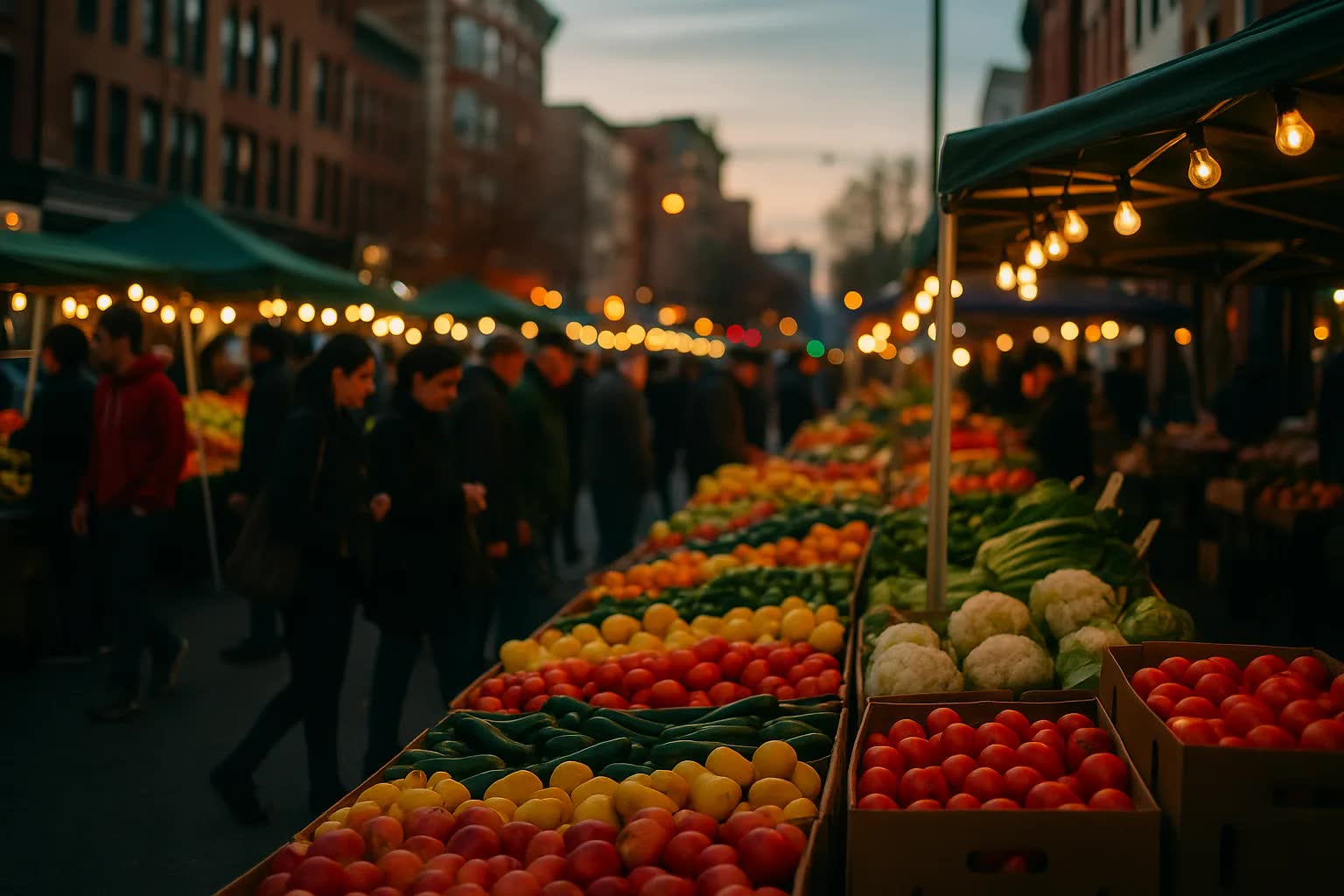
For Manhattan-bound commuters stepping off the PATH at Exchange Place, the sensory crosscurrents of Jersey City arrive long before the skyline: the scent of garam masala and frying plantains, the pulse of a salsa band warming up on a sidewalk, the glitter of string lights over a late-night bodega making shawarma. Those same intersections — where PATH riders, ferry passengers and local residents converge — are where immigrant-run markets have quietly remade parts of Jersey City into cultural crossroads, blending food, music and round-the-clock commerce to anchor neighborhoods even as glass towers rise across the Hudson.
Walk down Montgomery Street toward India Square, or through the narrow lanes around Journal Square, and you’ll find a patchwork of stalls, groceries and open-air eateries that speak to waves of migration: South Asian sari shops rub shoulders with Filipino bakeries and Dominican fruit stands, while a West African grill shares a block with a storefront selling Persian spices. These markets are not frozen tableaux of tradition; they are working enterprises that have evolved into communal stages where cuisines, languages and rhythms are exchanged in real time.
For entrepreneurs like Aisha Malik, who runs Lotus Spice Market on Newark Avenue, the late hours are part of how community is made. "People come by after their shifts on the PATH or after gigs in the Lower East Side; they don’t just want to eat, they want to share music and stories," said Malik, who emigrated from Lahore two decades ago and opened her market in 2014. "Our shop is a place where a tabla player can set up next to a DJ and everyone ends up learning a step or a lyric from one another."
The markets have become venues as much as they are marketplaces, attracting a nightlife crowd that mixes locals with young professionals from Hoboken and Manhattan. Promoters like Marco Rivera, who books nights at the Exchange Place Night Market, say that curating soundscapes — from bhangra and reggaeton to Afrobeat and live jazz — is central to the markets’ appeal. "Food gets people in the door, but the music keeps the block alive until the small hours," Rivera said. "We’re creating a scene that’s recognized across the city now, not just a place to grab a late snack."
The scale of that transformation is measurable. City and independent researchers tracking street commerce counted roughly 450 active street vendors in Jersey City in 2025, up from about 330 in 2016, a 36 percent increase; 22 organized night markets now run on a weekly basis across six neighborhoods. Vendors report that on popular weekend nights their stalls can do between $600 and $1,200 in cash sales, while weekday business averages around $220. Rents in retail corridors near PATH stations rose an estimated 28 percent between 2018 and 2025, even as the number of licensed food vendors increased, underscoring a pattern of intensified microcommerce alongside rapid real estate growth.
Neighborhood specificity is central to how markets shape identity. In McGinley Square, farmers markets that once offered artisanal produce by day shift into Afro-Caribbean music hubs by evening; on Central Avenue in Bergen-Lafayette, a cluster of Salvadoran and Mexican pupuserías have become a late-night anchor for shift workers from nearby industrial sites. Even smaller pockets, like West Side’s leafy streets around Bergen Avenue, have sprouted weekly market nights in summer, turning stoops and storefronts into pop-up stages and communal dining rooms.
That vitality comes with tensions. Longtime grocers and two-dozen informal vendors near Journal Square say rising lease costs and stricter permitting have pushed some to relocate to peripheral neighborhoods such as Greenville and The Heights. "We want to thrive here, but the city’s development incentives often favor luxury housing over small businesses," said Sofia Perez, director of the Bergen-Lafayette Neighborhood Alliance. "If these markets are part of what makes Jersey City livable, policy needs to protect them, not squeeze them out."
City officials say they are trying to strike that balance. "We recognize the cultural and economic value these markets bring, which is why the Office of Urban Markets expanded its nighttime vendor pilot last year," said Elena Kwan, deputy director of urban markets for Jersey City, explaining a program that fast-tracks permits for night activations and subsidizes sound permits for community events. Kwan acknowledged enforcement remains a challenge, noting that the city is rolling out a new coordination unit to mediate between residents, proprietors and developers over noise and storefront use.
Music-makers and vendors insist the markets offer something no zoning plan can manufacture: improvisational community. Tabla player and event co-organizer Amrita Singh described a recent night in Paulus Hook when a Filipino choir joined a salsa band for an impromptu set, drawing a crowd that spilled from Pavonia-Newport into the neighborhood’s pocket parks. "There’s a joy in that collision — people realize their neighbors are the ones making their favorite foods and songs," Singh said. "When policy supports that, you get durable neighborhoods, not enclaves of consumption."
Looking ahead, market operators, neighborhood groups and city planners say the next phase will require creative remedies: community land trusts to secure affordable storefronts, expanded night-market permits that protect public safety without stifling culture, and micro-grants to help vendors invest in soundproofing and refrigeration. As Jersey City continues to evolve, the question will be whether these markets can formalize enough to survive commercial pressure while preserving the improvisational, cross-cultural energy that made them essential in the first place.