How Off‑Broadway Labs Are Incubating New Musicals in Chelsea
Experimental workshops in Chelsea are fast-tracking composers and directors into commercial pipelines with stripped-back productions and audience feedback loops.
By Mei Lin · April 28, 2026 · 4 min read
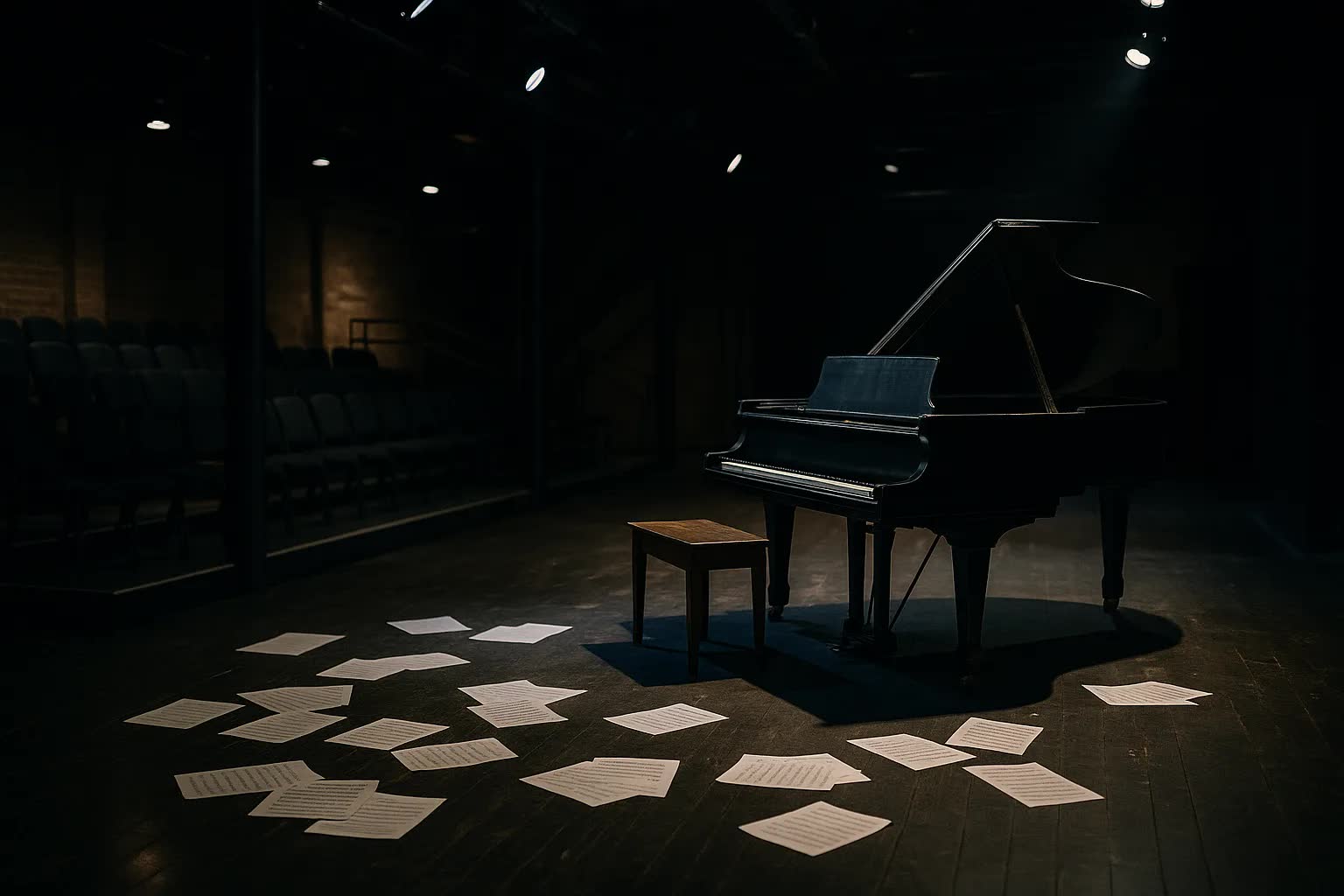
NEW YORK — In Chelsea, between the High Line and Hudson Yards, a compact constellation of Off-Broadway laboratories is retooling how new musicals find their way into the commercial pipeline, favoring stripped-back presentations, iterative audience feedback and a faster route from rehearsal room to paid run; producers and agents now routinely start their scouting along West 26th Street and in converted warehouses on Ninth Avenue rather than at more established uptown venues.
The labs themselves are modest and muscular: former garment lofts reimagined as black boxes, storefront stages on West 28th Street that seat 60 to 120, and a cluster of rehearsal rooms above cafés near Chelsea Market where composers and directors run nightly two-hour readings. Names such as Chelsea Lab Theater, PlayForge Workshop and WireStage — all founded in the last five years — have become shorthand among a new generation of musical-makers seeking speed and flexibility without the overhead of a full-scale production.
Artistic teams stage pared-down versions: a piano and two strings instead of a 20-piece orchestra, suggestive lighting, and actors in rehearsal clothes. That scarcity, proponents say, sharpens the material. "You learn what the show is at its core," said Evelyn Park, artistic director of Chelsea Lab Theater. "If the song works for two people and a piano, it will survive anything else you add later." Post-show talkbacks and online surveys are baked into the process, with dramaturgs collecting notes and reconfiguring scenes within days rather than weeks.
Directors and composers describe the labs as accelerators. Marco Reyes, a director and co-founder of PlayForge Workshop, said the old circuit — long private readings, a single workshop, then years of waiting for a producer — has been supplanted by a rhythm that compresses development. "We can workshop, workshop again with a new cast, and invite three commercial scouts all within a six-week window," Reyes said. "That momentum matters when funding windows and commercial calendars are tight."
The numbers back up the sense of momentum: eight Chelsea-based labs reported hosting 42 distinct musical workshops between 2022 and 2025, with an average audience of 110 people per run; 15 of those projects attracted commercial interest that led to paid off-Broadway transfers or extended productions elsewhere in Manhattan; average workshop budgets were roughly $75,000, and typical ticket prices for lab runs ranged from $20 to $40, compared with $100-plus for full-scale productions.
The proximity to transit and to midtown commercial producers has changed behavior on both sides. Producers say it's easier to make a spontaneous commitment when a script can be seen twice in a week on West 24th Street and seen again in a different incarnation on the High Line's fringe. "We started coming down from midtown to Chelsea three nights a week during development season," said Isla Merritt, a Manhattan-based commercial producer who asked not to be named for attribution. "It reduces the risk — you can see how audience responses evolve." A senior MTA planner who requested anonymity said evening ridership patterns around 23rd Street and 28th Street have ticked up since 2023, enabling later curtain times and more flexible rehearsal scheduling.
The labs have also changed the economics of discovery. Small-scale runs lower the bar for investor involvement and allow commercial backers to commit smaller sums earlier; an investor can underwrite a 12-performance run for $30,000 and gain a close look at a show's trajectory before a larger commitment. That has prompted a greater diversity of backers — from restaurant owners with ties to Chelsea to boutique investment groups focused on cultural projects — to show up at talkbacks and private rehearsals in storefront venues off Seventh Avenue.
But the model carries trade-offs. Workshop fees rarely approach union scale for extended runs; musicians' and actors' unions continue to press for higher minimums during development, and several labs negotiate bespoke agreements to keep costs contained. Rising rents in Chelsea and the development pressure spilling over from Hudson Yards are squeezing smaller operators: two rehearsal spaces on West 25th converted to condos last year, and one storefront theater has a lease renewal pending with a 40 percent increase, according to lab directors and local lease agents.
There are also early success stories that underscore the potential: River of Ink, a chamber musical developed over three lab cycles at WireStage and PlayForge, moved into a 12-week commercial engagement in midtown after it closed in Chelsea, raising $1.15 million from a mix of small private donors and a commercial investor group; another piece, Newton & Nightlight, was optioned for a regionally produced summer run with revisions informed directly by lab talkbacks. These examples have helped crystalize the labs' brand as a de-risker in a cautious marketplace.
Looking ahead, lab leaders say the next stage will be formal partnerships with midtown producers and streaming platforms that want a pipeline of stage-ready content, and they plan to expand outreach to borough neighborhoods beyond Manhattan to diversify voices and audiences; for Chelsea, the labs aim to remain tight and nimble, preserving their role as rapid-fire incubators even as they increasingly feed larger stages and influence how new musicals are financed, staged and streamed in the seasons to come.