How Sensors Under Buses Could Predict MTA Service Disruptions
A pilot in Staten Island places vibration and GPS sensors on buses to feed a predictive maintenance platform.
By Rashid Karim · April 22, 2026 · 4 min read
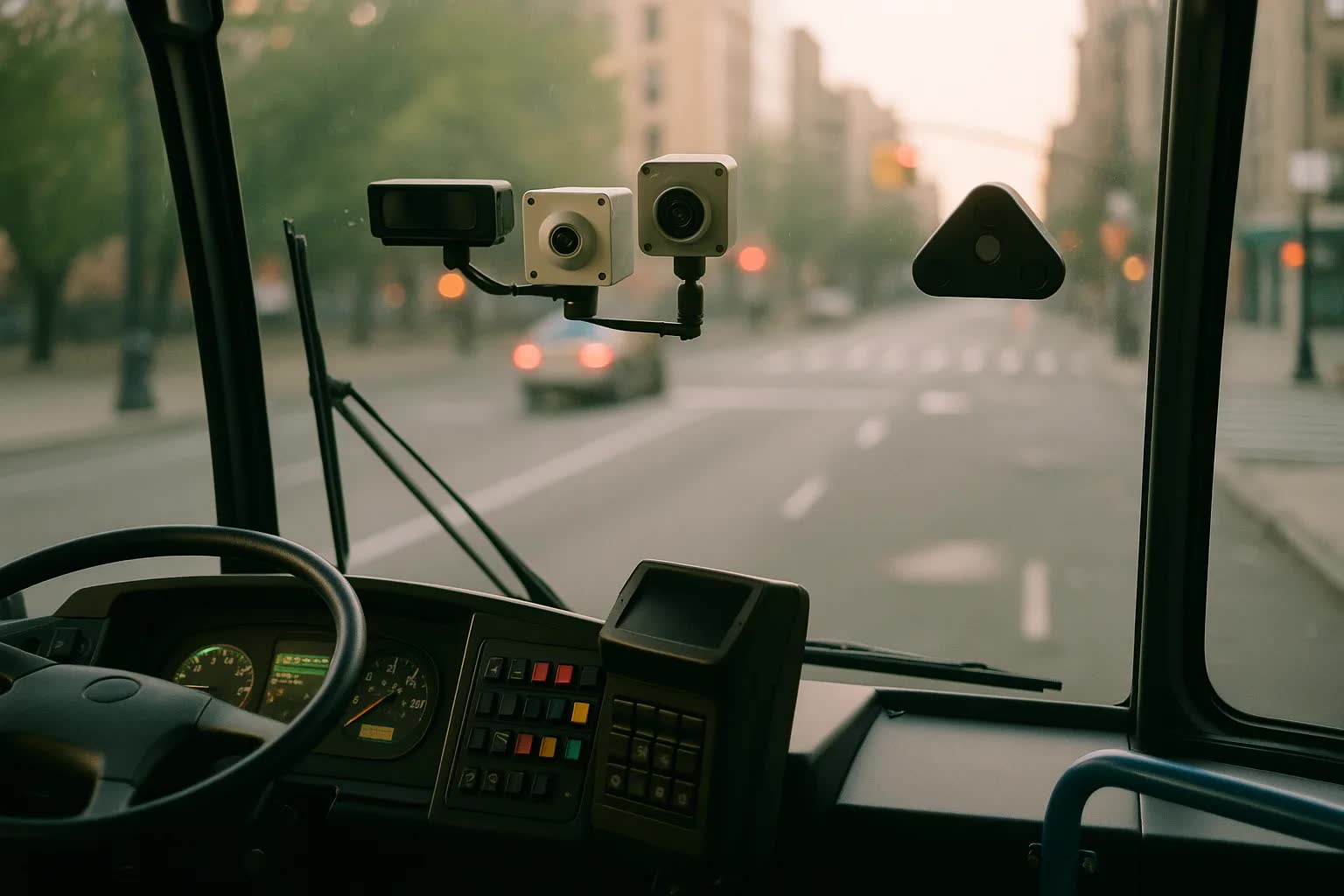
NEW YORK — A pilot program on Staten Island is putting vibration and GPS sensors under city buses in a bid to predict mechanical failures before they cascade into MTA service disruptions, a move transit officials say could transform how New York manages its aging fleet from the St. George Ferry Terminal to the neighborhoods along Hylan Boulevard.
The devices, mounted in weatherproof pods near axles and wheel assemblies, record high-frequency vibration signatures, acceleration patterns and precise location traces, then feed that data over cellular networks into a cloud-based predictive maintenance platform. Engineers say the combination of on-board edge processing and centralized machine learning lets crews detect anomalies that human inspections can miss between shifts.
Launched in March, the pilot covers buses operated out of the Clove Road and North Shore depots and includes service on five routes that run through St. George, Tompkinsville, Port Richmond and parts of Mariners' Harbor. The project is a collaboration between the MTA Staten Island Bus Division, a private vendor, TransitSense Technologies, and researchers at the CUNY Urban Tech Lab who helped develop the analytics models.
"The sensors let us see problems before they strand a bus or delay the ferry connection," said Maria Delgado, director of fleet technology at TransitSense Technologies. "We can flag bearing failures, brake anomalies and wheel defects by signature rather than waiting for a breakdown report, which changes the maintenance equation from reactive to proactive."
In concrete terms, the pilot outfitted 120 buses across four depots and is sampling vibration at 200 hertz, collecting roughly 2 terabytes of telemetry a month. MTA engineers report an 18 percent drop in on-route mechanical failures in the first six weeks compared with the same period last year and a reduction in average time-to-repair on flagged defects from 5.6 hours to 3.2 hours during the trial window.
The analytics platform was trained on six years of historical maintenance logs and paired vibration samples, allowing it, for example, to correlate a rising harmonic at a particular frequency with imminent bearing failure. GPS stamping then maps the signature to precise street segments — crews can now see if an anomaly occurs consistently on Richmond Terrace west of Old Place Road or on Bay Street near the St. George Ferry Terminal, narrowing down where to concentrate inspections.
"We can finally prioritize crews where they'll do the most good," said a senior MTA planner who requested anonymity because the pilot's findings are still being reviewed ahead of a board briefing. "Instead of chasing random breakdowns across the borough, we send a targeted inspection team to a route segment that shows deterioration and fix it before a bus goes out of service."
The technology is not without hurdles. Field teams have had to develop new mounting brackets to shield sensors from road salt and puddles during winter, and initial models produced false positives tied to pothole impacts rather than mechanical wear. Local union leaders have also demanded clarity on how predictive data will be used in scheduling and safety inspections. "We're all for safer buses, but this has to protect jobs and be transparent," said Jamal Pierce, president of Staten Island Transit Workers Local 342.
For riders and small businesses in neighborhoods served by the pilot, the changes are tangible. Commuters who regularly catch the Staten Island Ferry at St. George say they have noticed fewer sudden bus removals from service during evening rush hours, and the owner of a deli on Richmond Terrace near Tompkinsville said drivers are spending less idle time waiting for relief buses, improving on-time departures for short hops to the terminal.
City and transit officials say the pilot will inform a possible systemwide rollout. The initial phase was funded with a $3.2 million package of city and private funds; scaling to the entire MTA bus fleet of roughly 5,000 buses would likely cost in the neighborhood of $45 million to $60 million for hardware, software and integration, according to internal estimates. If the Staten Island results hold, the agency plans to propose expansion to Brooklyn and Manhattan corridors and to begin exploratory tests of similar wheel and vibration sensing on commuter rail and selected subway rolling stock in 2027.