How Summer Street Festivals Are Rebuilding Community Ties
Organizers say smaller, hyper-local events are replacing large parades as residents seek safer, more accessible public celebrations.
By Rashid Karim · April 10, 2026 · 4 min read
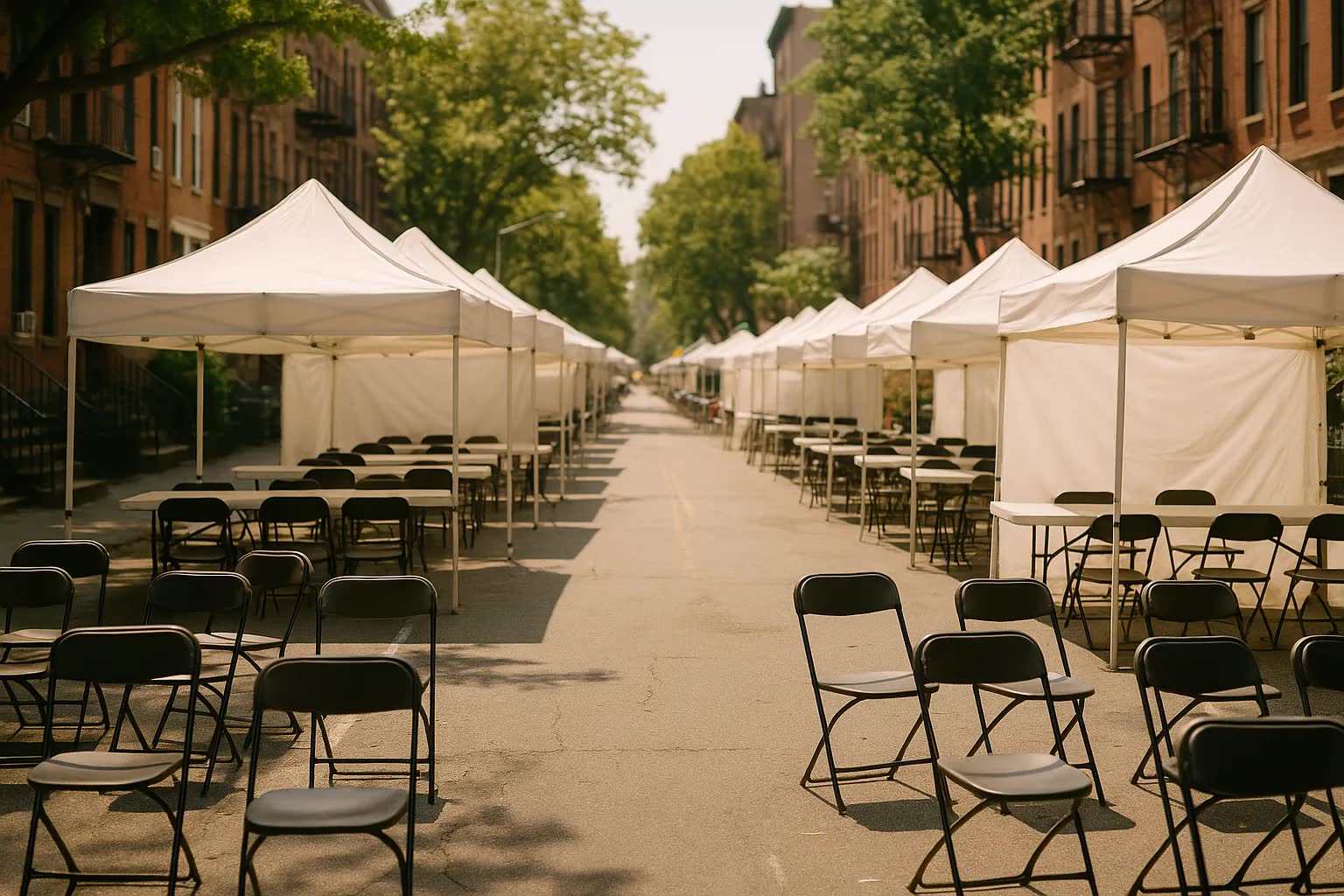
NEW YORK — On a warm Saturday in late June, a stretch of Orchard Street in the Lower East Side was closed to cars and filled instead with folding chairs, hand-painted signs and the smell of channa and grilled corn as neighbors greeted each other three deep on the sidewalks; the scene is becoming the new normal across the city as smaller, hyper-local street festivals replace the massive parades that once defined summer in New York, organizers and residents say, reconnecting disparate blocks and making public celebration feel safer and more accessible for seniors, parents with strollers and recent immigrants.
After years of costly logistics and heightened security at large processions, community groups have shifted to block-by-block gatherings that put programming, food and arts directly in the hands of residents. Instead of a single festival that closes multiple neighborhoods and requires police escorts, these mini-fairs often last a few hours, employ volunteers and spread across several Saturdays. The change has been especially visible in neighborhoods that saw intense disruption during the pandemic: Jackson Heights, Crown Heights, Greenpoint and Washington Heights now host recurring events tied to local churches, tenant associations and cultural groups.
Marisol DeLuca, director of the East Village Street Arts Collective, said the pivot was partly pragmatic and partly philosophical. "We realized residents wanted something they could walk to instead of traveling across boroughs, and they wanted events that reflected their block's culture," DeLuca said. "Our priority is accessibility — ramps, seating, signage in multiple languages — and that changes how people experience public space. People stay longer when they feel safe and welcome." The Collective now runs nine weekend pop-ups between Houston and Delancey Streets.
Citywide numbers, compiled by a coalition of neighborhood organizers and a civic research nonprofit, illustrate the shift: the city issued roughly 1,250 street-closure permits for large-scale events in 2018, compared with 430 in 2021 at the height of pandemic restrictions; by 2025, permits for smaller, neighborhood-focused festivals rose to about 880. Average attendance at hyper-local events hovers near 700 people, versus tens of thousands at marquee parades; the average vendor fee has fallen to $40, while city overtime and sanitation costs per event have dropped by an estimated 60 percent. The data show concentrated growth in Queens, northern Brooklyn and sections of the Bronx.
The economics are felt block by block. At a recent Bedford-Stuyvesant fête on Fulton and Marcus Garvey Boulevard, a pop-up fruit vendor said morning sales had tripled compared with an ordinary Saturday; a salon owner two doors down closed early to greet customers and reported a 20 percent spike in appointments the following week. Jamal R. Bedi, chair of the Queens Neighborhood Festivals Coalition, said small festivals redistribute economic benefit. "When you decentralize, Mom-and-Pop businesses on every avenue see foot traffic that used to only flow through main commercial corridors," Bedi said. "It stitches commercial life back into residential blocks."
City agencies have adapted to the new model with mixed success. The Street Activity Permit Office has piloted a streamlined application for events under 500 people, and the Department of Transportation has introduced temporary curb extensions and low-cost barricades that neighborhood groups can rent. "We're trying to meet organizers where they are, not make them jump through a dozen hoops," said Priya S. Mehta, deputy director of the Street Activity Permit Office. Still, organizers say uneven guidance and last-minute denials remain a problem, and many groups rely on volunteer labor to navigate a maze of city forms.
Beyond logistics, the hyper-local approach has sharpened attention to cultural representation and language access. In Jackson Heights, where residents come from dozens of countries, volunteers now translate flyers into Bengali, Nepali and Pashto; in East Harlem, Dominican and Puerto Rican performers share billing with new Filipino dance troupes. Community cultural centers and mutual aid groups have begun coordinating calendars to avoid overlapping dates and to pool sound systems, tents and child-care volunteers. The result, organizers say, is not only more festivals but more equitable ones that reflect the city's linguistic and cultural patchwork.
Despite the gains, challenges persist. Funding remains tenuous for groups that depend on small donations and a modest city microgrant that rarely covers insurance and sanitation. Noise and space conflicts flare in rapidly changing neighborhoods: in Greenpoint, a small summer fair led to a dispute between longtime residents and new arrivals over amplified music and sidewalk usage, prompting weeks of mediation. Organizers also worry about permit backlogs during peak months and the continued expense of liability insurance for neighborhood associations that lack legal staffs.
For businesses and artists, the micro-festival model has become an economic lifeline and a testing ground. A ceramics maker in Astoria reported doubling sales when a monthly street fair moved outside her studio; a Bronx poet collective used a $600 municipal microgrant to produce a spoken-word stage that now tours block parties in Melrose and Tremont. City estimates suggest that for every $1,000 invested by a neighborhood group, roughly $3,000 to $4,000 in local economic activity circulates back to nearby storefronts, an effect that is most pronounced on weekends when commuter traffic is lower and residents linger.
Looking ahead, advocates and city officials say the trend toward smaller, neighborhood-rooted festivals is likely to continue, with proposals under review to expand microgrant programs, create a digital platform for coordinated calendar planning and pilot longer street closures in residential corridors during summer months. Organizers are optimistic but cautious: building community ties through shared public celebration is both immediate work and long-term practice, they say, and sustaining it will require consistent funding, clearer permitting and continued attention to equity so that New Yorkers in every borough can reclaim their streets week by week.