Hudson River Barge Service Expands to Move Construction Materials Off City Streets
New short-haul barge routes aim to reduce truck congestion and emissions during major Manhattan and Brooklyn building projects.
By Amina El-Sayed · February 19, 2026 · 4 min read
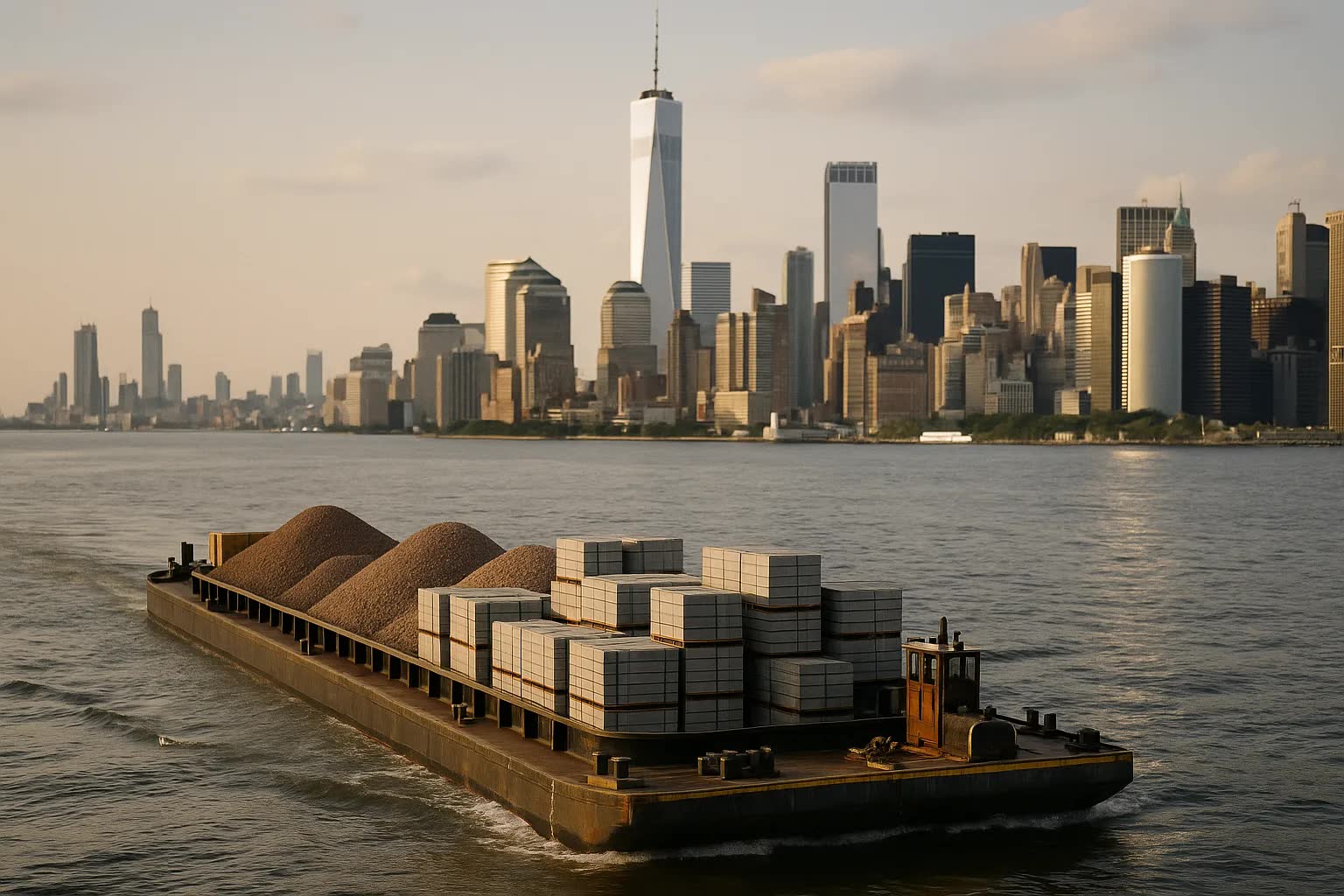
New short-haul barge routes launched this week will begin moving concrete, steel and excavated soil off city streets for several major building projects across Manhattan and Brooklyn, a move city officials and developers say is intended to ease truck congestion along 11th Avenue, reduce gridlock around the Brooklyn-Queens Expressway ramps and cut pollution in neighborhoods such as Chelsea, Red Hook and Sunset Park.
The pilot, organized by HudsonLink Freight in partnership with the City Department of Transportation and the Waterfront Management Office, will run scheduled shuttles between the Brooklyn Army Terminal in Sunset Park and piers on the West Side of Manhattan, with a parallel route serving Red Hook and the Gansevoort Peninsula near the Meatpacking District.
Officials said the service was designed for short-haul loads — building materials, demolition debris and excess soil — that typically move only a few miles but generate outsized local impacts. HudsonLink’s director of marine logistics, Lydia Ramos, said barges will minimize heavy truck traffic where work is concentrated. "Each barge trip replaces dozens of truck trips through neighborhoods already strained by construction," Ramos said. "We're trying to keep the heavy work out of residential corridors and on to the water where it belongs."
Representatives for major developers behind several Manhattan towers and the city’s ongoing sewer and subway-related excavations in Brooklyn endorsed the plan. Marcus Chen, president of the Brooklyn Construction Alliance, said the barges will also ease pressure on labor and staging sites. "Moving material by barge helps projects run on schedule because it reduces delays caused by truck congestion on Atlantic Avenue and the West Side Highway," Chen said. "That reliability translates into cost savings for contractors and fewer late-night movements through neighborhoods."
The pilot grew out of a series of community complaints and a DOT freight study completed in late 2024 that highlighted choke points where construction trucks cluster — notably the intersection of 23rd Street and 11th Avenue near Hudson Yards and the Red Hook piers around Van Brunt Street. Local business owners and block associations had argued that heavy truck flows damaged sidewalks, polluted air and disrupted deliveries to retail corridors in Chelsea and Dumbo.
Planners said barges will tie directly into temporary onshore transfer sites that contractors must permit for each project. A senior City Department of Transportation planner who requested anonymity to discuss negotiations said permit conditions include off-hour loading windows and acoustic screening at transfer yards on Gansevoort and at Pier 6, and strict routing plans to keep transfer trucks off residential side streets. "This isn't a free-for-all," the planner said. "The agreements specify time, place and how materials move from barge to site, which is critical to winning community trust."
Concrete numbers in the plan underline the scale of the shift: the initial phase is projected to move 120,000 tons of material over 18 months, diverting an estimated 40,000 heavy truck trips from city streets. Each barge will carry roughly 1,200 tons; operators estimate an annual reduction of about 1.8 million truck miles and a cut in carbon dioxide equivalent emissions of roughly 6,500 metric tons compared with the same haul by truck. The pilot calls for an operating window of 6 a.m. to 10 p.m. for transfers, with overnight moves permitted only for emergency work and with community notification.
Environmental groups cautiously welcomed the initiative while urging stronger city oversight. The East River Conservancy and a coalition of neighborhood associations praised the potential air-quality benefits in low-income neighborhoods such as East Harlem, Sunset Park and parts of the Lower East Side, but said they will monitor diesel use at transfer yards and require stringent anti-idling enforcement. A spokeswoman for the conservancy said monitoring stations will be installed near piers and along truck routes to track particulate matter and nitrogen oxides during the pilot.
Not everyone is convinced. Some small businesses and residents in Red Hook have criticized earlier barge projects for creating noisy loading operations and for the traffic that still results from the last-mile trucking between piers and construction sites. Local councilmember allies in northwest Brooklyn have pressed for a permanent management plan, not just a short-term pilot, and have sought commitments for community benefits such as employment for local residents at transfer yards and a neighborhood complaints hotline.
City officials said they will evaluate the pilot on a rolling basis, with monthly reports on truck reductions, emissions data and neighborhood impacts, aiming to decide by late 2026 whether to expand the program to additional routes, including cross-Hudson shuttles to serve projects on the west side of Manhattan and the new development zone around the Harlem River. If successful, planners said, the program could be a model for shifting short-haul freight onto New York’s waterways and reshaping how the city manages construction logistics in heavily built neighborhoods.