Hudson River Ferry Launches On-Demand Service Using Real-Time Passenger Data
A startup operator experiments with flexible routing and short-notice pickups to serve emerging waterfront neighborhoods and weekend beach traffic.
By Omar Haddad · February 14, 2026 · 4 min read
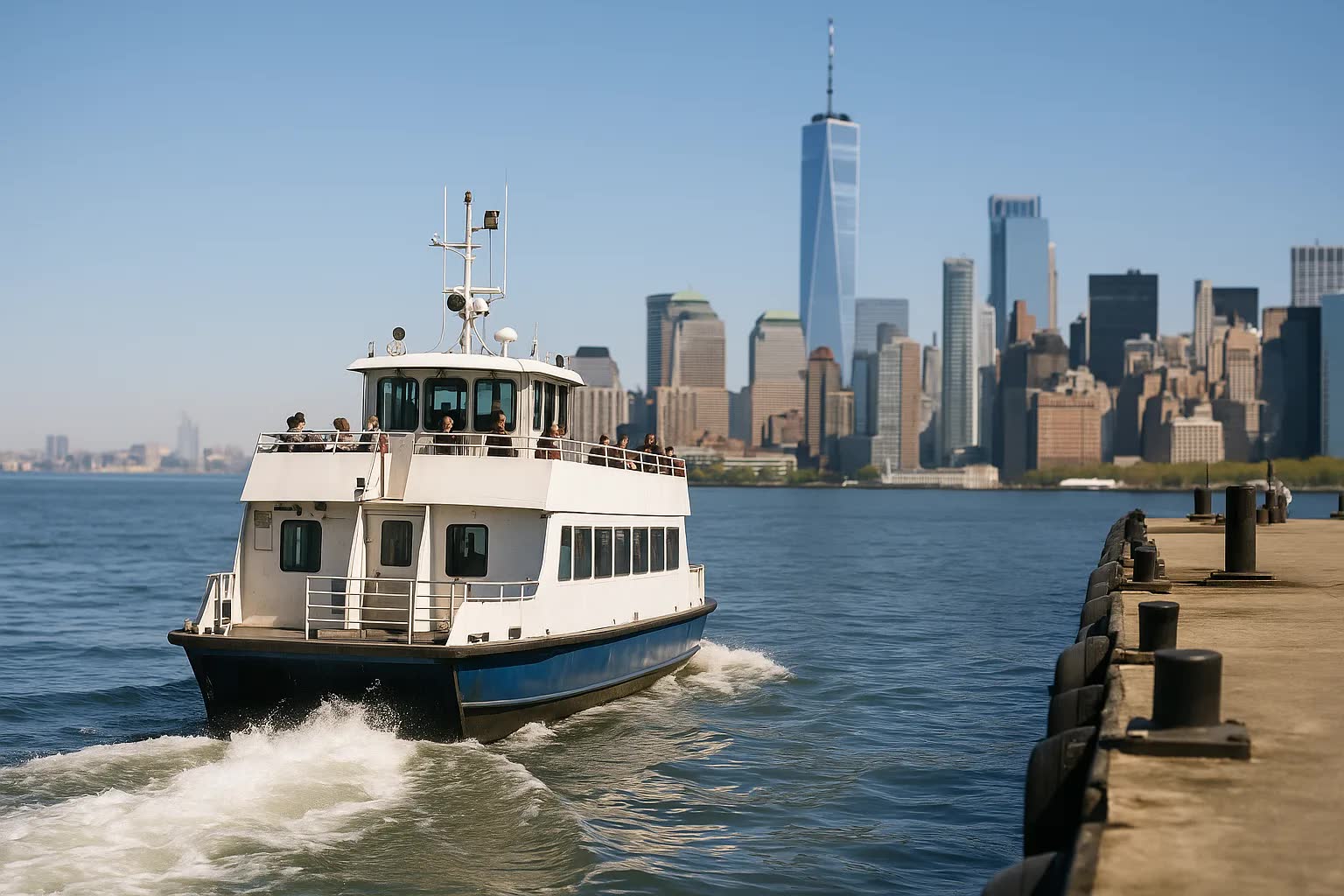
On a blustery Saturday morning near Pier 96, where joggers and delivery cyclists intersect the Hudson River Park esplanade, a new startup ferry quietly rerouted its course to pick up a single passenger flagged down at 57th Street and 12th Avenue and then sped south toward Chelsea Piers, skipping its scheduled stop at West 30th Street. The scene is part of an experiment in on-demand water transit that promises to stitch together emerging waterfront neighborhoods — from Hudson Yards and Chelsea to Red Hook and Greenpoint — with short-notice pickups calibrated by real-time passenger data, a potentially seismic shift for how New Yorkers move along the river.
RiverRun Ferries, a five-year-old operator based in the Brooklyn Navy Yard, launched the pilot this month after winning a city permit to test flexible routing on weekends and weekday evenings. The company’s app aggregates live requests from commuters, tourists and beachgoers, then feeds them into an algorithm developed by BlueWake Analytics, a local maritime software firm. The result is a dynamic manifest: vessels can add or drop stops within a 15- to 30-minute window and alter routes to avoid congestion at Manhattan piers or to meet surges in demand at Astoria or the Rockaways.
Officials and entrepreneurs say the service is aimed at serving parts of the waterfront that traditional scheduled ferries have undercounted. RiverRun’s pilot will include ad hoc calls at Pier 11/Wall Street, the Chelsea Waterside, the 34th Street ferry landing, the Brooklyn Army Terminal in Sunset Park and an experimental weekend connector to the Fort Tilden beach complex. Company executives say the system is particularly focused on weekend beach traffic and the unpredictable flows around new office towers at Hudson Yards and the rapidly developing northern Brooklyn waterfront.
“We designed the platform to behave more like a rideshare on water,” said Marina Chen, RiverRun’s founder and chief executive officer. “Instead of forcing people to plan around fixed timetables, we let the boats flex to where passengers actually are. The data tells us that demand is often clustered in small pockets — a street fair on 9th Avenue, a concert at Pier 17, a service outage on the subway — and we can respond in real time.”
The pilot’s early numbers are tangible: RiverRun is fielding six 75-seat vessels for the trial, with average occupant loads currently at 40 to 55 passengers per trip during weekend peaks. The company reports that average wait times in the pilot areas have dropped from an estimated 22 minutes under a strictly scheduled model to about eight minutes when on-demand routing is active, while trip detours add an average 4.6 minutes to total travel time. RiverRun’s internal projections estimate it can serve roughly 3,000 unique weekend riders across 12 waterfront nodes during the summer pilot, operating at an average fare of $7.50 per ride.
City planners welcomed the experiment as a test case for a more adaptive waterfront transit network, but cautioned that routing decisions must be balanced against broader traffic management and equity goals. “This is the sort of nimble service that could close last-mile gaps, particularly in neighborhoods underserved by the subway,” said Diego Alvarez, deputy director of the Office of NYC Waterfront Planning. “But we will be scrutinizing how pickups are distributed across income and commuting corridors to ensure low-income riders in places like Sunset Park and Red Hook benefit and aren’t sidelined by purely market-driven demand.”
Regulation and safety remain front of mind. RiverRun has been coordinating with the U.S. Coast Guard’s local sector and the city Department of Transportation to ensure flexible routing complies with maritime safety zones and local slip schedules. Company staff say crew training now includes dynamic manifesting protocols and passenger communication drills to handle rapid course changes. The startup also plans to deploy on-board attendants who can coordinate short-notice dockings at piers that are not traditionally used for frequent commercial stops, such as the small ferry slip at Gansevoort Peninsula and certain private landings near the Brooklyn Heights Promenade.
Privacy advocates and transit watchdogs asked questions about the use of real-time passenger data, and RiverRun says it is anonymizing trip requests and aggregating positional data before it is processed by BlueWake’s routing engine. “We never sell personal data and only store location traces long enough to optimize the immediate route,” Chen said. “Our goal is operational efficiency and responsive service, not building surveillance products.” Independent reviewers from the nonprofit Waterfront Transit Alliance will audit the data pipeline during the pilot and publish a report on security and access by the end of July.
Neighborhood businesses say the service could be a boon. At a small seafood stand on Van Brunt Street in Red Hook, proprietor Luis Santiago said weekend ferry riders already swell customers at nearby cafes and piers. “When the boat can stop here on a short notice, people wander down to the shops,” Santiago said. Riders interviewed in Chelsea and Williamsburg noted the convenience of being redirected during disruptions to the A and L trains, and several community board members told city officials they want to see trial windows expanded if the pilot proves equitable and safe.
If the pilot demonstrates durable demand and passes safety and privacy audits, RiverRun hopes to scale its on-demand model across additional Manhattan, Brooklyn and Queens landings next year and to negotiate seasonal connectors to Coney Island and Rockaway Point. City officials say they will evaluate the pilot against ridership data, equity metrics and environmental impact, including potential reductions in car traffic along the West Side Highway during peak leisure hours. For now, the ferry that detoured past 57th Street serves as both a proof of concept and a reminder that New York’s waterfront is still, quite literally, a work in motion.