Hudson Valley Attracts Biotech Startups and Venture Capital Dollars
Former industrial buildings converted to lab space are drawing NYC investors and promising high-paying jobs upstate.
By Hana Kim · March 9, 2026 · 4 min read
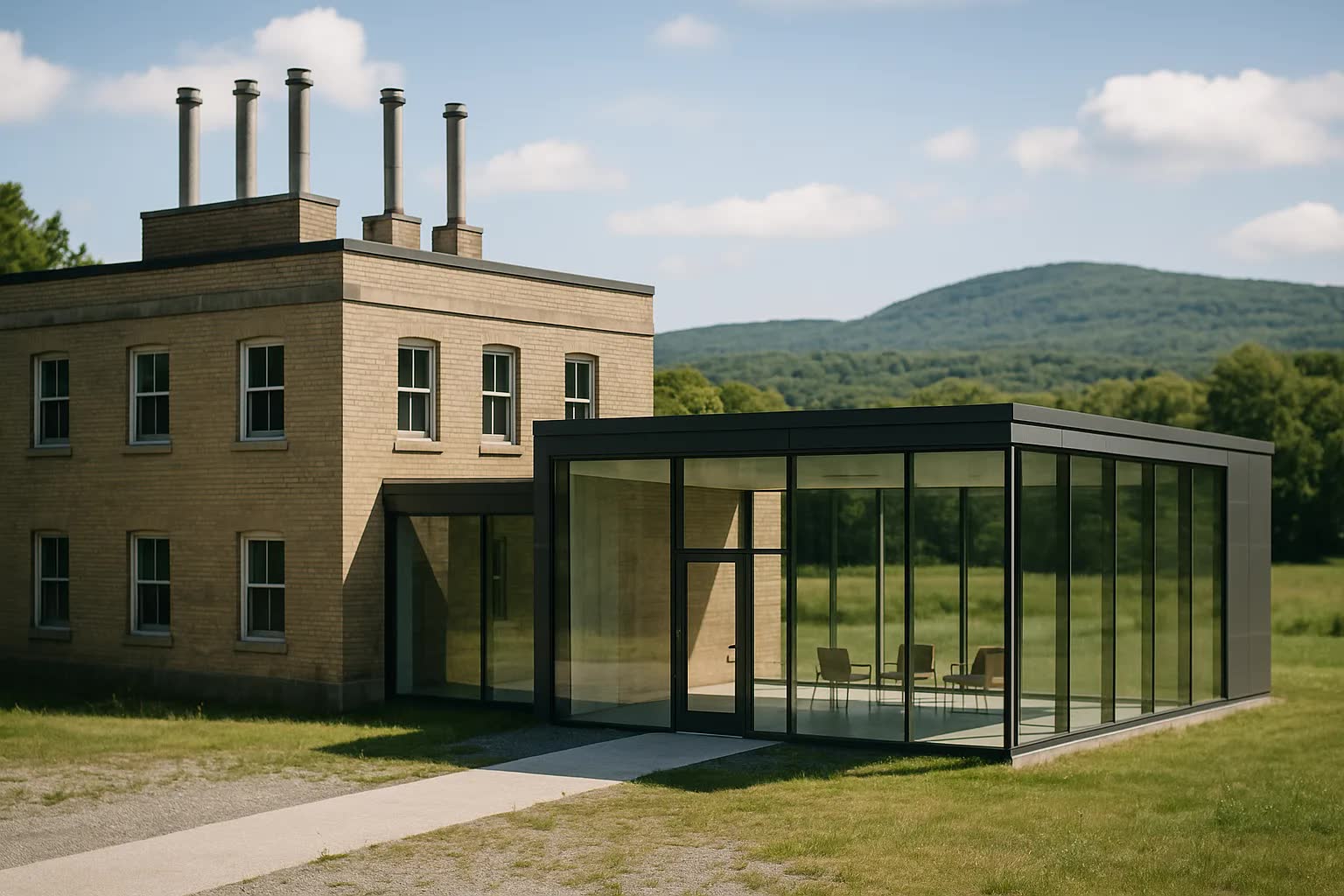
NEW YORK — Venture capital meetings in Chelsea and investor lunches in SoHo are increasingly ending with discussions about lab benches north of the city, as converted brick-and-beam industrial complexes along the Hudson River lure New York City money and promise a new wave of high-paying jobs for upstate communities.
Once-silent manufacturing blocks in Beacon, Kingston and Poughkeepsie now hum with researchers setting up benches and entrepreneurs pitching therapies. Developers say the pattern is simple: cheap, large floor plates; faster permitting; and enough local talent to staff entry-level lab technician roles and senior scientists who can commute from Manhattan. "We started seeing term sheets that assumed Hudson Valley capacity rather than Manhattan scarcity," said Evan Park, managing partner at Ridgeway Capital, which has backed three Hudson Valley startups in the last 18 months.
The repurposing has transformed hulking brick factories — the former Fulton Street Dye Works in Kingston and a 1920s paper mill on Beacon’s Main Street — into wet labs, cold storage and GMP suites. Dr. Lena Morales, executive director of Beacon Biotech Commons, said developers are clipping old skylights, gutting floors for new HVAC and installing clean-room doors to meet biosafety standards. "The talent pipeline has always been here; what's changed is the infrastructure to keep them," Morales said.
Numbers underscore the scale of the shift. Since 2020, developers and investors report roughly $620 million in venture capital directed to more than 60 Hudson Valley life-sciences startups, with approximately 1.1 million square feet of industrial space converted into laboratory and support space across 18 major projects. Local governments and companies say those projects have created about 2,400 jobs so far, with starting laboratory salaries averaging roughly $112,000; typical lab rents in the region run $55 to $75 per square foot compared with $95 to $150 per square foot for comparable spaces in Manhattan.
County economic development offices have helped accelerate conversions with tax abatements, expedited permit reviews and workforce training grants tied to community colleges in Dutchess and Ulster counties. "We wanted to create a pathway for private investment without losing the working-class character of our towns," said Marisol Ortega, senior planner at the Hudson Valley Development Authority. Ortega said programs that subsidize laboratory technician certification have already placed more than 300 local residents in entry-level roles.
From a venture perspective, the proximity to New York-based investors is the draw. "We can visit a facility in Beacon before lunch and be back in Tribeca for an evening investor meeting," said Sanjay Mehta, managing partner at Granite Harbor Ventures. Mehta said his firm is writing larger Series A checks than it would have two years ago because the initial capital buys more infrastructure upstate and accelerates the runway for experimental drugs and biologics.
The rapid change has brought growing pains. Longtime residents and small-business owners in downtown Beacon and parts of Kingston say rising rents, shortages of apartment stock and construction noise have altered neighborhoods. "We welcome the jobs, but we also need affordable housing and more parking for our customers," said Irena Feld, owner of Bread & Steel bakery on Beacon’s Main Street. City officials and developers acknowledge the tension and say new housing projects and transportation upgrades are being planned in response.
Converting old factories into labs is neither cheap nor simple. Developers cite three constraints that enlarge cost and timelines: installation of advanced HVAC and gas delivery systems, compliance with biosafety and environmental rules, and the need for reinforced floors for heavy equipment. "It isn’t plug-and-play; retrofits can run 25 to 40 percent more than standard office conversions," said Thomas Liu, CEO of Hudson Labs Development, which is converting a former garment factory in Newburgh into a multi-tenant research facility with BSL-2 and BSL-1 suites.
City-university connections are being cultivated to keep the pipeline of scientists flowing north. Regional partnerships — informal collaborations between city research hospitals and Hudson Valley colleges and private labs — have led to shared fellowship programs and satellite offices for computational biology teams. Commuters from the Upper West Side, Chelsea and Williamsburg use the Hudson Line and the Beacon and Poughkeepsie stations to reach labs in under two hours, making the region accessible for day trips as well as relocations.
Planners and investors are already talking about the next five years: more conversions, deeper partnerships with training institutions and a focus on building housing that workers can actually afford. "We have an opportunity to scale this cluster responsibly so it benefits long-time residents and new science jobs alike," Ortega said. If the current momentum holds, the Hudson Valley may not just be a weekend escape for city dwellers but a long-term node in New York’s life-sciences economy.