Hudson Valley Drive‑In Concerts Raise Funds for Local Farms
Drive‑in performances at Hudson Valley farms are becoming a hybrid fundraising model that supports agriculture while offering live music.
By Rachel Cohen · January 22, 2026 · 4 min read
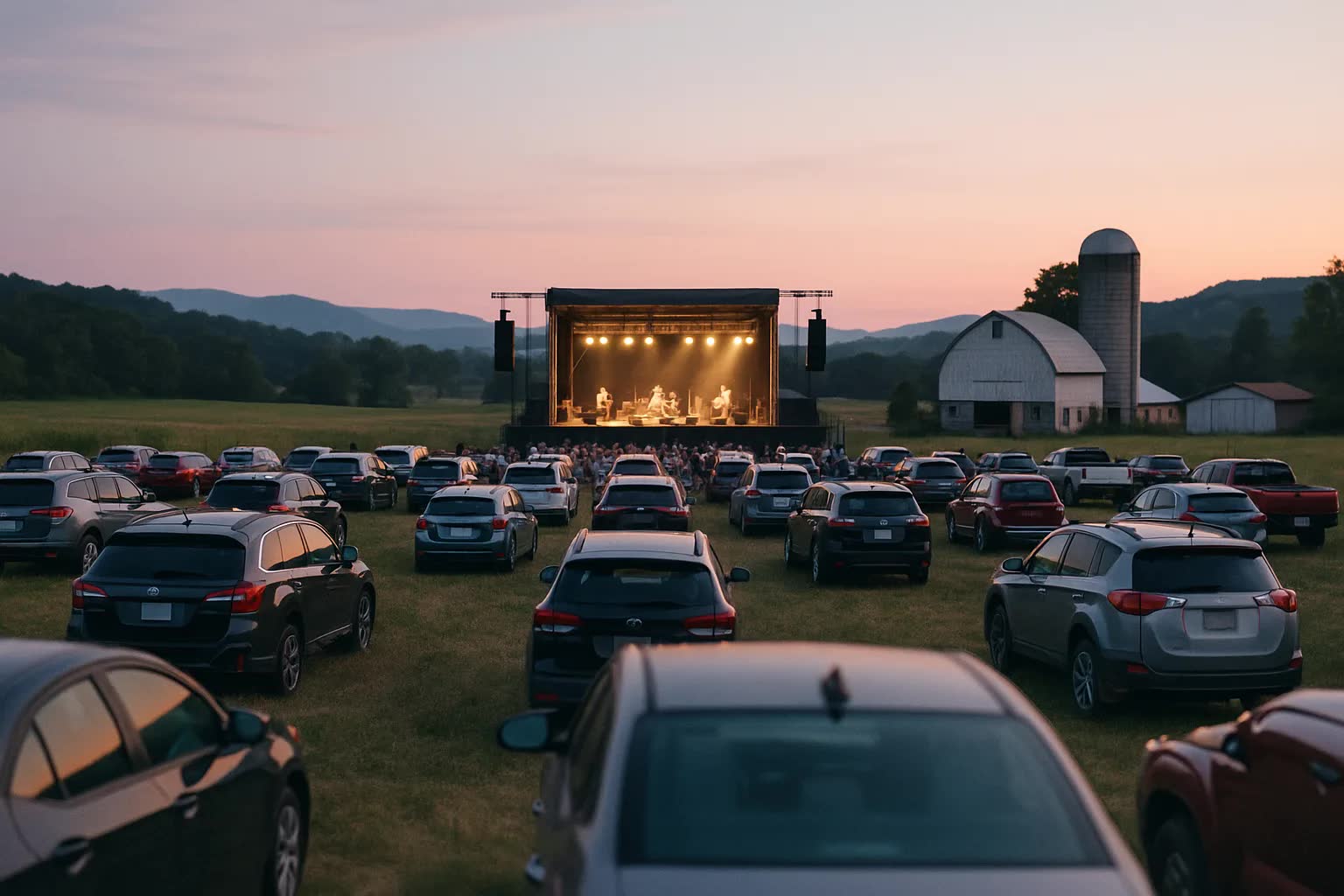
NEW YORK — For many New Yorkers fed up with subway delays and the sameness of indoor livestreams, a Saturday night drive north has become the closest thing to a city escape that still feels like home: drive‑in concerts staged on working Hudson Valley farms that double as fundraising events to keep those farms in business and their fields from being sold to developers.
The concerts, which began as an offshoot of pandemic-era creative survival tactics, now operate year‑round in various forms across Dutchess, Ulster and Columbia counties. Organizers say the combination of ticketed performances, on‑site farm stands and donation drives has become a hybrid revenue stream that supplements traditional farm income and underwrites conservation easements — a finance‑driven answer to rising land taxes and development pressure along the region’s commuter corridors.
In Rhinebeck, Willow Creek Orchards started hosting the shows in 2022 after a particularly bad summer of low berry yields and a steep tax bill pushed owner Eleanor Ramirez to rent her fields for concerts. "We started because we needed to pay the mortgage, not to put on a festival," said Ramirez, owner of Willow Creek. "Now the shows pay for the staff who tend the trees and for the conservation lawyer who helps us keep this land in farming." Marcus Bennett, executive director of the Hudson Valley Ag Alliance, said the model also reintroduces hundreds of urban residents to the economics of food production. "People from Brooklyn and Manhattan finally see where their food comes from and write checks beyond the price of a ticket," Bennett said.
In concrete terms, the impact is measurable. Across 14 farm drive‑in events staged between April and October 2025, organizers report total gross ticket sales of about $420,000 with an average ticket price of $38 per car; average attendance was roughly 135 vehicles per show. On top of ticket revenue, direct farm sales (produce, canned goods and memberships in community‑supported agriculture programs) averaged $12,500 per farm over a season, and participating farms say the concerts accounted for 18 to 27 percent of their annual non‑subsidy income. Organizers estimate the model helped underwrite conservation easements on roughly 120 acres in the two most active counties last year.
Logistics have been a learning curve. Farms convert tractor rows into angled parking, rent portable sound towers and run FM transmitters so each car receives clear audio through its radio. Parking grids are marked with hay bales; food vendors are sectioned off near the farmstand to maintain circulation; and sanitation comes from contracted porta‑john suppliers. Many of the city attendees come via ride shares or carpools from neighborhoods such as the Upper West Side, Williamsburg, Long Island City and Park Slope, parking in fields after a one‑hour drive up the Taconic or along Route 9.
Lila Chen, founder of Farmstage Collective, a nonprofit that helps farms turn events into steady income, said the success comes from treating entertainment as a predictable revenue line rather than a one‑off community perk. "We designed ticket tiers, subscription passes and corporate sponsorships so farms get reliable monthly income, not just a bump after a hit show," Chen said. Her organization also helps farms apply for temporary event permits and negotiate night‑sound ordinances with town boards, work that local growers say is essential to making concerts sustainable rather than disruptive.
The financial effects ripple into local land markets and conservation work. Towns that once eyed parcel subdivision now find owners willing to place conservation easements on fields because the easements are easier to finance when there is an established alternative revenue stream. "When farmers can project three years of diversified income, they can often qualify for loans that fund easement placements or farm infrastructure," said Tomás Rivera, director of the Catskill Land Conservancy. Rivera added that the concerts have softened some developers’ appetite for buying contiguous parcels near commuter rail lines, at least temporarily.
Not everything is seamless. County officials and neighbors cite periodic problems with traffic, noise and the wear on rural roads not designed for steady streams of compact cars. "We had to reroute traffic and beef up signage several times last summer," said a senior Ulster County planner who requested anonymity because negotiations over event permits were ongoing. Insurance costs, unpredictable weather and the need for large‑scale portable sanitation also eat into margins, meaning the model works best for farms that can spread costs over multiple events or pair concerts with other revenue operations such as farm stays or agritourism.
Beyond finances, organizers and farmers stress the cultural benefits. The lineups favor regional singer‑songwriters, folk and Americana acts who draw city audiences seeking smaller, more intimate concerts; local chefs from Hudson and Beacon run pop‑up kitchens; and specialty food producers — goat cheese makers, cider houses and beekeeping co‑ops — use the platform to find long‑term customers. For many attendees from Greenwich Village or the South Bronx, a drive‑in on a September evening can be both a night out and a reintroduction to the economics of local food.
The model’s organizers say they plan to expand while tightening the business case. Farmstage Collective and several farm owners are negotiating a cooperative fund that would underwrite winter pop‑ups in pole barns and pay for a joint insurance pool, and the Hudson Valley Ag Alliance is mapping a three‑year plan to protect another 200 acres tied to events. "This is about creating durable links between city wallets and rural landscape preservation," Bennett said. "If we can prove the numbers keep growing, these will be more than occasional concerts — they’ll be infrastructure for sustaining farmland."