Hudson Valley Hospitals Use Telehealth Kiosks to Reach Rural Patients
A regional rollout of telemedicine booths aims to bridge gaps in specialty care across the valley.
By Taylor Nguyen · April 24, 2026 · 4 min read
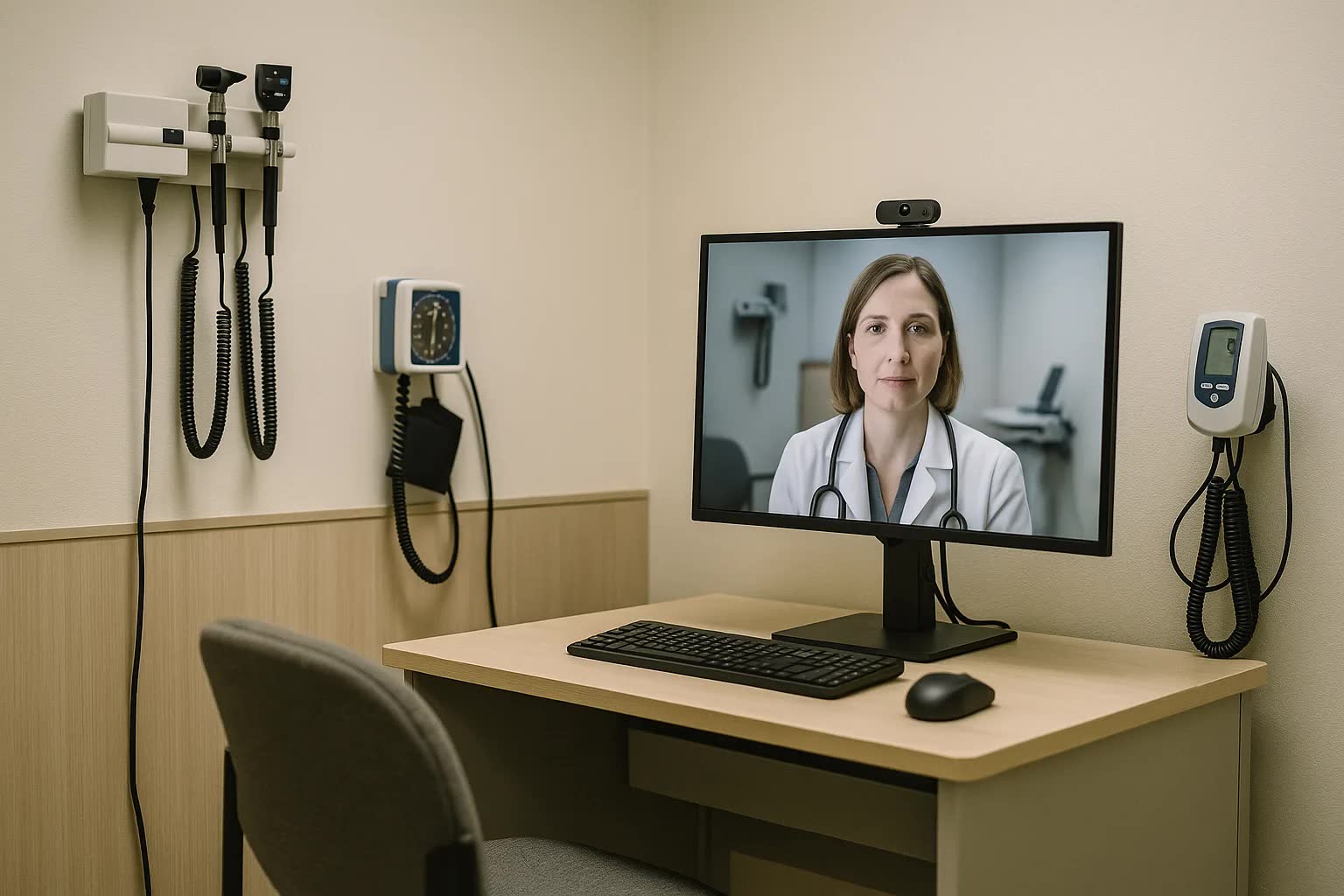
From a windowed office on 42nd Street near Hudson Yards to a community center in Beacon, a new regional push by Hudson Valley hospitals is bringing telemedicine booths to patients who often face a two-hour drive to see specialty doctors, a program officials say will fold city expertise into rural care networks across the valley.
The initiative, led by Hudson Valley Health System in partnership with county health departments and a small Connecticut vendor, Taconic TeleHealth, places self-contained telehealth kiosks in libraries, town halls and independent pharmacies from Poughkeepsie to Tannersville. Each booth is equipped with a high-resolution camera, digital stethoscope, otoscope, secure file transfer and on-site staffers trained as 'telepresenters' to help patients connect with specialists based in the system's Midtown Manhattan command center.
Hospitals pitched the rollout as a practical response to persistent access gaps for wound care, behavioral health and endocrinology in the valley's more isolated pockets. Officials say the booths are designed to be private, HIPAA-compliant spaces that can be used for follow-ups, medication management and initial specialty triage, reducing the need for expensive ambulance rides and time off work for commuting patients who travel Route 9 or the often-congested Taconic State Parkway.
Dr. Marisol Vega, chief medical officer at Hudson Valley Health, said the kiosks are meant to be a bridge rather than a replacement for in-person care. "We are not trying to replace the neighborhood clinic or the relationship with a primary care doctor," Vega said. "What we are offering is timely specialty input for people who would otherwise wait months or drive hours to get the care they need." She said clinicians in the Midtown hub can pull up imaging and labs in real time when patients are in the kiosk.
The early rollout is notable for its scale: 72 kiosks were deployed across 18 towns in Dutchess, Ulster and Greene counties over six months, with another 24 units scheduled this summer. Program leaders report 3,400 patient encounters in the first quarter, a 42% jump in specialty consults for participating towns compared with the same period last year, and an estimated reduction of 47,200 miles of round-trip driving. The initial capital cost was $2.3 million, funded by a mix of hospital capital, two regional foundations and a state digital equity grant, while projected annual operating costs for telepresenters and bandwidth are about $850,000.
In Beacon, where Route 9D clings to the river and commuters often hop trains at the Metro-North station for Manhattan work, residents said the kiosks have changed how they manage chronic conditions. "I used to give up on getting to an endocrinologist because of the drive into White Plains or the city," said Alice Monroe, a retired schoolteacher in Beacon who uses the kiosk at the public library. "Now I can see my doctor in Manhattan without missing a day of volunteering at St. Luke's on Main Street. It feels like a lifeline."
But the project has not been purely technical. Broadband constraints remain uneven: towns closer to Poughkeepsie and the rail corridor have median download speeds above 150 megabits per second, while some hamlets in northern Greene County average under 25 megabits, according to system data shared with county health officials. Ethan Malhotra, director of telehealth at Taconic TeleHealth, acknowledged the limits: "The kiosks are bandwidth-hungry devices — video, peripheral diagnostics and secure uploads require robust connections. We had to deploy cellular failover and negotiate with three local providers to meet our quality standards," he said.
Privacy and reimbursement have also required workarounds. The project team standardized consent procedures, deployed end-to-end encryption and negotiated billing codes with private insurers and Medicare intermediaries to ensure visits are reimbursable as equivalent specialty consultations. Lina Herrera, executive director of Rivertown Medical Center in Kingston, said training staff as telepresenters was essential. "It's not just about the camera," she said. "Our telepresenters help position the patient, run the peripheral devices and document a visit so the specialist can make a confident clinical judgment."
Community groups and a few county officials have pushed back on sustainability and equity concerns. Critics note the kiosks concentrate access in towns with civic infrastructure while very remote pockets still rely on volunteer drivers and mobile clinics; some small pharmacies expressed concerns about space and staffing burdens. County health commissioner Jonah Raines of Ulster County, speaking at a public forum in Kingston, said the model will need ongoing public funding to remain viable for smaller municipalities that cannot absorb annual operating costs.
Program leaders say the next phases will address those gaps: more kiosks targeted to medically underserved census tracts, direct partnerships with community health centers in East Flatbush and Red Hook for reverse-referrals, and a pilot integrating remote-monitoring devices to manage heart failure and diabetes. Hospital officials plan to publish an outcome evaluation this winter showing comparative readmission rates and travel-saved metrics; if successful, the model could be replicated in other upstate regions and inform state policy on telehealth capital reimbursement and broadband investment in the coming legislative cycle.