Hudson Valley Residencies Lure City Creators Back to the River
Residency directors say an influx of New York-based artists is reshaping rural programs and local economies along the Hudson River.
By Aaron Feldman · December 29, 2025 · 4 min read
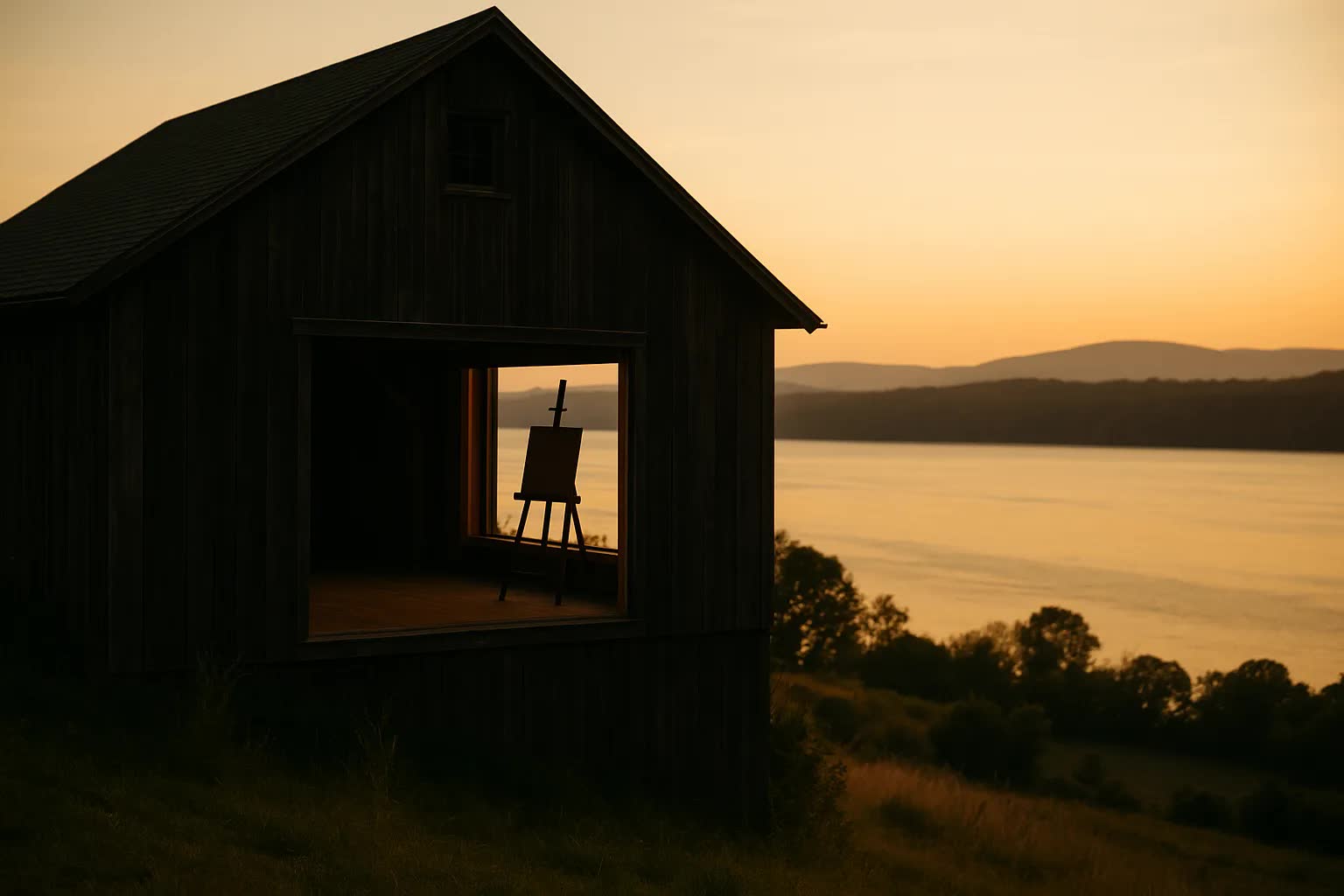
NEW YORK — Artists are packing studio supplies into hatchbacks and booking weekend trains out of Penn Station and Grand Central, swapping cramped Chelsea utilities rooms and Bushwick lofts for barns, riverfront warehouses and rooms with views of the Hudson as an influx of city creators reshapes rural residencies upstate and the small towns that host them.
Program directors along the river say the shift is changing everything from admissions priorities to daytime programming. "Over the past three seasons we've seen a clear tilt toward New York City-based applicants — filmmakers, designers and performance artists who want concentrated, project-based time outside the city," said Maya Cohen, director of Beacon House Residency in Beacon and a former adjunct curator in Manhattan. "That demand has nudged us to shorten some residencies, build more flexible workspace and rethink community engagement so both visitors and long-time residents benefit."
In towns such as Hudson, Kingston and Cold Spring, local merchants and landlords have noticed the change. "The dinner rush used to be mostly visitors passing through in summer, but now there are steady weeknight crowds when cohorts of artists host pop-up performances or open studios," said Luis Ramirez, owner of the Boathouse Café on Main Street in Cold Spring. "That reliable business has helped us keep staff on year-round, but it's also pushed up rents on storefronts in ways that worry older neighbors."
Residency leaders say the new arrivals bring different practices than the painters and writers who dominated programs a decade ago. "We're seeing more collaborative, cross-disciplinary work — sound artists partnering with local luthiers, or installation artists commissioning metalworkers in Hudson's industrial district," said Arjun Banerjee, director of the Hudson River Atelier, whose program converted a nineteenth-century mill off Route 9 in Stockport into seven studios. "We're curating residencies now with an eye toward makership and marketability, not only quiet time for a single painter."
A regional survey conducted this fall by the Hudson Valley Arts Council found that the share of residency applicants who list a New York City address rose from 38 percent in 2019 to 62 percent in 2024. The same survey reported a 24 percent increase in total residency bed-nights along the river between 2020 and 2024, an estimated 3,400 visiting artists staying in programs last year and roughly $6.1 million in direct local spending tied to residency-related activity, including lodging, meals and studio services; county tourism offices provided additional figures showing an average 8 percent uptick in weekend occupancy in four river towns compared with pre-pandemic levels.
Residents and local activists say that growth has consequences. Longtime Hudson resident and hardware-store owner Tom Hargrove, whose family business sits on Warren Street, said that while cultural traffic has been good for some, it has also altered the rental market. "People are turning garages into short-term artist lofts and landlords are opting for higher-paying, short-stay tenants tied to residencies," he said. "That displaces the folks who've lived here for generations."
Some programs have responded with deliberate integration efforts. Beacon House partners with Beacon High School and a domestic carpentry co-op to run weekend workshops; the Hudson River Atelier offers two free community studio days each month and a stipended residency for one local artist per year. "We talked a lot with the town council and local nonprofits before expanding," Cohen said. "If we bring artists here, we want them to be a resource, not a pressure point."
For many artists from neighborhoods such as the Lower East Side, Williamsburg and Gowanus, the river residencies offer access to the space and light that Manhattan studios rarely afford. "I needed a place to build a 20-foot installation and to test it with an audience — my East Village freight elevator just couldn't do it," said Lena Morales, a mixed-media artist who lives in Gowanus and spent two months last spring at the Catskill Workshop, a residency 90 minutes north of the city. "The residency gave me time, a few local collaborators and a weekend crowd who actually bought work from an open studio. That kind of financial pivot matters."
The economic and cultural reshaping is also manifesting in new infrastructure and programming: ferry schedules expanded to include weekend runs to Beacon and Cold Spring, three pop-up galleries opened in Kingston within the last 18 months, and a Chelsea gallery on West 20th Street reported a 15 percent increase in sales of artists who had recently shown work created during Hudson residencies. Directors and municipal planners say the next phase will be negotiating durable housing solutions, fair rental practices and longer-term studio residency models that anchor rather than float with the tourism cycle.
Looking ahead, residency directors say they plan to formalize partnerships with city institutions and local governments to balance artistic opportunity with community needs; Cohen and Banerjee both described pilot programs to convert unused municipal buildings into mixed-use live-work spaces and to create sliding-scale rental models for studio time. "This river has always been porous — people, goods, ideas travel up and down it — but if we want creative ecosystems that last, we need policy, investment and patience," Cohen said. "The next five years will determine whether this renaissance remains sustainable for both the artists and the towns that host them."