Hudson Valley Warehouses Become Stages for Experimental Dance
Choreographers are staging site‑specific work in converted mills and warehouses north of the city, drawing urban audiences to rural performance spaces.
By Dominic Russo · March 29, 2026 · 4 min read
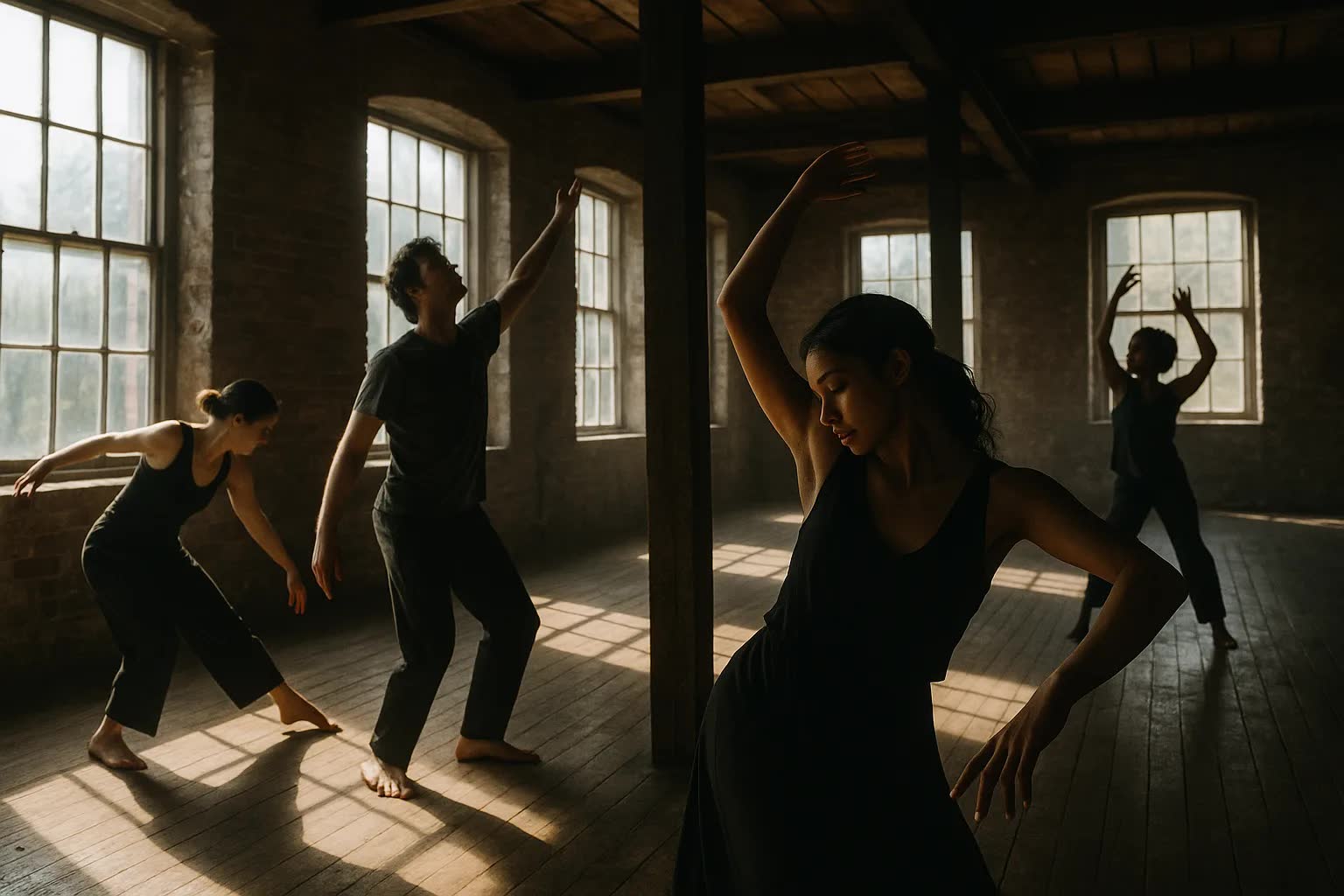
On a rain-slick Tuesday evening, a group of tickets held on the kitchen table in a Tribeca walk‑up made its way onto the northbound Metro‑North platform at Grand Central Terminal, bound not for Lincoln Center but for a repurposed textile mill in Beacon; that journey exemplifies a quietly growing migration of New York City audiences to the Hudson Valley, where choreographers are transforming warehouses and former factories into stages for experimental, site‑specific dance work.
The spaces are integral to the work. At the Lumen Mill, a 19th‑century brick structure on Fishkill Creek in Beacon, dancers thread their bodies through rusted catwalks and light wells; in Hudson, the Old Ironworks — an ex‑foundry on Second Street — hosts performances that snake through stacks of reclaimed timber and mezzanines; and in Kingston, a converted paper warehouse now called The Coal House has become a two‑season hub for durational pieces that unfold across entire building footprints rather than on proscenium stages.
Those conversions have been driven by choreographers who say the architecture itself becomes a collaborator. "We don't just lay down tape and call it immersive," said Maya Levin, artistic director of Riverbound Dance, whose company staged a four‑night run at the Old Ironworks this winter. "The beams, the dust, the smell of oil — those are the scores we respond to. Audiences arrive with different expectations; they come ready to move with the building."
The logistics of getting urban audiences to rural venues have been sharpened into an art of their own. Many patrons travel from neighborhoods across Manhattan — Chelsea, the East Village, the Upper West Side — or from Brooklyn hubs like Williamsburg and Park Slope, taking late‑afternoon commuter trains that leave Grand Central between 4:30 and 6 p.m. A handful of private shuttle services have sprung up, and several venues coordinate with local restaurants on Main Street for pre‑ or post‑performance meals to keep the cultural night economy flowing back into towns.
Concrete numbers underscore the trend. Between May and November 2025, eight independent dance collectives staged 42 site‑specific productions in seven Hudson Valley warehouses, presenting a total of 136 performances that drew a cumulative audience of approximately 9,120 people; a post‑season survey by the Railbed Residency found that 68 percent of ticketholders listed New York City addresses, the average ticket price was $36, and local businesses reported incremental revenue of an estimated $240,000 tied to performance weekends.
Artists say the work benefits from the residency time and the freedom of nontraditional infrastructure. "When you have a month to rehearse inside an old mill instead of four weeks in a black box, your movement vocabulary expands to the whole place," said Naima Brooks, choreographer‑in‑residence at The Coal House. "We incorporate stairwells, loading docks, even the echo of a nearby railroad. It's slower to build, but it yields work that can't be replicated in Brooklyn or Tribeca."
Local communities, too, have been quick to notice the economic and cultural ripple effects. Beacon's Main Street has seen a handful of boutique hotels book full weekends around performance series, while Hudson's Broadway corridor reported increased foot traffic that helped a struggling independent bookstore stay open through winter. Municipal officials in Kingston and Poughkeepsie have worked with venue managers on parking and permits, and some local chambers of commerce have started cross‑promotional campaigns to include performances on weekend tourism maps.
Still, there are challenges. Heating a cavernous industrial room in February can blow a budget, and liability insurance for audiences moving through uneven floors is costly. Transportation remains a barrier for some would‑be attendees: late trains from Hudson County and Queens are scarce, and the absence of a late‑night shuttle from Manhattan has meant that some shows end earlier than artists would prefer. "We are negotiating with a regional transit planner to explore weekend late runs," said Jasper Lin, program director of Railbed Residency, noting that the issue affects programming windows and artist pay.
The phenomenon also signals a shift in how contemporary dance is marketed and consumed. For many urban audiences, the excursion north becomes part of the performance: a ritual that begins with the subway in Chelsea or a car pickup in Park Slope and culminates in an encounter with place‑based choreography that foregrounds architecture, labor history and the intangible residue of industry. Critics and curators say the movement blurs lines between gallery installation, performance art and concert dance in ways that could alter funding and commissioning practices over the next decade.
Organizers are already planning expansions for the 2026 season: a new collaborative residency in Poughkeepsie, weekend programming that coordinates with Metro‑North's late‑night pilot timetable, and a rotating showcase that will bring five Hudson Valley works into a temporary pavilion on Pier 40 in Manhattan for a two‑week run next fall. If the history of the last three years is any indication, the warehouses will keep pulling city audiences north — and the choreography will keep responding to the spaces that receive it.