Hudson Valley Wineries Brace for a Hotter Growing Season
Winemakers report shifting harvest dates and new irrigation projects as the region adapts to increasing summer heat and extreme rainfall.
By Diego Alvarez · April 10, 2026 · 4 min read
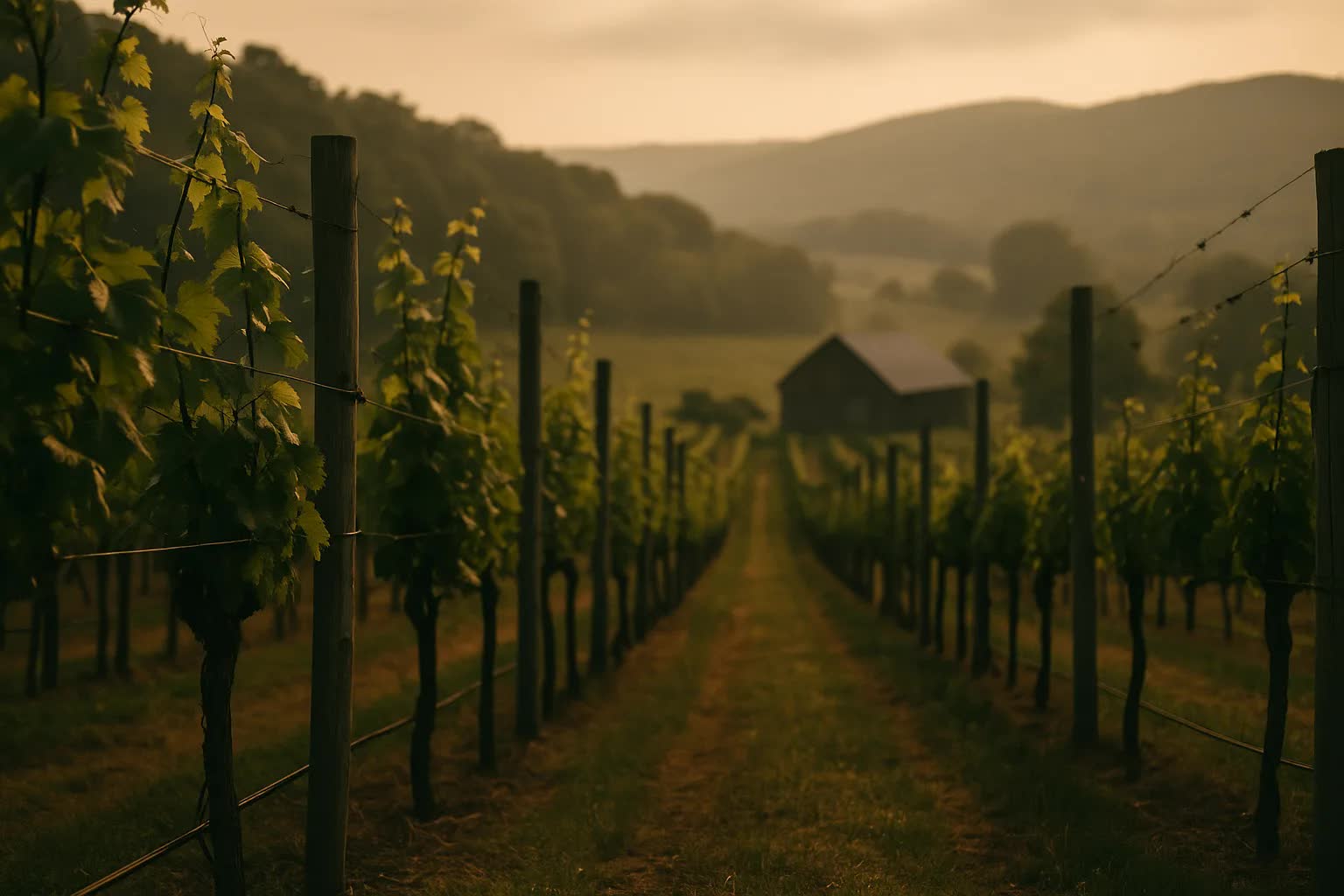
NEW YORK — New York City sommeliers and wine shop owners along Seventh Avenue in Chelsea and Bedford Avenue in Williamsburg said this month that the bottles they order from the Hudson Valley are arriving with a different rhythm: earlier harvest dates, brighter acidity in some vintages and an unevenness from block to block that speaks to a warming and wetter growing season upriver. Winemakers in the valley are responding with irrigation projects, new canopy management and shifted harvest calendars, and the changes are beginning to filter into restaurants from the East Village to the Upper West Side where grateful city diners have long prized local terroir.
Stretching north from the Palisades into the Catskills, the Hudson Valley is a patchwork of vineyards — from small, family-run farms in Marlboro to larger estates in New Paltz and Beacon — that produce cool-climate varietals such as Riesling and Pinot Noir as well as hybrid grapes adapted to northeastern winters. The region, hemmed by the river and punctuated by ravines and ridgelines, has historically relied on microclimates that moderated both frost and summer heat; now those microclimates are shifting, sending growers to the drawing board with maps, sensors and excavation permits.
“Bud break is creeping earlier every year,” said Maria Santos, director of viticulture at Stonebridge Vineyards in Gardiner, who has tended the estate’s soils for 14 seasons. “We had vines in the west block leafing out two weeks ahead of where they were a decade ago, and that compresses the whole cycle: flowering, veraison, ripening. It makes timing decisions harder because you’re managing for heat one week and heavy rain the next.”
Regional data compiled by a coalition of growers and extension agents — the Hudson Valley Vine Alliance, formed in 2022 — shows an average growing-season temperature increase of 1.9 degrees Fahrenheit over the past 15 years, harvests arriving 10 to 14 days earlier on average, and a 25 percent rise in extreme rainfall events in June through September. The alliance estimates roughly 75 commercial wineries and nearly 3,500 planted acres in the valley; about 40 percent of those vineyards have begun installing new irrigation or water-management systems this winter, projects that growers say will represent roughly $2.3 million in capital investment across the region with $600,000 in matching grants and low-interest loans so far.
At Beacon Ridge, a 45-acre operation on Route 9D just outside Beacon’s Main Street gallery district, owner Evan Price said the winery is laying a grid of drip lines and building a concrete-lined reservoir to capture spring runoff. “We used to rely on natural rainfall; now we are budgeting irrigation as a given cost of production,” said Price. “We’ve also adjusted our pick dates — early-morning harvests on the coolest days — and that’s changed everything from staffing to truck rental.”
More worrying for some growers than plain heat has been the concentration of rain. Intense downpours have brought erosion and mildew outbreaks that can wipe out fruit in a matter of days. At Shaker Ridge Vineyards in Marlboro, winemaker and co-owner Leila Mercer described trenching and contour-planting as part of a desperate defensive strategy. “We’ve lost blocks to Phomopsis and downy mildew twice in the last five years,” she said. “The terraces and longer canopies help shed water now, but they require more labor and more precise timing to avoid shading fruit too much.”
The economics are immediate and local. Smaller growers say the new infrastructure and labor demands are squeezing margins just as tourist-driven tasting-room traffic has been ramping up again after the pandemic years, bringing customers from Brooklyn and Manhattan neighborhoods such as the East Village and DUMBO. Lena Park, head sommelier at Larkin & Co., a restaurant on Hudson Street in Greenwich Village that sources several small-production bottlings from the valley, said diners are already commenting on styles: “Our regulars tell us the 2024 white wines had sharper acidity and more floral notes, and that’s changing purchasing patterns — people are more open to orange wines and lighter reds now.”
Public resources have stepped in with targeted help. Cornell Cooperative Extension clinics in Ulster County this spring are offering workshops on soil moisture sensors and drought-adaptive rootstocks, while county agricultural funds are providing matching grants for on-farm water-storage projects in the Rhinebeck and Hudson township clusters. “We’re seeing an unprecedented level of cooperation,” said Dr. Harold Kim, an extension agronomist leading the workshops. “Growers are pooling technical data, investing in shared reservoirs and even coordinating harvests to protect labor pools and transport capacity.”
On the winemaking side the palette is shifting as much as the infrastructure: cellar teams are picking earlier to preserve acidity, experimenting with partial carbonic maceration on early-picked reds and trialing hybrids and late-blooming clones in higher elevations above the Hudson Highlands. Vineyards with steep slopes are scrambling to secure insurance against washouts; others are planting cover crops to increase infiltration and reduce erosion. Urban wine buyers in Midtown and the Lower East Side may not see these soil-and-seasons interventions on their wine lists, but they will taste the result: fresher, earlier-picked whites, and in some years, a move away from full-bodied, high-alcohol reds toward more restrained styles.
Looking ahead, the valley’s vintners say the coming growing season will be a test of both their new investments and their shared governance. Trials of drought-tolerant rootstocks begin this spring, and several cooperatives plan to deploy drones and real-time sensors across contiguous blocks to monitor heat stress and disease pressure. Vineyard owners from Kingston to Rhinebeck say the next few years will show whether the region can hold onto the sense of place that made its wines a draw for New Yorkers from Chelsea to the Upper East Side, even as the climate forces a faster, more technical pace in the fields. The hope — and the work — is to keep the valley’s bottles on city shelves without losing the character that brought them there.