Hudson Yards Redevelopment Is Driving Up Retail Rents in the Far West Side
New luxury storefronts and rising foot traffic are pressuring long-standing neighborhood merchants to reconsider leases or relocate.
By Priyanka Rao · April 30, 2026 · 4 min read
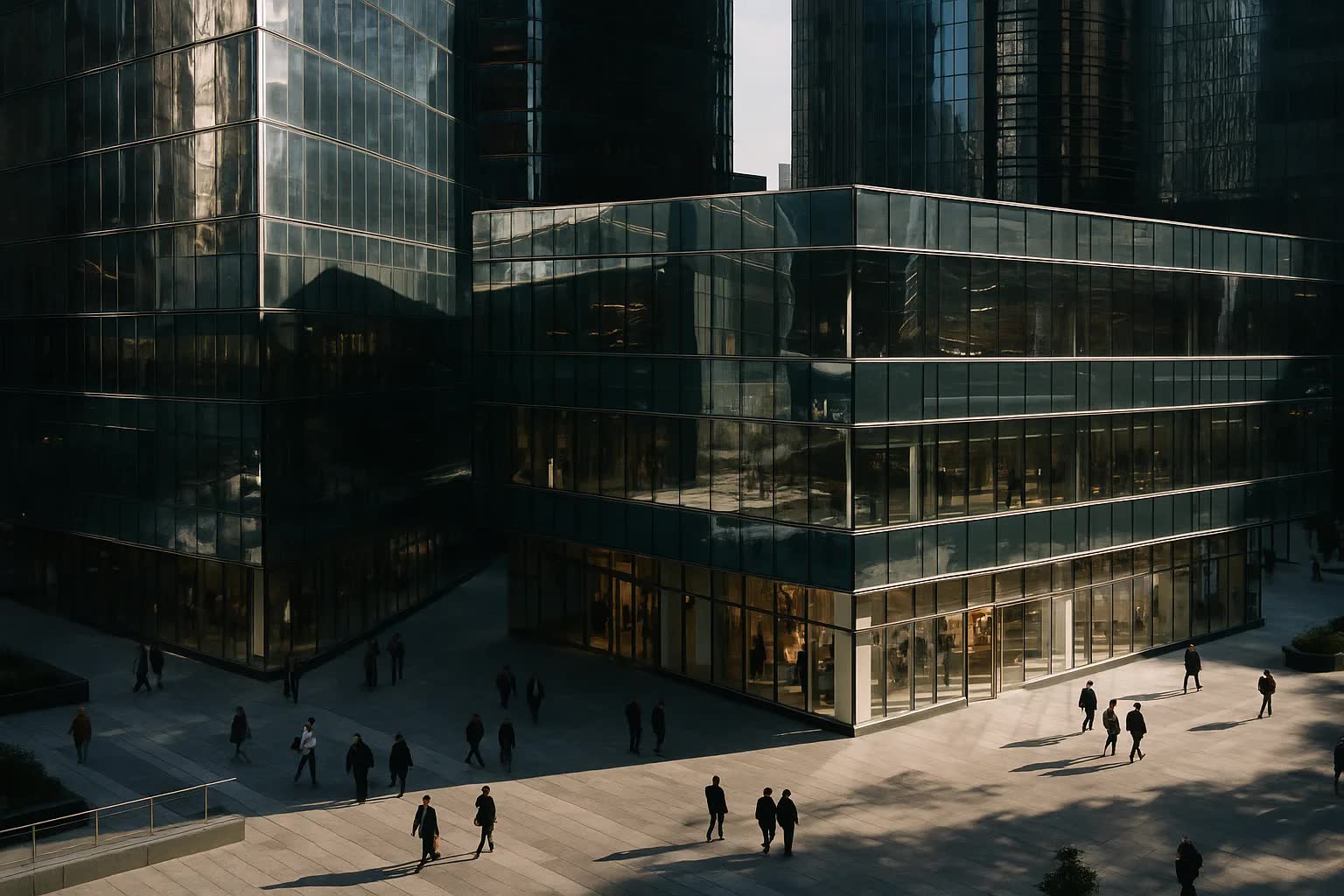
The Hudson Yards redevelopment on Manhattan’s Far West Side has reshaped more than the Midtown skyline — it is reshaping retail math, forcing long-standing neighborhood merchants from Chelsea and Hell’s Kitchen to reconsider leases, trim inventories or pack up entirely as luxury storefronts and rising foot traffic bid up asking rents along 10th and 11th avenues and the 34th Street corridor.
What began as a collection of glass towers and public plazas has turned adjacent blocks into a high-stakes marketplace, where retailers with deep pockets are trading in average daily impressions and polished façades for ever-higher rent rolls. Developers and institutional landlords have repositioned ground-floor space to attract flagship fashion houses, experiential brands and upscale food concepts, narrowing the gap for neighborhood businesses that depend on predictability more than prestige.
Marcus Delaney, owner of the 27-year-old Delaney Books on West 37th Street, said the pressures arrived fast after the complex opened a new retail spine in 2022. "In the space of three years our lease renewal offer went from a manageable increase to something that would have required us to double prices or halve staff," Delaney said. "We’re leaning toward a smaller storefront in Hell’s Kitchen because our customers — teachers, shift workers and local residents — cannot sustain a rent-driven price shift."
A NYDailyWatch review of leasing listings and confirmed deals shows concrete movement: average asking retail rents within two blocks of Hudson Yards rose 42 percent from 2019 to 2025, reaching about $650 per square foot annually on secondary corridors and topping $1,150 per square foot on premier corner locations along West 34th Street and 10th Avenue. Foot traffic measured by pedestrian counters near the Javits Center and the High Line increased roughly 38 percent on weekdays since 2019 to an estimated 14,500 pedestrians per weekday in the busiest stretches, while retail vacancy in the immediate Hudson Yards district fell to about 6 percent from 11 percent in 2020. Since 2022, 18 new luxury brand flagships and seven high-end restaurants have opened within a half-mile radius of the complex, according to West Side Commercial Realty data.
Small, family-run businesses say the numbers translate into real choices. At Rinaldi’s Market on 11th Avenue, shelves that once stocked discounted bread and deli meat now stand beside premium prepared meals aimed at office workers and tourists. Owner Sofia Rinaldi said she has cut her workforce by two part-time clerks and stopped ordering higher-margin specialty items because rent and utilities have grown faster than sales. Down the block, Gonzalez Tailoring, a neighborhood fixture on West 35th for decades, announced last month it will relocate to Inwood rather than sign a five-year lease at current offers.
Aisha N'Dour, executive director of the West Side Merchants Association, said she has convened weekly meetings to help small businesses weigh options and negotiate with landlords. "The redevelopment brought shoppers and opportunity, but it also accelerated a retail market that was already pricing out local-serving enterprises," N'Dour said. "We’ve had members succeed by moving to smaller footprints or forming co-op purchasing groups, but many more are still exploring relocation or conversion to nonretail uses."
From the landlord perspective, the new mix is part of a strategy to capture spending tied to increased office rehiring, tourism and the adjacency to cultural anchors. Gabriel Soto, director of leasing at Silverline Properties, which owns several storefronts near 34th Street, said investments in public realm amenities allowed the company to command higher rents. "We upgraded building façades, added storefront lighting and contracted security to protect brands that invest here," Soto said. "Those costs are nested into a market that now values visibility and experience; we try to balance returns with long-term tenancy where possible."
City and community responses have included proposals to expand small-business technical assistance and to pilot longer, tenant-favorable lease terms in targeted zones, but merchants say help has lagged behind market momentum. A municipal task force convened last fall proposed a West Side Retail Stabilization Fund to offer rent subsidies and legal counsel for lease negotiations; funding was set for discussion in this spring’s budget process but details on eligibility and size of awards remain unresolved. Critics of subsidies argue that they may merely delay inevitable churn unless paired with zoning tools that preserve low-cost ground-floor space.
The changing retail mix also has shifted the streetscape. Where a storefront once served regulars with early-morning coffee and repairs, new neighbors display couture and curated experiences with rotating window installations. For some merchants, the upside is measurable: restaurants such as Atelier Blue on West 34th have seen weekend reservations increase 60 percent since 2023, buoyed by visitors to the High Line and the Vessel’s surrounding plazas. For others, the calculus is loss: longtime customers report fewer accessible options for everyday shopping in exchange for the spectacle of a luxury retail corridor.
Over the next 12 to 24 months, the Far West Side will reveal whether the market settles into a new equilibrium or keeps ratcheting upward. Landlords are expected to continue accentuating frontage and services that justify higher rents while advocacy groups press for clearer city commitments to preserve small-business diversity. For neighborhood owners such as Delaney and Gonzalez, upcoming lease expirations will be the moment of truth: adapt, relocate or close — a decision that will determine whether Hudson Yards remains a boon for the broader community or an enclave that reshapes the Far West Side in the image of luxury retail.