Hudson Yards’ Secret: How Data Centers Underpin the Development’s Tech Backbone
Behind-the-scenes infrastructure at an iconic West Side project is powering local firms and global cloud providers alike.
By Diego Alvarez · April 18, 2026 · 4 min read
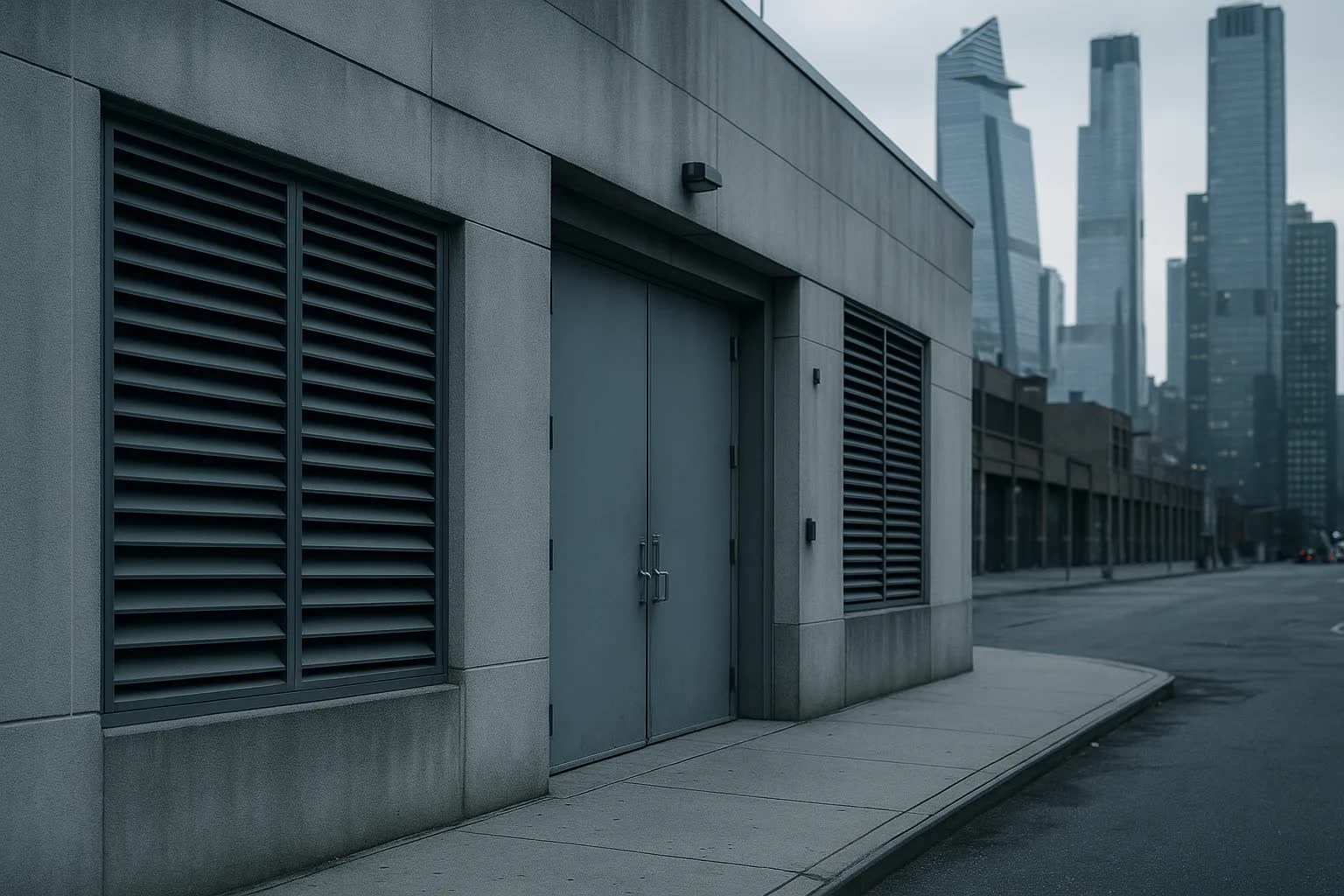
NEW YORK — Beneath the glass towers, luxury retail and elevated promenades of Hudson Yards there is a less visible but increasingly vital layer to the West Side transformation: purpose-built data centers that supply the computing and networking muscle for local start-ups, global cloud providers and the city’s burgeoning media and financial tech clusters, routing traffic and storing information just blocks from the Hudson River and the Javits Center.
The facilities, tucked under the mixed-use podiums and in repurposed mechanical vaults along West 30th Street and the old West Side rail trench, are not the sort of neighborhoods residents see on the High Line. They are engineered environments — conditioned rooms, raised floors where required, heavy-duty electrical infrastructure and fiber trunks that snake along 10th and 11th avenues — designed for constant uptimes and minimal latency between Manhattan racks and the transatlantic cables landing further south in Brooklyn.
Power and connectivity are the selling points. Operators have negotiated multiple feeds from Con Edison, installed on-site substations and partnered with several fiber carriers to create diversity routes that avoid single points of failure. "We built this campus with N+1 redundancy on both power and network so a single outage doesn't ripple through the neighborhood," said Ethan Chen, director of facilities at Hudson Yards Infrastructure Partners, the consortium that manages the subterranean spaces. "Tenants demand predictable performance around the clock, and that requires upfront investment in infrastructure you can’t see from the plaza."
That predictability is precisely what has drawn local firms. Media production houses in Chelsea, financial technology firms along West 28th Street and a clutch of start-ups in Hell's Kitchen route key workloads into Hudson Yards’ edge facilities to shave milliseconds off transactions and video rendering. "Putting compute and storage this close saved us critical time for live sports overlays and interactive ad tech," said Maya R. Singh, chief technology officer at NebulaGrid, a Midtown cloud-startup that rents space in the complex. "Latency isn’t just a number to our clients. It’s revenue, and being measured in single-digit milliseconds changes what we can offer."
The scale is concrete. The subterranean campus occupies roughly 160,000 square feet across three primary vaults and claims a critical load capacity approaching 120 megawatts, with three independent utility feeds, two on-site diesel generator arrays, 40 megawatts of lithium-ion battery storage for short-term ride-through and fiber connectivity from at least five national carriers. Operators report hosting more than a dozen tenants — from managed service providers to co-location clients and hyperscale cloud partners — with service-level agreements that commonly promise 99.999 percent availability.
Building below grade in a part of Manhattan that still carries the imprint of old rail infrastructure required long negotiations with city agencies and transit authorities. Permitting involved coordination with the Metropolitan Transportation Authority and the Port Authority for certain easements and load-bearing assessments under the rail right-of-way. "There were months of study about vibration, slab load and emergency egress," said a senior city planning engineer who asked not to be named because of ongoing contract work. Flood mitigation became an overriding concern after Superstorm Sandy's lessons reshaped how utilities and emergency systems are designed in the boroughs.
The economic footprint is quietly significant. Data center operations have created a specialized trades workforce in the West Side — electrical technicians, cooling specialists and fiber technicians — and have supported a small but growing market for nearby office tenants seeking proximity to infrastructure. Landlords market access to edge compute as a premium amenity alongside skyline views and concierge services. Leasing agents say the availability of local colocation space has kept some start-ups from relocating their most latency-sensitive applications to New Jersey or Long Island, preserving jobs within Manhattan neighborhoods from Chelsea to Midtown West.
Yet the facilities are not without controversy. Community groups in Hell's Kitchen and the surrounding Chelsea blocks have raised questions about noise from mechanical rooms, truck traffic for fuel deliveries and the heat expelled by large cooling systems. Operators have pointed to investments in closed-loop cooling, acoustic dampening and plans to channel waste heat into district heating pilots as mitigations. "We expect the industry to meet neighborhood standards and contribute to local sustainability goals," said Luis Moreno, chair of Community Board 4's technology committee, who has pushed for stronger disclosure on noise and delivery schedules near the West 30th corridor.
Competitors and complementary projects are multiplying. Manhattan West, the Brooklyn Navy Yard and a new cluster on the East River waterfront each pitch variants of edge computing and campus-scale facilities that aim to spread capacity across boroughs. City officials and private developers are discussing updates to zoning and building codes that would standardize ventilation, redundancy and floodproofing requirements for below-grade data centers, as well as possible incentives to encourage heat recycling and the use of cleaner backup power.
For now, Hudson Yards’ subterranean data arms have quietly become a backbone to the neighborhood’s tech ecosystem, knitting together local momentum and global networks. As demand for low-latency services grows with artificial intelligence, live media and financial trading applications, the West Side’s hidden servers will likely expand, prompting further debates over energy sourcing, urban design and how much infrastructure a neighborhood can absorb without sacrificing street-level life. The next chapters will test whether the city can balance rapid technological growth with resilience and livability on the blocks that sit above the machines.