Hudson Yards Turns Plazas Into Interactive Projection Art Venues
Large-scale projection installations are transforming Hudson Yards' public spaces into nighttime art destinations that attract commuters and tourists alike.
By Ezekiel Harris · February 17, 2026 · 4 min read
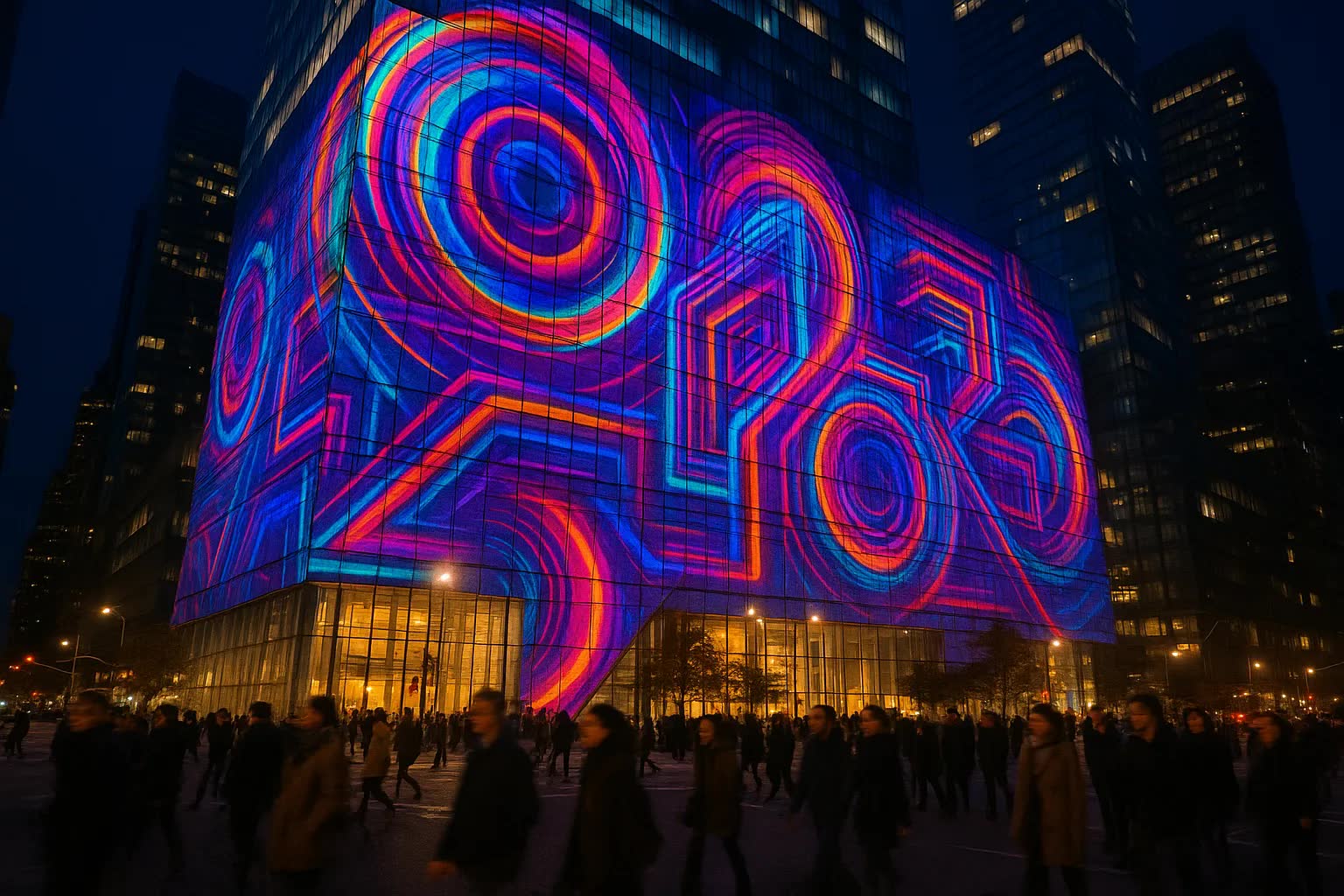
On winter evenings at Hudson Yards, the plazas that sit beneath soaring glass towers and overlook the High Line have begun to glow with large-scale projection art, turning commuter corridors into impromptu galleries that draw neighborhood residents, office workers and out-of-town visitors alike. What started as weekend performances outside The Shed has expanded across the development's Public Square and Gardens and along the strip of pavement between 10th Avenue and West 30th Street, where digital canvases now bloom on paving stones and building facades after sunset.
Organizers say the shift from static sculptures and pop-up markets to immersive, technologically driven work is both intentional and practical: projections require less permanent infrastructure and can be programmed to react to foot traffic, transit schedules and even weather. Hudson Harbor Arts, a nonprofit arts presenter created by a coalition of property managers and local cultural groups, partnered with the Yards Public Arts Initiative last spring to produce the first season. "We wanted to create something that met people where they already are — the walk from Penn Station to the High Line — and make that path feel like a cultural corridor," said Evelyn Park, director of public art at Hudson Harbor Arts.
The installations vary from low-slung light-mapped animations projected onto seating ledges to towering works that climb the facades of retail podiums and office lobbies. Artists use motion sensors, infra-red beams and smartphone APIs so elements of a piece shift in response to a passing runner on 10th Avenue or a crowd waiting for the 7 train. Projection mapping firms supply arrays of 20,000- to 40,000-lumen projectors for the dramatic nighttime pieces, while neighborhood commissions are shown at lower brightness to reduce glare for residents and drivers on busy cross streets.
Local business owners say the effect is already measurable. Salim Rahman, owner of the Blue Plate Diner on 10th Avenue near West 30th Street, described a clearer evening rush and new customers lingering after work. "People used to come in, eat and leave. Now they sit with coffee and watch the light shows — it keeps them here longer, and they spend more," Rahman said. Commuters from Penn Station and Hudson Yards' office towers, as well as residents from Chelsea and Hell's Kitchen, have reported making detours specifically to see works between the Vessel site and the High Line entrance at 30th Street.
Organizers provided hard numbers to illustrate scale: the program runs four nights a week, Thursday through Sunday, from 6 p.m. to 11 p.m., attracting an average of 3,200 visitors per night during its first three months and an estimated cumulative footfall of 288,000 since October. Installations this season have used 42 projectors across five plazas, consuming roughly 1,800 kilowatt-hours on a typical weekend night, and the initiative's operating budget is pegged at $1.2 million through spring, funded by private property assessments, a city arts grant and ticketed special events that contributed about 18 percent of revenue.
Curators and artists say the transient, programmable nature of projection work has allowed for a diverse roster of creators, from local muralists adapting their palettes to light-based pieces to international digital artists testing new interactive platforms. "We wanted to give local artists the tools to scale their work up without asking them to manufacture something permanent," said Amara N'diaye, curator-at-large for the Yards Public Arts Initiative. N'diaye said rotating three-week runs help keep content fresh for repeat visitors and create opportunities for artists from Chelsea, Harlem and the Bronx to collaborate on site-specific commissions.
Still, city agencies and property managers have had to negotiate around practical concerns: glare into residential windows, pedestrian safety on darkened pathways and the vulnerability of projection equipment to weather. "We developed a coordinated protocol with building security and DOT to ensure sightlines are safe and we don't create hazards at crosswalks," a senior MTA planner who requested anonymity said. The planner added that the authority evaluated sightlines at entrances to the 7 and 34th Street subway stops and adjusted programming during peak commuter times to minimize potential distractions.
Economic spillovers have shown up beyond plazas. Hotels along West 30th Street and in Hudson Yards report modest increases in after-dark bookings tied to projection nights, and food vendors operating pop-ups near The Shed say weekly revenue during projection events is up 12 to 20 percent. A boutique hotel general manager on 33rd Street described guest feedback noting that the lights gave the neighborhood "an artsy evening vibe" that contrasted with Midtown's typical billboard-lit streetscape, drawing tourists who otherwise might have stayed in Times Square.
Organizers are already planning the next phase: longer runs for popular works, expanded programming on weekday evenings and pilot projects that bring projection art to adjacent blocks in Chelsea and the Meatpacking District to create a connected after-dark arts loop. Officials say they will continue balancing artistic ambition with residents' quality of life and commuter safety as they measure environmental impacts and energy use. For many who have turned an ordinary commute into a nightly outing, the glow of Hudson Yards' plazas is a promise that New York's public spaces can be both transit corridors and canvases — and that the experiment in light is only beginning.