Inside CUNY’s New Quantum Computing Lab in Manhattan
The City University’s investment aims to broaden access to emerging hardware and train the next generation of quantum engineers.
By Leo Wang · February 24, 2026 · 5 min read
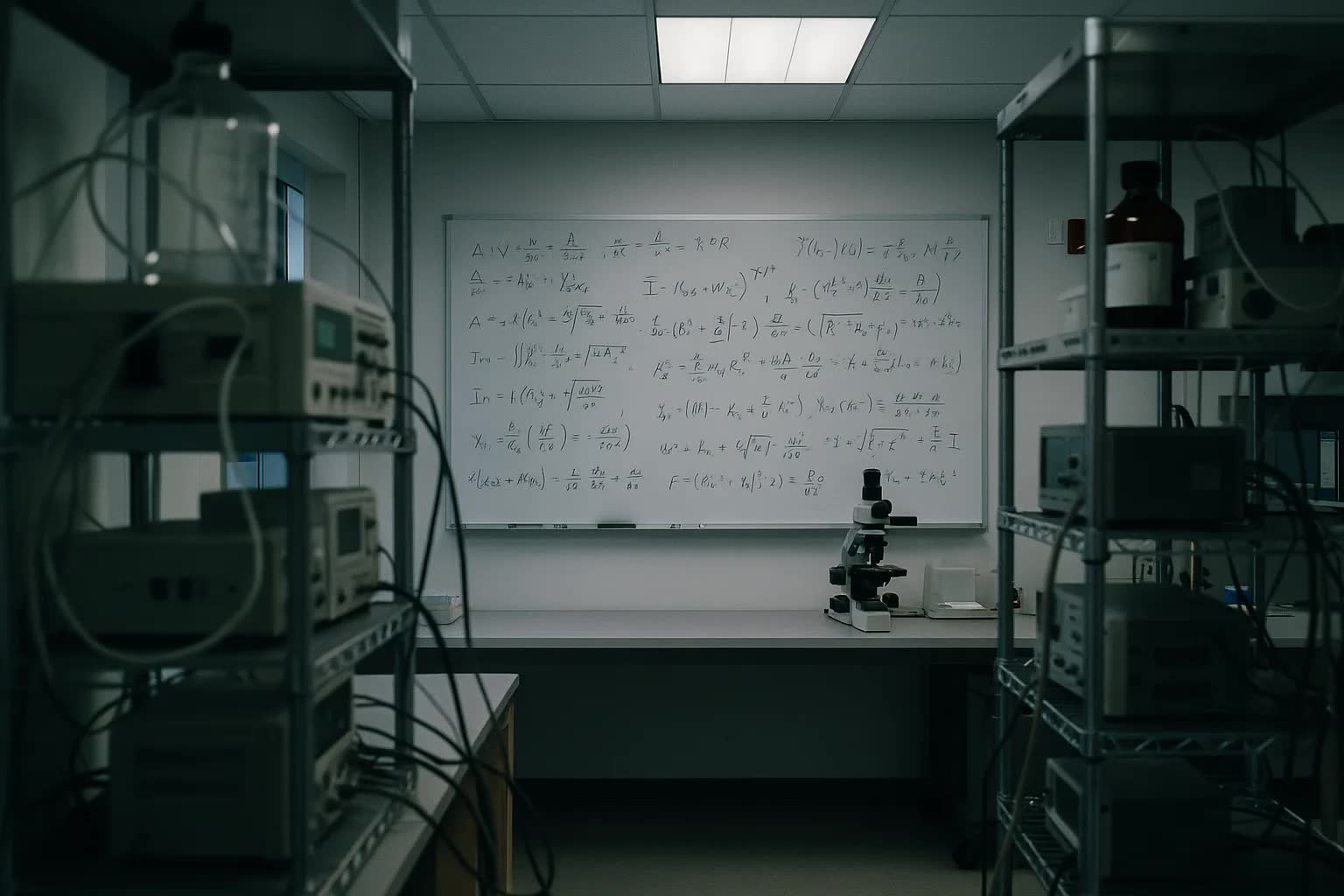
NEW YORK — On the third floor of a former garment factory on West 16th Street, tucked between a bodega and a yoga studio in Chelsea, The City University of New York on Tuesday unveiled a new quantum computing lab intended to broaden access to emerging hardware and train a generation of engineers who might otherwise never see a dilution refrigerator in person. University leaders framed the facility as a practical bridge between CUNY's sprawling community-college network and Manhattan's tech corridor, promising equipment time, paid internships and a curriculum designed to funnel diverse talent from the Bronx, Queens and Staten Island straight into the quantum economy.
The lab occupies roughly 18,000 square feet and includes a row of three cryogenic systems, a 72-qubit superconducting processor and a 48-ion trapped-ion chain, all installed in a temperature-controlled wing with acoustic dampening and an anechoic testing chamber. "This is not a showcase, it's a utility," said Dr. Maya Rodriguez, director of CUNY's Quantum Initiative, as she led a tour past stacked racks of microwave control hardware. "Our goal is to make hands-on time with real hardware the norm for CUNY students, not the exception." Rodriguez said the facility will be open to students, faculty and industry partners under a transparent, scheduler-based system.
Funding for the lab comes from a blend of municipal bonds, a five-year commitment from the university's capital plan and private partnerships with local startups and philanthropic foundations. CUNY officials declined to release the full list of donors but said several New York–based venture funds and two venture-backed hardware companies have signed multi-year access agreements. The university also announced a formal collaboration with the Manhattan Quantum Hub, a nonprofit consortium of colleges and small businesses, to share calibration data and training modules across member institutions.
By the numbers: the lab cost an estimated $52.7 million to build and outfit, occupies 18,000 square feet, and will support up to 520 students per year in hands-on classes and internships. Staffing includes 14 full-time engineers, six postdoctoral researchers, and a rotating slate of adjunct instructors; the university projects 12 certificate and degree-bearing courses in quantum information science by fall 2027. Industry agreements guarantee a minimum of 120 paid internships annually, and the lab has contracted with 10 local startups for joint research and prototyping work.
The academic program is intentionally pragmatic. Courses mix quantum mechanics with signal processing, cryogenics safety, and embedded systems engineering; a new two-semester certificate combines lab rotations with a capstone sponsored by a private partner. "Too many programs teach the math but never the machinery," said Prof. Aaron Hale, chair of physics at CUNY Queens College, who helped design the curriculum. "If you can wire up an FPGA to control a qubit and tune a Ramsey experiment by the end of a semester, your students will be in the market on day one." Hale added that faculty from community colleges will rotate through the Chelsea lab to bring equipment-based modules back to their campuses.
Access has been a recurring theme. CUNY officials emphasized evening and weekend hours to accommodate working students, and remote jobs have been carved out for students who live outside Manhattan but need to work during the day. "I commute from Inwood and work afternoons at a hospital, so evening lab time is everything," said Janelle Ortiz, a junior electrical engineering student at City College, who is enrolled in an introductory quantum practicum. "Seeing the real machines and talking to engineers makes this feel like a career I can have, not just a theory class in a textbook."
The Chelsea location was chosen for more than proximity to Midtown investors: it sits inside a building that also houses an incubator and a small manufacturing floor, enabling rapid prototyping and short supply lines for startups. Hudson Quantum Systems, a three-year-old firm that makes cryocooler components, has leased 4,500 square feet on the ground floor to fabricate control electronics and to mentor student teams. That adjacency is meant to shorten the pathway from lab bench to product, university officials said, and to anchor a nascent quantum cluster in the neighborhood between the High Line and Madison Square Park.
Still, creating a city-center quantum lab posed logistical and technical headaches. The installation required retrofitting an older building with helium recapture systems, vibration isolation to protect sensitive experiments from subway noise, and redundant power feeds to minimize downtime. Procurement delays in 2024 slowed delivery of several critical components, prompting the university to stockpile spare parts. "You learn to plan for failure modes you never worried about in classical labs," said Samuel Okafor, senior lab engineer, who led the cryostat installation. "Supply chains, helium logistics and municipal permitting become part of the experiment."
Neighbors and neighborhood stakeholders had mixed reactions. Local businesses said the lab has already boosted weekday breakfast traffic for cafes along 15th Street and created lunchtime demand for restaurants in the Flatiron District; some community board members expressed concerns about rising rents and the displacement effects that technology investments can bring. "It's great to see students and engineers here, but we'd like commitments on hiring local residents and keeping retail rents manageable," said Daniel Park, owner of Parkside Café on 15th Street, who added that small-business outreach is still a work in progress.
CUNY officials say this lab is only the first node in a broader plan to weave quantum infrastructure across the five boroughs, with satellite teaching labs proposed for the Bronx, Brooklyn and Staten Island and an application for a federal workforce grant pending this spring. The university has set a target to certify 200 quantum technicians and place at least 75 graduates into paid industry roles by 2028. For students like Ortiz, engineers like Okafor and the small firms planning to prototype on the ground floor, the Chelsea lab offers a test of whether a public university can remake access to hardware in a field long trapped behind high price tags and concentrated clusters; the answer will shape New York's role in the coming quantum economy.