Inwood Community Garden Fights DOT Bike-Lane Plan That Would Remove Trees
Gardeners and parents say the proposed lane design sacrifices established green space for marginal traffic improvements.
By Ezekiel Harris · December 20, 2025 · 4 min read
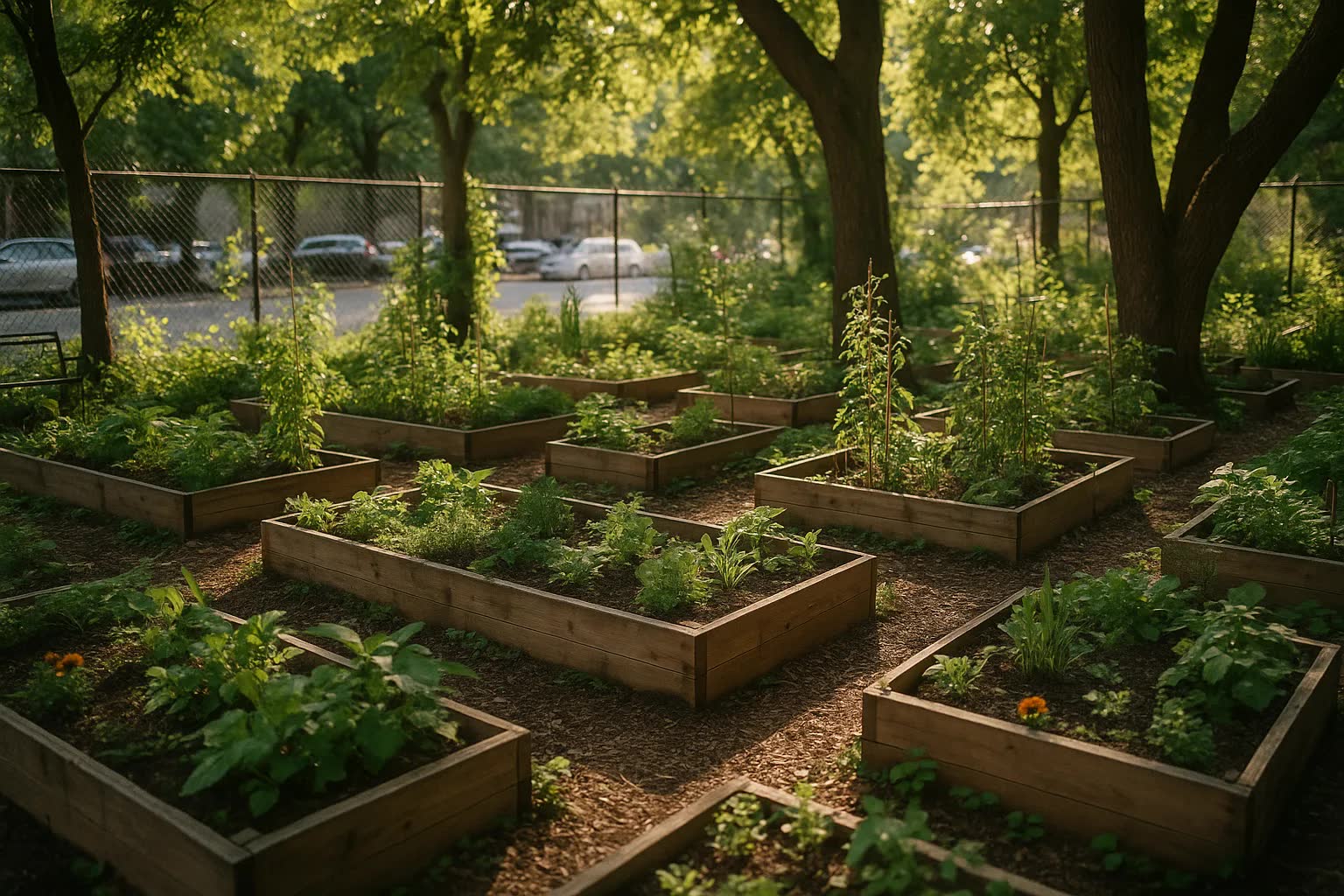
On a brisk December morning in Inwood, a narrow strip of community-planted beds and shade trees along Dyckman Street has become the latest flash point in New York’s ongoing tug-of-war between cycling infrastructure and neighborhood green space, as gardeners and parents press the city to revise a Department of Transportation plan that would remove mature trees to make way for a protected bike lane they say offers only marginal traffic benefits.
The garden, known to locals as Lantern Community Garden, sits on the north side of Dyckman near the corner of Seaman Avenue, a block from the Dyckman Street subway station and a five-minute walk from Inwood Hill Park. Volunteers have tended the raised beds for nearly 20 years; tomato vines and a row of honeylocust and London plane trees have become a neighborhood landmark and an unofficial playground shade for toddlers from two nearby day cares.
"These trees are not just decoration — they're part of our daily lives, our children's recess and our summer relief," said Marisol Rivera, president of the Lantern Gardeners Association, as she swept leaves along a sidewalk now marked with spray paint where the DOT says bollards would be placed. "We understand the need for safer streets, but we shouldn't have to trade in mature trees that took decades to grow for designs that barely shave minutes off a commute."
City planners say the lane is intended to close a missing link between the Hudson River Greenway and existing north-south protected lanes, improve safety and encourage cycling in Upper Manhattan. "Our street engineers developed the design to provide continuous protection for cyclists while maintaining bus operations and essential vehicle access," said Daniel Chu, Manhattan borough planner at the DOT. "We sought to balance competing needs, but we are open to adjustments to reduce environmental impacts where feasible."
The plan, circulated in a November DOT packet, would convert a 0.6-mile stretch of Dyckman between West 204th Street and Broadway into a two-way protected cycle track on the north curb, eliminate 14 curbside parking spaces and remove 18 street trees directly within the project footprint; the agency estimates the design would increase average bicycle speeds on the route by about 12 to 18 seconds per block during morning peak hours and project a net increase of 150 daily bicyclists within the first year. The initial construction budget is listed at $1.1 million, with an additional $200,000 in projected annual maintenance costs.
Parents gathered outside the garden last week framed the dispute not as a fight over bikes versus cars but as a question of neighborhood health and equity. "My two-year-old naps under those trees in the stroller; in the summer the shade is everything," said Asha Demby, a mother of two and PTA president at PS/IS 52, which serves families from Inwood to Washington Heights. "The DOT's math about a few seconds saved per block doesn't measure the cooling and air-quality benefits these trees give our kids."
At a Community Board 12 transportation committee hearing on Dec. 10, the room at the Inwood Library overflowed; more than 90 residents signed up to speak. Opposition group Friends of Dyckman Trees presented an alternate plan that would retain the existing street trees by shifting the bike lane to the south curb and narrowing traffic lanes to 9.5 feet, a so-called road-diet approach that engineers have used on other Manhattan streets. DOT staff said the south curb is constrained by multiple bus stops and loading zones and would present operational conflicts but agreed to run a new engineering analysis.
"There are all kinds of design tools that preserve canopy while improving safety," said Dr. Elias Monroe, an urban ecologist at the Manhattan Institute for Urban Ecology, who reviewed the community proposal at the meeting. "A single mature street tree can intercept thousands of gallons of stormwater annually and reduce local temperatures by up to 3 degrees Celsius on hot days; those are not trivial benefits when weighing design trade-offs."
The conflict highlights a broader tension in city planning: the mayoral administration has pushed for expanded cycling infrastructure under Vision Zero and climate goals, while neighborhoods with limited open space say implementation has sometimes overlooked localized environmental and cultural values. Community Board 12 is scheduled to vote on a nonbinding recommendation at its full board meeting on Jan. 6, and local elected officials have signaled they will request a follow-up public design workshop and an environmental review that assesses tree loss and potential mitigation.
For now, Lantern Garden volunteers have stepped up soil beds, scheduled a tree-count and planning session, and say they will continue to press for a redesigned lane that spares the canopy. "We are not anti-bike," Rivera said. "We want a safe street and a healthy neighborhood. We just want a plan that does both." DOT officials said they would present revised drawings after the holidays and take community feedback into account before finalizing the design, a process that could stretch into spring and leave the fate of the trees — and the character of that block of Dyckman Street — undecided for months to come.