Jackson Heights' Coffee Counterculture Blends Immigrant Traditions and Third-Wave Brews
New micro-roasters and longstanding Latin American cafés are collaborating on limited runs that marry single-origin beans with regional flavor profiles.
By Priyanka Rao · April 21, 2026 · 5 min read
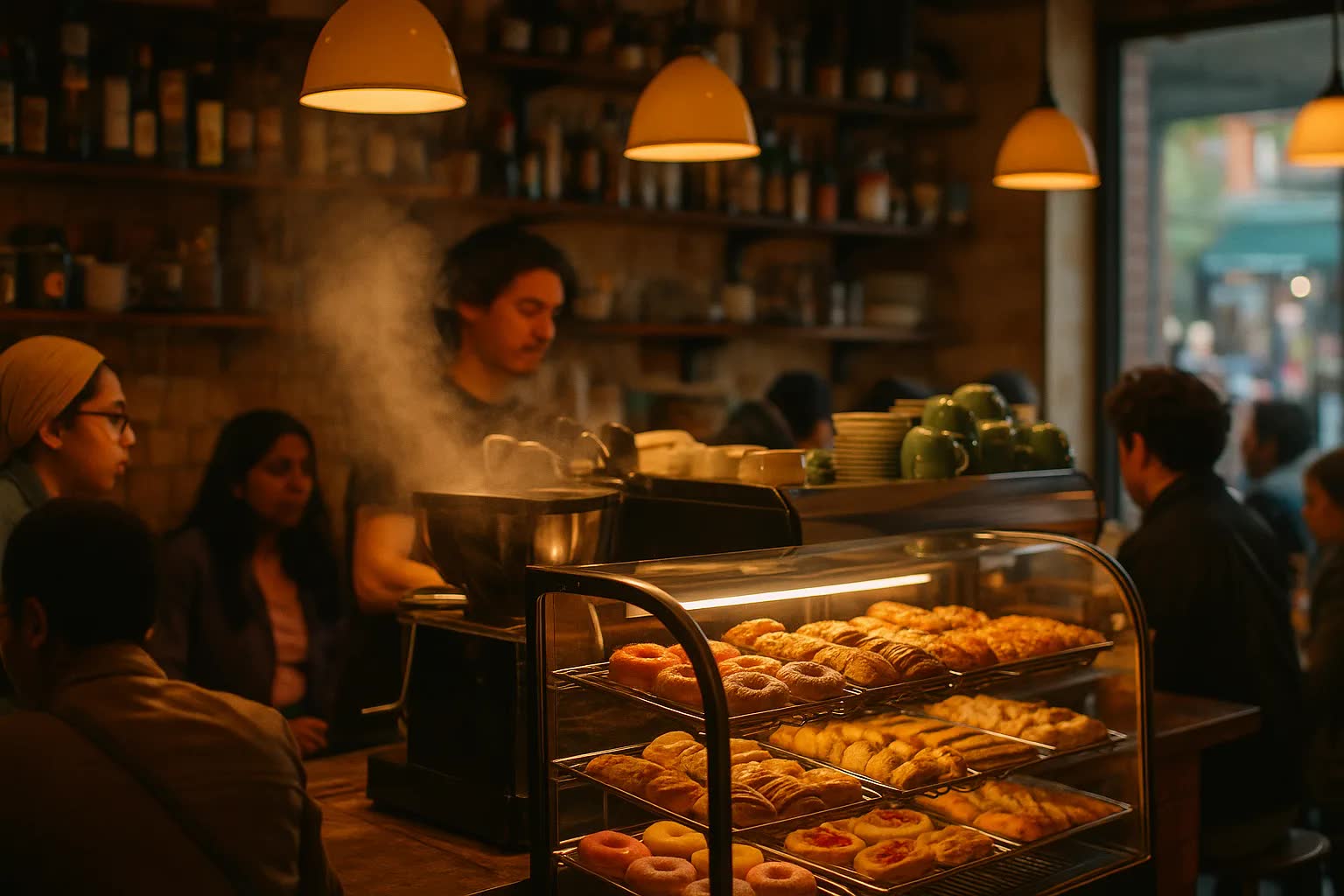
On a spring morning in Jackson Heights, the smell of roasted coffee braids with the scent of cardamom and pan dulce as neighborhood cafés negotiate a new identity between immigrant tradition and third-wave technique. A block from Roosevelt Avenue and Diversity Plaza, small shops that once served as informal living rooms for Colombian and Ecuadorian immigrants are partnering with micro-roasters to produce limited-run beans that aim to preserve familiar regional flavors while courting specialty coffee drinkers from nearby Astoria and Elmhurst. The result is a counterculture that is distinctly local: not a wholesale replacement of customary cafés but a deliberate blending of two coffee worlds in the heart of Queens.
For decades Jackson Heights has relied on Latin American cafés where espresso machines sit next to shelves of conchas and bottled mamajuana. Places such as the long-running La Abuela Café on 37th Avenue, family-owned since the 1980s, have anchored community life, offering cafecito at five in the morning and dinner-table conversation late into the night. Those cafés traditionally used pre-ground blends imported from South America or Central America and brewed coffee to accompany sweets, newspapers and weekend domino games rather than for cupping notes or origin profiles.
In the last five years, a wave of micro-roasters has set up shop on side streets and in converted storefronts, bringing the language of terroir, cupping and pour-over to a neighborhood already fluent in more than a dozen languages. Cumbre Roasters opened a tiny production facility near 75th Street in 2022 and sells out its subscription batches within days. Owner-operators say their interest is not to replace neighborhood staples but to collaborate. "We don't want to gentrify their menus," said Sofia Alvarez, head roaster at Cumbre Roasters. "We want to help cafés keep the flavors customers grew up with, while elevating the beans so those flavors taste more like the farmers intended."
Collaborations have ranged from recipe swaps to co-branded releases. One recent example paired a single-origin Colombian Huila naturally processed bean with La Abuela's signature panela syrup; the micro-roaster adjusted roast curves to enhance molasses notes and the café served it with a warmed arepa. Another limited run married a Guatemalan Huehuetenango lot with a traditional horchata-style crema, a technique developed during a week-long residency in a shared kitchen on 37th Avenue. Baristas from both sides traded training: cafés learned to dial in extraction time and temperature, roasters learned to balance acidity against the dense sugar profiles of regional desserts.
"People come here for comfort, but they also want better coffee," said Carlos Méndez, co-owner of La Abuela Café. "When we first started working with roasters, my abuela was nervous. She said, 'You can't mess with the coffee my hands make.' But after the first cup, she said we were honoring it, not changing it. That's been important for our customers to see."
The technical adjustments are precise. Roasters experiment with roast profiles at increments of 15 to 30 seconds on the development curve and adjust airflow and drum speed to coax citrus or chocolate notes. Cafés tweak grind size and dosing to keep a consistent flavor when switching from house blend to single-origin. "It's micro-adjustments for a macro result," Alvarez said. "We measure extraction yield, total dissolved solids, and tweak recipes for each batch so that when someone asks for 'the coffee that tastes like mamón' next to the chess table, they can have that memory plus clarity in the cup."
Those experiments have measurable impact. Since 2019 the number of certified micro-roasters operating in Jackson Heights has risen from two to 11, and at least 14 longstanding Latin American cafés have engaged in some form of collaboration with roasters, according to an informal survey conducted by the Jackson Heights Business Alliance. Typical limited-run batches are 10 to 50 kilograms, priced at $18 to $28 per pound wholesale, with retail pour-over or espresso flights sold between $4 and $8. In a sample month last fall, collaborative pours accounted for between 12 percent and 27 percent of revenue at participating cafés, and subscription boxes for collaborative releases garnered 400 to 1,200 preorders per release across three local roasters.
The neighborhood geography matters. Collaborations happen on blocks that have long been cultural crossroads: 37th Avenue, where seafood markets and sari shops sit two doors from bagel shops; the stretch around 74th Street and Broadway, where a lunchtime rush of office workers meets multigenerational families; and small side streets near 82nd Street, where new roastery warehouses reuse former garment district spaces. The proximity to transit hubs helps. Customers from Elmhurst or Corona can be at a roastery cupping in under 20 minutes, and residents who grew up in Jackson Heights still find their old corner table. The result is a daily exchange of tastes and stories.
Critics say the phenomenon risks aestheticizing immigrant flavors for a wealthier demographic. Owners counter that collaborations are negotiated and reciprocal, not top-down. Training programs now include bilingual barista courses, and several roasters use neighborhood hiring policies. "We want technicians who speak Spanish, Bengali or Nepali when the shift starts at 6 a.m.," said Mariana Ruiz, director of community relations at a nonprofit that connects roasters and cafés. "That's been crucial for keeping these projects rooted in the people who live here." Customers interviewed in parks and on stoops described gratitude more than resentment, noting that collaborative menus have kept cafés economically viable while drawing younger crowds during afternoon lulls.
Looking ahead, the collaborations show no sign of slowing. Roasters and cafés are planning seasonal releases tied to cultural calendars, including a midsummer coffee that will pair a Peruvian lot with lucuma-infused milk and a Diwali collection that contrasts South Indian-style filter coffee with Latin American spice blends. In June, Cumbre Roasters and four neighborhood cafés will launch a monthlong "Jackson Heights Cupping Series," offering educational tastings, bilingual workshops and a community-sourced roast where residents nominate flavors to be preserved. The experimenting continues, and in a borough that has long brewed together, the next cup will likely taste like home and like a new frontier at once.