JFK Terminal Overhaul Spurs Small-Business Concerns in South Queens
Local suppliers and taxi drivers warn that construction timelines and reconfigured traffic patterns threaten livelihoods tied to airport traffic.
By Noah Fitzgerald · March 7, 2026 · 4 min read
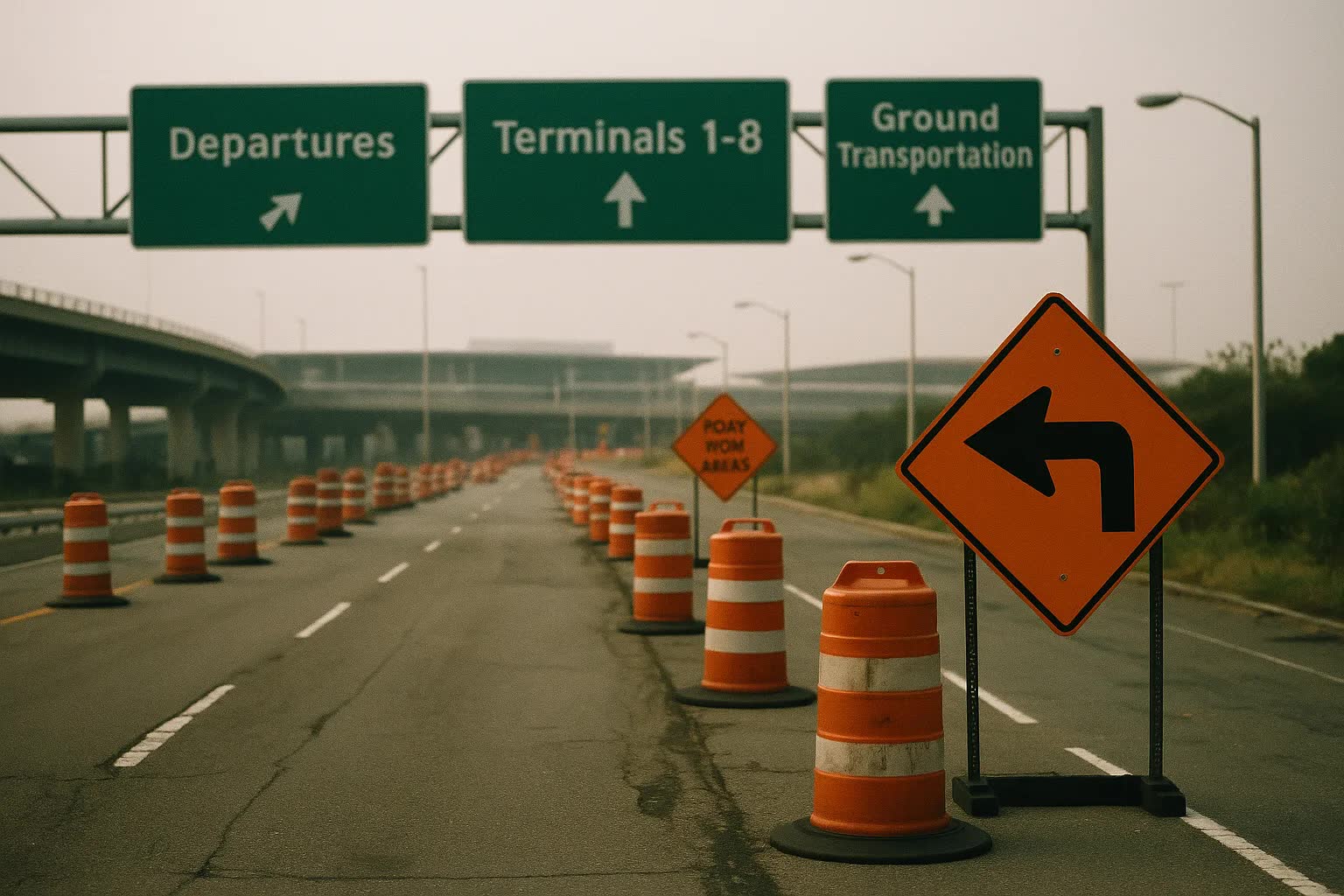
NEW YORK — A multibillion-dollar overhaul of a busy JFK terminal has energized debates in South Queens about who will pay the price for a modernized airport, as local suppliers, taxi drivers and neighborhood shopkeepers warn that shifting construction timelines and reconfigured traffic patterns threaten the steady stream of customers and contracts that have sustained livelihoods for decades.
The Port Authority’s JFK Redevelopment Program, now entering what officials call Phase II, will remake Terminal 5 and its surrounding service roads to expand passenger capacity and add new curbside security checkpoints, work that planners say is critical to reducing long-term congestion at John F. Kennedy International Airport. But the project’s immediate effects on adjacent streets — in neighborhoods from South Ozone Park to Jamaica — have prompted a flurry of community meetings, emergency business planning and some sharp public criticism.
For many small suppliers, the airport’s travel lanes are less a symbol and more a daily lifeline. Marco D'Santos, owner of D'Santos Fruit Market in South Ozone Park, said the store’s wholesale clients include several concessionaires inside Terminal 5 and van drivers who pick up from his loading dock three times a day. "When they start blocking Rockaway Boulevard for staging or close the North Conduit approach for months at a time, those vans don’t come," D'Santos said. "We’re not just losing a sale — we lose the whole chain of deliveries that kept us open through slow seasons."
Taxi operators and car-service drivers say changes to curb access and taxi queuing areas could be equally disruptive. Aisha Green, president of Rosa's Taxi Cooperative in Jamaica, said drivers already contend with longer walks, staggered shift starts and unpredictable waits. "Our drivers live off hourly runs to and from the terminals," Green said. "If staging zones move two blocks away or curfewed daytime lanes reduce pickups, that’s a direct cut to their paychecks and to the independent drivers who can't absorb months of lower fares."
The project’s public documents and early contractor memos disclose concrete figures that help explain the alarm. The Phase II contract, awarded last year, is valued at $3.8 billion with an expected construction window of 60 to 72 months, though officials say some work will be accelerated. Planners estimate that traffic re-routing will affect roughly 18,000 inbound and outbound vehicles a day along Rockaway Boulevard and North Conduit Avenue for at least 22 months; they project 420 airport-dependent small businesses in South Queens could see revenue declines averaging 15 to 30 percent during peak construction. Port Authority modeling cited in a recent briefing put anticipated taxi and ride-hail turnaround times up by 12 to 20 minutes during the busiest midday hours.
The disruption is already taking shape on the ground. In Howard Beach and Richmond Hill, hotels that traditionally host arriving crews and delayed passengers report a drop in bookings for contractor crews who typically stayed overnight to meet early-morning pickups. Luna Logistics, a cargo handling firm based off Lefferts Boulevard that serves several concession suppliers, says its loading schedules have been repeatedly delayed because of temporary lane closures and new security holds near the terminal perimeter, forcing the company to add overtime and pass fees onto small vendors.
Port Authority officials acknowledge the pain but say mitigation efforts are in place. Marina Delgado, a Port Authority spokesperson, said the operator will deploy shuttle routes, temporary loading corridors and an expedited permit process for commercial vehicles to limit local impacts. "We hear the concerns of South Queens businesses and drivers," Delgado said. "Our traffic-management plans are being coordinated with the city and community boards to minimize harm and provide alternative access during critical phases of construction." Critics say the measures are vague and the timing uncertain.
At a town-hall meeting last month in a community center on Archer Avenue, a senior MTA planner who requested anonymity told residents that contingency plans might still be altered as contractors submit their sequencing plans. Community board members and local elected officials pressed for guarantees: off-peak work windows, financial relief funds for displaced vendors and clearly marked commercial corridors. Some voiced skepticism. "They’ve been promising us shuttle buses since Phase I and we still had drivers circling for an hour last summer," said Laila Rodriguez, chair of a local merchants association.
Individual stories capture what broader numbers cannot. Malik Thompson, a 12-year driver for a neighborhood hack license who lives in Ozone Park, said he is already switching shifts to try to avoid the expected mid-morning snarls that will add time to each round trip. "I have to choose between sitting at the airport lots for less money or driving less and making nothing at all," he said. Nearby, Rosa's Taxi Cooperative is organizing a legal fund and a roster of substitute routes that would lean on the Belt Parkway and Woodhaven Boulevard if the Port Authority does not narrow the planned curbs and staging areas.
Looking ahead, the Port Authority has scheduled a revised traffic plan for release in June and will hold an additional series of outreach sessions in South Ozone Park, Jamaica and Howard Beach; advocates say they will press not just for mitigation but for binding compensation measures tied to demonstrable revenue losses. For now, small businesses and drivers say they will watch the summer of construction closely and continue to push city and airport planners to translate promises into cash-flow relief and clearer commuting corridors before the work reaches its busiest sections.