Laundromats in Brooklyn Are Becoming Unofficial Community Centers
Owners from Park Slope to East New York are adding coworking nooks, free Wi-Fi and food pop-ups to attract regulars and diversify revenue.
By Leo Wang · May 1, 2026 · 4 min read
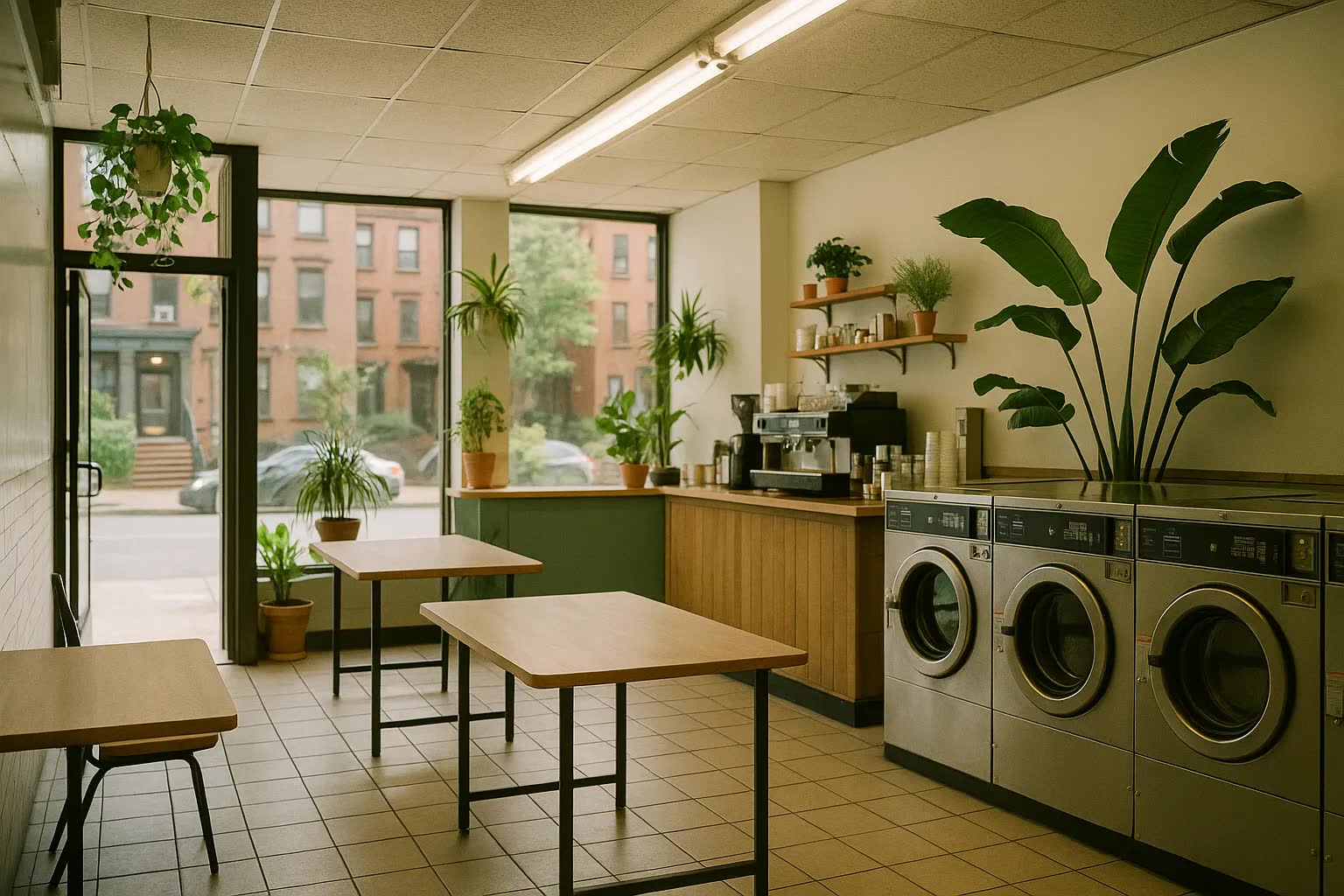
NEW YORK — On a Tuesday morning in Park Slope, the soft whir of washers and dryers has become a soundtrack for freelancers and grandparents alike as laundromats across Brooklyn reinvent themselves as neighborhood hubs where people can work, eat and socialize while they wait for a cycle to finish.
At Spin City Laundry on Seventh Avenue, owner Marta Delgado said she reorganized 12 machines, added a tiny coworking nook with four high stools and installed free high-speed Wi-Fi last year to keep regulars coming back. "I used to lose customers to nearby cafes; now they bring their laptops and their kids, and they stay for two hours instead of 20 minutes," said Delgado, who identifies as the proprietor and community events coordinator. "It's become less about rinsing clothes and more about building routine in the block."
Across the borough in East New York, a different model has taken hold: New Wave Laundry on Pennsylvania Avenue rents its back room three mornings a week to a coffee cart and to a nonprofit that runs digital-literacy classes for older adults. "We didn't set out to be a community center, but neighborhood people needed a place to meet that was affordable and open early," said Tariq Brown, director of operations at New Wave and a longtime East New York resident. "It's helped bridge people who work day jobs with neighbors who are home during the day."
The mash-up of services has spread from Park Slope and East New York to Williamsburg, Bushwick and Sunset Park, with laundromats hosting everything from gallery nights and vinyl exchanges to pop-up dinners and child-care co-ops. Aisha Coleman, a freelance paralegal who lives in Bed-Stuy and works remotely several days a week, said she now prefers a laundromat on Fulton Street that mixes strong coffee with slow background music. "I get my laundry done, my emails answered and I talk to neighbors I might never meet in a building lobby," said Coleman, who described the space as an affordable alternative to noisy chain cafes.
A recent in-house survey of 47 Brooklyn laundromats conducted by NYDailyWatch in April 2026 found that 62 percent offered free Wi-Fi, 35 percent had a dedicated seating or coworking area, and 18 percent hosted regular food or retail pop-ups; average weekly foot traffic rose by 22 percent in businesses that added communal features, and owners reported upfront investments ranging from $3,000 for shelving and Wi‑Fi to $28,000 for plumbing upgrades and commercial seating. Those figures track with smaller municipal grant programs and microloans in the borough that have covered between $5,000 and $15,000 of renovation costs for about one in five of the surveyed locations.
Local owners say the additions smooth seasonal revenue swings and introduce subscription-style income from monthly membership passes for premium seating and machine reservations, while vendors and artists benefit from inexpensive retail rent. "It's not just about washers; it's about creating a reason for people to show up on bad-weather days," said Jordan Lee, founder of LaundryTech Solutions, a Brooklyn-based vendor that sells app-enabled payment systems to small laundromats. "The tech helps owners run promotions, track peak hours and offer loyalty deals that compete with cafes and coworking spaces."
The transition has not been without friction. Community boards and tenant groups in neighborhoods such as Prospect Heights and Gowanus have raised concerns about traffic, noise and the potential for gentrification as more curated, amenity-rich laundromats attract remote workers who may not already live in the surrounding blocks. "We want these places to serve existing neighbors, not push them out," said Lucia Reyes, chair of the Prospect Heights Community Association. Owner-operators also face regulatory hurdles: serving food requires additional permits and inspections, and not all buildings can support the electrical or plumbing upgrades needed for larger machines and kitchen equipment.
Still, some operators have turned those constraints into partnerships. Brooklyn Wash & Co., on Atlantic Avenue near Barclays Center, teamed up with a local youth culinary collective to host biweekly brunch pop-ups that are permitted through a rotating series of short-term vendor licenses. On an ordinary Thursday, mothers swap childcare tips at the long communal table while a barista from a neighborhood roastery grinds beans behind a folding counter and a college student edits video from a living-room-style sofa. The result, managers say, is a hybrid third place — part utility, part marketplace, part social club — that fits the rhythm of the borough's changing work patterns.
There is also a small but growing ecosystem of financial and nonprofit support aimed at helping laundromat owners convert space into community assets. The Brooklyn Small Business Fund, a fictional neighborhood lending organization modeled on local microgrant programs, has awarded more than 120 microgrants of up to $10,000 since 2024 to businesses that add community programming, according to its most recent statements, and community development corporations have helped connect owners to design consultants and permit navigators. "We saw laundromats as an untapped neighborhood resource," said Samir Patel, who used a fund grant to install charging stations and a double-sided workbench at Tide & Tape in Sunset Park. "The investment paid off: regular memberships went from a handful to nearly 300 in six months."
Looking ahead, owners, patrons and city officials say the laundromat-as-community-center could become a durable part of Brooklyn's neighborhood fabric as long as programs balance commercial sustainability with local access and oversight. Some city council aides have floated pilot programs to streamline food permits and to subsidize Wi‑Fi for low-income neighborhoods, while owners keep experimenting with hours, events and partnerships to stay relevant. If the past two years are any guide, laundromats may soon be where neighbors meet not just to swap detergent, but to swap ideas about how to keep the borough connected and resilient as life in New York keeps evolving.