Legal Fight Over Bronx Courthouse Closure Raises Access Concerns
A state proposal to centralize lower-court services has prompted lawsuits from local officials who argue it will hinder access to justice for low-income residents.
By Olivia Park · December 2, 2025 · 5 min read
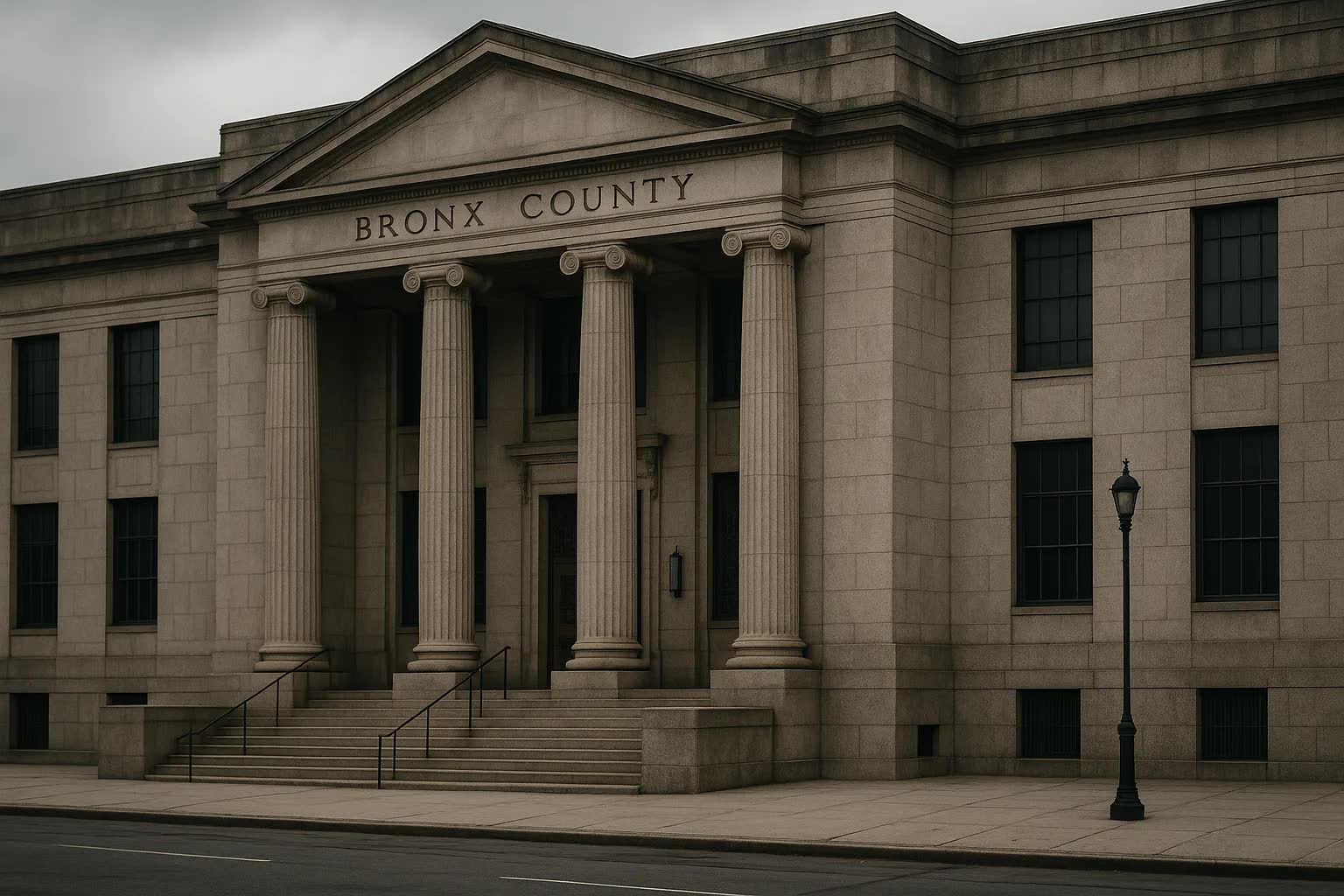
NEW YORK — A state plan to close a longtime Bronx courthouse and centralize lower-court services in a single downtown hub has prompted a flurry of lawsuits and renewed questions about access to justice for low-income New Yorkers, with critics saying the consolidation would push routine matters — housing cases, consumer disputes and landlord-tenant proceedings — farther from the neighborhoods they affect. The proposal, which targets a municipal building near the Grand Concourse and 161st Street that has served the borough for decades, has become a touchstone in a broader debate over whether efficiency gains justify increased travel and bureaucratic complexity for the city’s poorest residents.
Officials from Albany argue that consolidating clerks’ offices, arraignment desks and civil filing rooms into one centralized center would reduce duplication and long lines across the city’s patchwork of lower courts, but local lawmakers and community groups say the move would erase years of gradual access improvements in the South Bronx, Belmont and Morrisania. The state plan, unveiled last fall, would shift 12 lower-court functions out of the Bronx building into a newly renovated facility proposed for Foley Square in Manhattan, while maintaining major felony and family court calendars in the borough.
Within days of the state announcement, Bronx leaders — including Borough President Rosa Martinez and three City Council members who represent parts of Tremont, Fordham and Mott Haven — joined a class-action lawsuit filed in Bronx County Supreme Court challenging the closure as arbitrary and discriminatory. The suit, brought with backing from the Bronx Justice Coalition and the Bronx Civil Legal Aid Project, seeks a temporary restraining order to block the transfer while it argues the state failed to conduct an adequate public-interest review or consider the transportation burdens imposed on low-income litigants.
"This is not a budget line item; it's the front door to our courts," said Councilwoman Anika Brooks, who represents the West Farms and Fordham neighborhoods, at a press conference on the steps of the courthouse in late November. "For many of our constituents, losing a local courthouse means missing work, missing hearings and ultimately losing housing — and that's what this consolidation will do to people who already are one subway delay away from disaster." Brooks's office has cataloged dozens of constituent stories about missed hearings attributed to long waits and complicated cross-borough commutes.
State officials defend the consolidation as a modernization effort designed to speed case processing and reinvest savings in legal services. "We are proposing a streamlined system that will reduce redundancy and better allocate judicial resources where they're most needed," said Richard Lacey, deputy director of the State Office of Court Reorganization. "We hear the concerns about logistics, and we are proposing transportation supports and satellite intake points to mitigate those impacts, but the overall gains in efficiency are clear." Lacey declined to provide a final timeline, saying the plan remains subject to regulatory review and potential court rulings.
Under the state plan as presented to community boards and city officials, three Bronx lower-court intake locations would close and 14 administrative functions would be consolidated into two downtown hubs; citywide, the number of stand-alone lower-court clerks’ offices would drop from 23 to 11. The state projects annual operating savings of roughly $12 million while estimating upfront renovation costs of about $5.6 million for the downtown center. Officials estimate the consolidation would affect approximately 95,000 civil filings and 42,000 housing-related cases originating in the Bronx each year; average one-way travel time for affected litigants could rise from an estimated 23 minutes to 58 minutes, according to internal projections shared with local officials.
Community advocates say those numbers understate the human costs. Many Bronx residents rely on bus lines that are slower than subways and have caregiving responsibilities that make added travel times untenable; Spanish-speaking and elderly litigants, they add, face steep barriers in navigating a centralized facility without robust language access and neighborhood-based assistance. "Our intake team hears from people every day who simply cannot afford to take a day off to go to Foley Square," said Dalia Rios, director of the Bronx Civil Legal Aid Project. "If you compound extra travel time with lost wages, childcare costs and confusion about where to file, you get fewer people showing up — and that means less access to justice for tenants and survivors of abuse."
The lawsuits press several legal theories, including alleged violations of procedural requirements under state administrative law and claims that the consolidation would have a disparate impact on protected classes in violation of anti-discrimination law. Plaintiffs have asked Judge Martin Hale of the Bronx County bench for an expedited hearing, with briefs due next month and a preliminary injunction hearing tentatively scheduled for Jan. 22, 2026. Court records show both sides have retained teams of attorneys, and the plaintiffs have signaled they may seek a statewide injunction if the initial challenge fails.
Employees at the courthouse and their union have also weighed in, warning of staff layoffs and the loss of institutional knowledge tied to long-tenured clerks who understand neighborhood patterns and languages. "We are not just closing a building; we're erasing a place where people could come in and be helped by someone from their own community," said Frank Delgado, president of the Bronx Courthouse Employees Union. Delgado said union leaders were negotiating with state officials to preserve as many positions as possible and to create formal roles for neighborhood intake coordinators if consolidation proceeds.
For now, the fight is likely to stretch through the winter into the legislative session, testing the balance between judicial efficiency and local access in what may become a template for other boroughs facing similar proposals. If the state prevails in the courts, critics say they will press the City Council and Albany lawmakers for statutory protections to keep basic intake services in neighborhood hubs; if the plaintiffs succeed, the state may have to return to the drawing board, offering alternatives that preserve local access. Either way, the outcome will shape where Bronx residents go next time they receive a summons, seek a housing remedy or stand up in court — and whether those trips feel like a reasonable part of civic life or an insurmountable barrier.