LIRR Expansion Sparks Eminent Domain Fight in Nassau and Suffolk
Plans to add a third track have intensified debates over property takings, compensation and local governance along the corridor.
By Malik Johnson · December 8, 2025 · 4 min read
NEW YORK — On a crowded winter morning at Penn Station, a throng of Long Island Rail Road riders boarded trains bound for Mineola, Hicksville and Babylon, unaware that a yearslong infrastructure plan to add a third track along the Main and Montauk corridors has transformed their commute into the flash point of a bitter land-ownership fight across Nassau and Suffolk counties.
The Metropolitan Transportation Authority’s plan, unveiled last spring, would add a third continuous track along roughly a 32-mile stretch from Floral Park through central Nassau into western Suffolk, with new switches, grade crossings eliminated and expanded platforms at multiple stations. Proponents say the work will increase capacity and reliability for the roughly 280,000 daily riders who use the affected branches; opponents say the project’s use of eminent domain threatens homes, small businesses and locally governed streetscapes from Garden City to Patchogue.
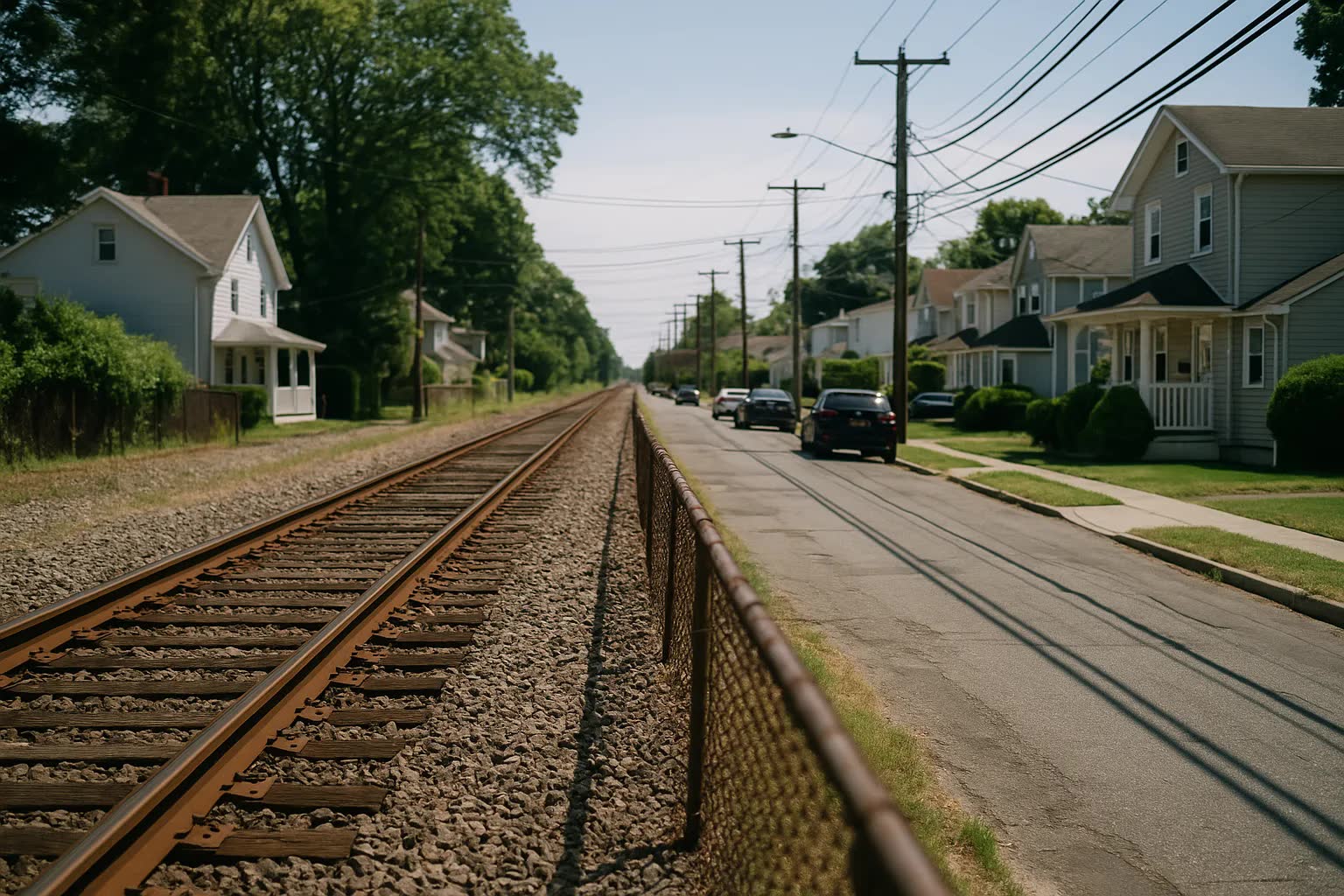
Neighbors and municipal officials describe narrow residential blocks and commercial strips that sit just feet from the rail right-of-way, and the prospect of property takings has injected the expansion with political heat. Homeowners along Jericho Turnpike in Mineola and Merrick Road in Freeport have received preliminary notices of intent, while small-business owners on Main Street in Huntington and the strip of storefronts near Roosevelt Field Mall say planners have suggested partial acquisitions that would render buildings unusable.
"I moved my family to Rockville Centre so my kids could walk to school and so we could be part of a tight-knit street; suddenly the government says a chunk of our backyard will be taken for a track," said Marco Silva, president of the Mineola Property Owners Association. "Compensation offers don't reflect the value of community ties, and the process has been opaque from day one."
The scale of what is proposed is concrete and precise: MTA filings reviewed by local officials identify approximately 412 parcels as potentially affected, including 278 residential lots, 94 commercial properties and 40 municipal parcels used for parking or utility access. The preliminary budget for construction sits at an estimated $4.6 billion, with a separate $210 million contingency for property acquisition and relocation; planners project phased construction between 2026 and 2033 and say the third track could reduce peak-period crowding by as much as 22 percent on the busiest segments.
MTA planners insist the project is engineered to minimize takings and maximize transit benefits. "We know taking property is a last resort and our teams are redesigning alignments wherever possible to avoid residential homes," said Evelyn Park, a senior MTA planner who requested anonymity when discussing negotiation strategies. "When acquisitions are unavoidable, we will offer a relocation package and adhere to state law on just compensation, but we also have an obligation to the hundreds of thousands of riders who need more reliable service."
Local governments have reacted with a patchwork of resistance. The towns of Hempstead and Islip have passed emergency resolutions demanding expanded hearings and tighter valuation rules; village boards in Floral Park, Garden City and Babylon Village have filed friend-of-the-court briefs seeking to compel the MTA to negotiate with municipalities before initiating takings. Attorneys for several towns argue that state eminent domain law requires a higher bar when a public project will significantly alter a village’s character, while MTA lawyers counter that the authority’s broad mandate to run and improve regional transit outweighs local zoning concerns.
Small-business owners say the compensation formulas do little to restore livelihoods. A deli owner on Merrick Road in Freeport presented a municipal hearing with three years of tax returns and argued that replacement premises within walking distance for his clientele would carry triple the rent; another proprietor near Patchogue's Main Street said shuttering for construction would bleed customers to businesses off the corridor. "The numbers they give are cold market comps, not the loss of a community that feeds my family," said Aisha Patel, an attorney representing a group of homeowners and business owners challenging early notices in state court.
Early litigation has already slowed the timetable. At least four separate suits have been filed in Nassau and Suffolk Supreme Courts seeking preliminary injunctions and more robust environmental review, and administrative appeals are pending over appraisal methods and relocation assistance. Transportation analysts say the outcomes could set a precedent for how large-scale rail projects reconcile regional mobility needs with suburban property rights — a tension playing out at planning boards and in living rooms from Jamaica to Sayville.
Public hearings are scheduled next month and both sides say they will press their case before the MTA board and the courts; local leaders warn that if offers and mitigation fail to address displacement and the erosion of local control, additional municipalities will join the litigation. Officials at the MTA say design work will continue, but they acknowledge that routing and compensation disputes could reshape the project’s scope and timeline; for residents, the coming months will determine whether the expansion becomes a model for cooperative regional planning or a cautionary tale about government takings in suburban New York.