LIRR Right-of-Way Becomes New Corridor for Dark Fiber Expansion
Commuter rail easements are being repurposed to run high-capacity fiber that could reduce broadband gaps for Long Island homes and businesses.
By Olivia Park · March 6, 2026 · 4 min read
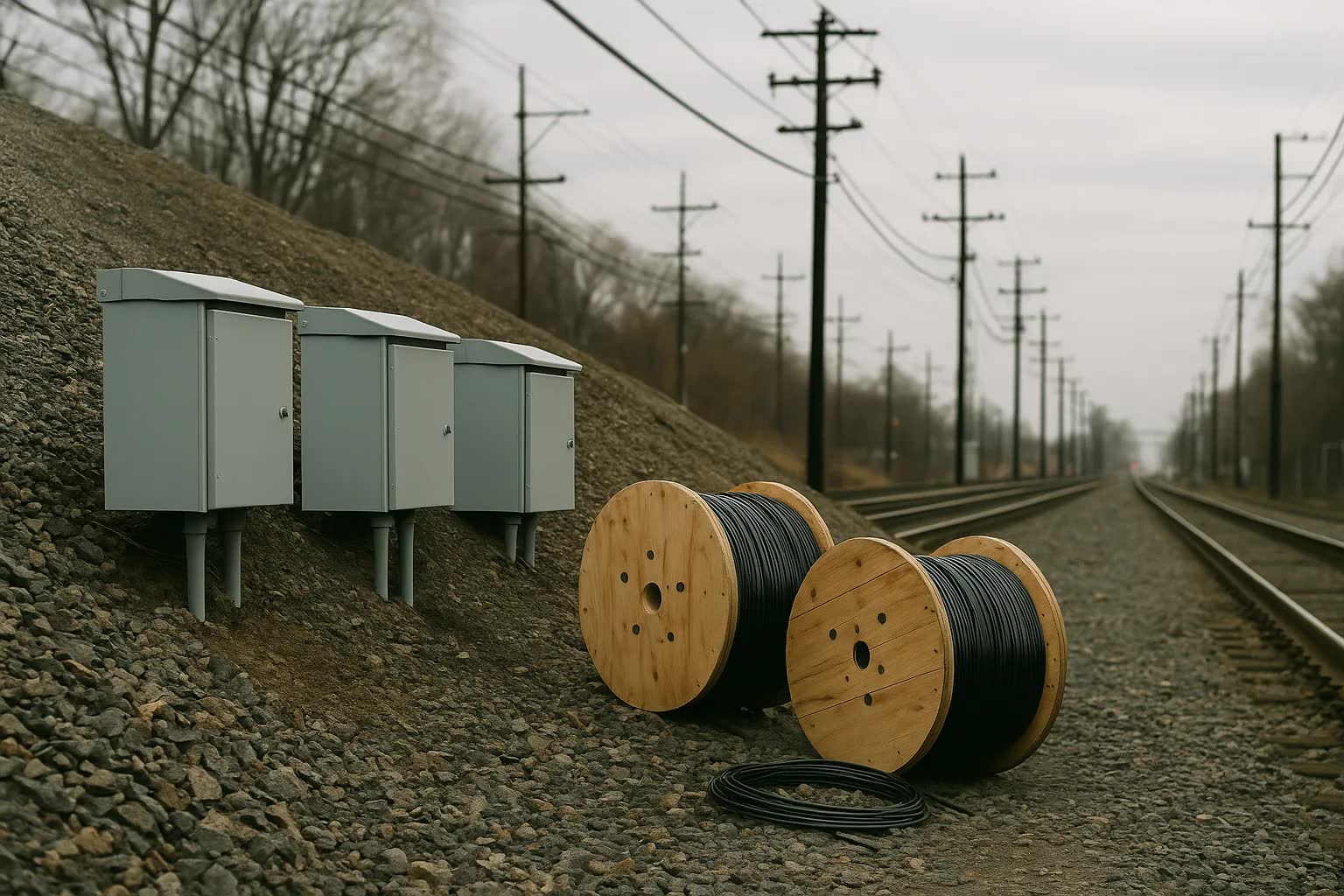
NEW YORK — The Long Island Rail Road’s mile after mile of fenced easements and grassy medians, long seen only as a transit asset threading Queens and Brooklyn into Manhattan, is quietly being recast as one of the city’s most valuable corridors for broadband expansion, with dark fiber cables now scheduled to run beneath tracks from Long Island City to Jamaica and beyond to Nassau County.
Transportation and telecommunications officials say the move leverages decades-old commuter-rail easements to avoid the expense and disruption of digging up busy arterial streets in neighborhoods such as Sunnyside, Astoria and Forest Hills, and to reach apartment buildings and strip malls that have been left behind by incumbent internet providers.
Evelyn Cho, chief network officer at HarborLight Fiber, the private partner selected for the city’s pilot, said the corridor provides a rare, continuous alignment through densely developed neighborhoods. "Rail rights-of-way are predictable, contiguous and already protected from utility cuts and accidental damage — that makes installation faster and less costly, and it reduces the time residents and businesses are offline during work," she said.
The project will install conduit and blown fiber in newly bored microducts placed alongside tracks, with periodic splice huts and handholes at station platforms and signal houses. HarborLight will operate the dark fiber under a neutral-host model that leases fiber strands wholesale to retail internet service providers, colleges and hospitals, leaving last-mile competition intact. Engineers say the work will require night and weekend possessions of the track, coordination with LIRR signal crews, and extra mitigation near historic structures like the Gantry Plaza State Park shoreline in Long Island City and the Atlantic Terminal approaches in Brooklyn.
City and company documents outline the scale: about 48 miles of contiguous right-of-way within the five boroughs will be available for fiber, with an initial 22-mile pilot from Long Island City to Jamaica. HarborLight estimates the fiber could directly pass 180,000 apartments and 12,500 small businesses in Queens and northwestern Nassau County; a single pair of fiber strands can today carry multiple terabits per second through dense wavelength-division multiplexing, meaning one installed cable could deliver aggregate capacity equivalent to hundreds of commercial fiber routes. Total development costs for the New York segment are projected at $75 million, with a commercial rollout window of 12 to 24 months after permits are secured.
A senior MTA planner who requested anonymity to speak candidly about internal deliberations said the authority viewed the effort as a way to monetize dormant easements without compromising operations. "The priority is safety and uninterrupted schedules, but this is a pragmatic way to bring in revenue that can be plowed back into track maintenance and signal upgrades," the planner said. "We’ve set strict attachment standards and emergency access protocols — the fiber vendors will be treated like any other rail tenant.”
The proposal has drawn mixed reactions from community groups and business owners along Jamaica Avenue and in neighborhoods east of Penn Station. Rosa Martinez, who runs Martinez Hardware on Jamaica Avenue, said customers still ask about reliable broadband for contractors and security cameras. "If this brings steady service and a few more options, it’ll help my business and the other stores that depend on fast payment systems," Martinez said. Nearby tenant advocates, however, want enforcement language ensuring lease revenues pay for local resiliency projects rather than feeding distant budgets.
Officials and industry advocates emphasize the public-interest case: connecting schools, clinics and community centers that struggled with spotty service during the pandemic, and enabling denser data capacity for hospitals such as Elmhurst Hospital Center and smaller neighborhood medical practices. The MTA’s draft lease agreement envisions annual rights payments that could approach $3 million a year from the fiber corridor alone once retail leasing ramps up, and stipulates a right-of-entry fee structure, insurance minimums and a community benefits clause that would fund digital literacy programs.
Regulatory hurdles remain. The operation requires joint inspection regimes with the LIRR’s signal department, state Public Service Commission clearance for utility work adjacent to active rail, and a patchwork of municipal permits in Queens, Brooklyn and Nassau County. HarborLight executives insist an open-access dark fiber approach will encourage ISPs to compete on price and service, but some municipal officials worry about oversight: who will enforce maintenance standards and how will disputes over fiber access be resolved without slowing service rollout?
If the pilot meets milestones, officials say the LIRR corridor could become a template for other commuter rail systems. HarborLight has sketched an expansion to Montauk Branch alignments and possible handoffs into Nassau and Suffolk suburban networks, while city planners envision a future in which the LIRR median between Sunrise Highway and Northern Boulevard not only carries commuters but also supplies the backbone for neighborhood connectivity. For residents of Jackson Heights, Long Island City and Forest Hills, the hope is tangible: faster, cheaper and more reliable broadband that arrives with the same regularity as the morning train.