Little India in Richmond Hill Keeps Festival Traditions Across Generations
Organizers balance ritual, commerce and youth-driven reinterpretation in outdoor celebrations that line Liberty Avenue each season.
By Aisha Bello · January 11, 2026 · 4 min read
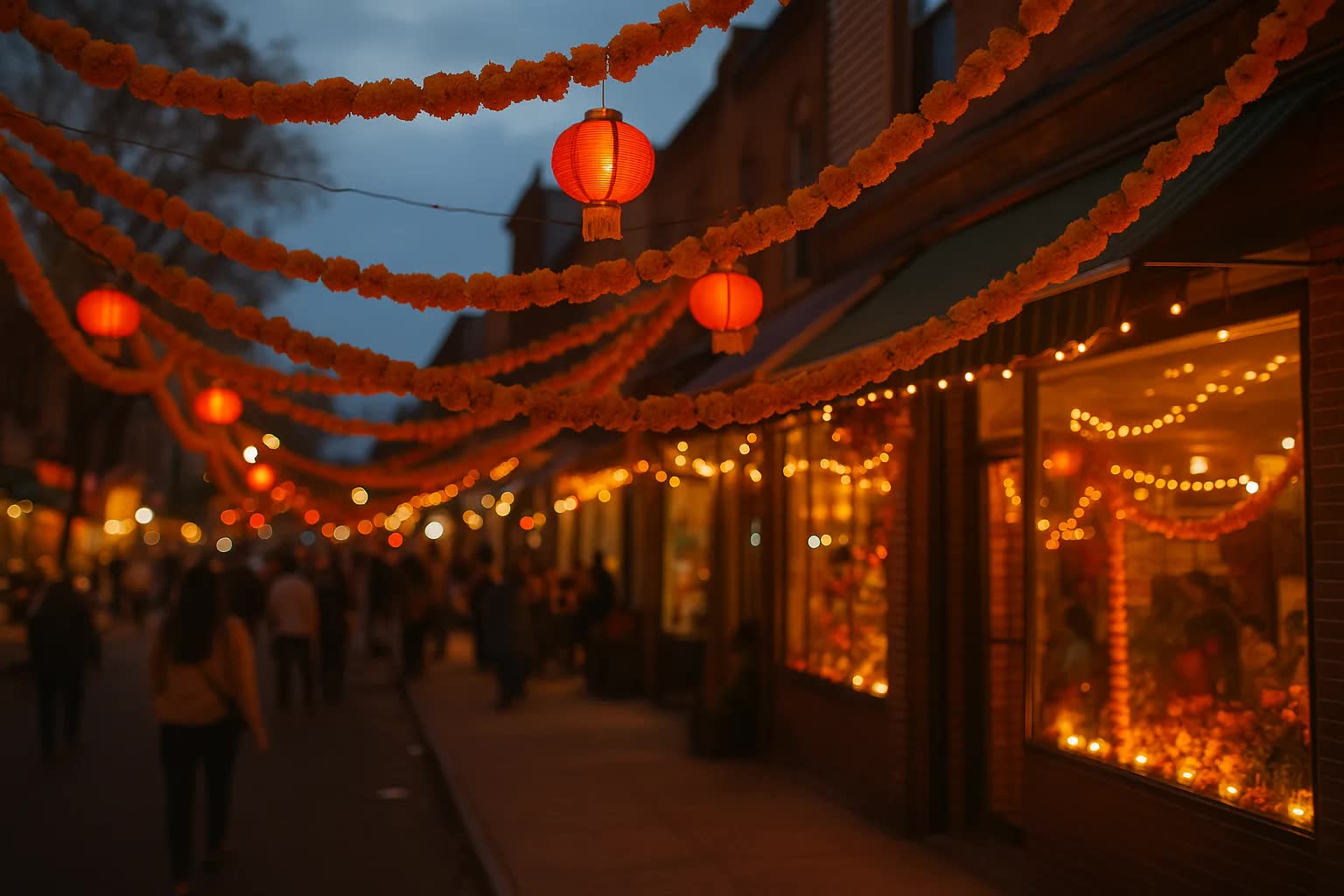
Along Liberty Avenue in Richmond Hill, Queens, the street takes on the scale and sparkle of a small city during festival season: strings of marigolds drape fire escapes, sari yards spill color onto the sidewalk and the scent of frying samosas competes with frankincense from makeshift shrines. The weekly rhythm of storefronts — the sari shops, sweet shops and travel agencies clustered between Lefferts and 121st Street — becomes a seasonal boulevard where ritual, commerce and youth-driven reinvention meet on what many residents call Little India, creating a distinctly New York version of continuity amid change.
On any given afternoon during Diwali or Holi observances, neighbors gather on folding chairs outside Sri Vishnu Mandir to watch a puja, while across the avenue a djinn of dhol beats pulls a crowd that might include a grandmother in a bandhani sari and teenagers in streetwear with LED garlands. The rituals remain anchored in temple schedules and family rites, but organizers say the street is also a stage where newer practices — pop-up art installations, bilingual storytelling and commercial tie-ins — are layered onto a tradition that elders insist must be respected.
For business owners, the festivals are both an obligation to community and a crucial source of revenue. "Our monthly sales during festival weeks are often three to four times what we do in January," said Maya Desai, co-chair of the Richmond Hill Business Association, standing in front of Anmol Sweets on Liberty Avenue. "We have mothers who buy thalis and priests who need incense, but we also see young people buying fusion street food and throwback vinyl — that mix pays salaries and keeps these shops alive."
Young participants are not merely consumers; they are reinterpreters. Nadia Khan, 24, a dancer and co-founder of the Little India Youth Collective, organizes after-dark dance circles and light shows that fold contemporary movement into devotional songs. "We grew up with these songs but we also grew up with internet remix culture," Khan said. "We’re not trying to erase the past; we’re trying to make it ours so kids who were born here will keep coming back and teaching their kids the same things."
Logistics are increasingly complex, involving block permits, sanitation plans and coordination with local policing and transit. "Every year we work with the 107th Precinct, the Department of Transportation and the city’s event permitting office to map closures and safety plans," said Ravi Singh, a senior MTA planner assigned to community outreach for special events in southeastern Queens. "We try to maintain reliable bus service while allowing vendors space to set up; it’s a balancing act where the goal is safety without strangling the economic flow the festivals create."
The numbers underline why that balancing act matters: organizers say Liberty Avenue festivals draw between 40,000 and 60,000 visitors over a series of weekend events each season, with roughly 320 vendors permitted in the past year and temporary street seating for up to 1,200 people on peak days. Permit fees, merchandise sales and a rough estimate of ancillary spending on taxis and local services push the local economic impact into the low millions — organizers estimate $2.5 million to $3.5 million — and demographic surveys done by the business association indicate about 42% of attendees are under 35, a third travel from other boroughs, and 12% come from suburban Nassau and Suffolk counties.
That money can sharpen disagreements about what the festivals should prioritize. Some elders, temple leaders and long-term residents voice concern that commercialization dilutes ritual integrity, while younger entrepreneurs argue that marketable events are the only way to keep festivals visible to a broader public. "The mandir needs offerings and people to keep the lights on, but it also needs meaning," said Arjun Patel, cultural director at Sri Vishnu Mandir. "If every activity becomes a sponsorship, we lose the center. We are experimenting with curated sponsorship that funds outreach while keeping the rites free of branding."
Neighborhood specifics shape the debate: between 101st and 118th Streets the street widens enough for processions to pass without blocking storefronts entirely, while south of Forest Park the avenue narrows and residents in single-family homes complain about noise and parking. The Richmond Hill Library on 114th Street doubles as a rehearsal space for youth groups; Jackson Heights residents and visitors from Jamaica turn up in numbers on festival weekends, filling the local dining rooms and making parking a contentious subject in landlord meetings and civic association notices.
For many immigrant families, the festivals are cultural insurance — a way to hand down language, cuisine and ritual forms to children born in New York. They are also increasingly public: non-South Asian neighbors, local elected officials’ offices and even nearby high schools have begun to include festival activities in multicultural calendars. Organizers say that broad civic engagement has helped the events earn multi-year permits and occasional city cultural grants, although the money comes with reporting requirements and expectations that some say change the informal, homegrown character of the street fairs.
Looking ahead, planners and community leaders say next season will test whether Little India can keep its layered identity intact. The business association is negotiating a three-year permit package that would lock in dedicated vendor zones, expanded youth programming funded by a pilot cultural fund and an experimental app for real-time crowd management; temple leaders are drafting a code of conduct for sponsored spaces; and youth groups are planning workshops to teach elders digital archiving. All told, Liberty Avenue’s ritual-commercial ecosystem is preparing for another cycle of reinvention — a negotiation between past and future that will determine whether these streets remain the kind of New York place where tradition is lived and remade simultaneously.