Long Island City Data Centers Expand as Media Firms Seek Low-Latency Hubs
Proximity to Manhattan and dense fiber routes is driving new data-hall construction in Queens to serve streaming and ad-tech companies.
By Keisha Brown · March 13, 2026 · 4 min read
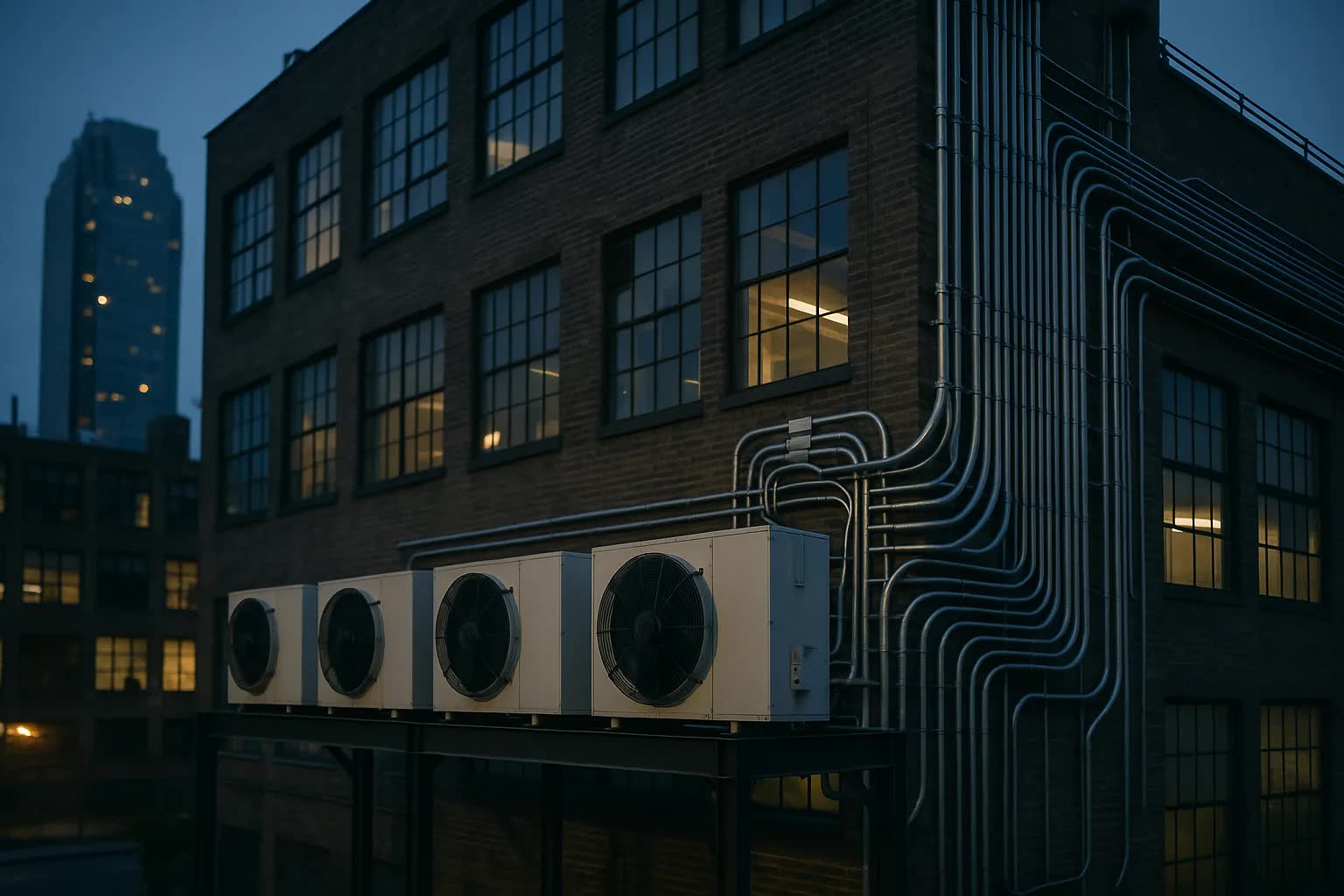
NEW YORK — Long Island City is fast becoming the low-latency back office for Manhattan’s streaming platforms and ad-tech firms, as new data-hall construction stretches along Jackson Avenue, 21st Street and the waterfront near Gantry Plaza State Park to meet demand for split-second processing just across the East River.
As media companies push ever more video streams and programmatic ad auctions through real-time pipelines, proximity to Midtown delivers measurable advantages in milliseconds and dollars. "When you’re bidding on an ad or stitching a 4K stream, every millisecond shaved off the round trip counts," said Alicia Chen, vice president of network operations at HarborStream Media, a streaming aggregator that has moved critical edge caches into a newly completed vault on Vernon Boulevard. "Being a bridge-ride away from our customers in Midtown was the deciding factor."
Developers and operators are responding with modular data halls that convert old industrial shells and build new, reinforced facilities within walking distance of the Queensboro Bridge. Queens Data Partners, a local colocation builder, is finishing a three-hall campus on Jackson Avenue near the Court Square subway complex that features on-site battery storage and a dedicated fiber meet-me room designed to handle multiple carriers and cloud on-ramps. "We designed the halls with carrier density in mind — it’s about resilience and choice for customers who demand sub-2 ms performance to Manhattan," said Liam Ortiz, managing director at Queens Data Partners.
Concrete figures for the expansion underscore how strategic Long Island City has become: two major projects completed or under construction amount to roughly 320,000 square feet of data-hall space and 40 megawatts of critical power capacity; developers say the campus will be connected to at least 18 separate dark-fiber routes into Manhattan and the broader metro area and is aimed at serving roughly 60 media and ad-tech clients. Built investment for the projects is estimated at $220 million, with roughly 350 construction jobs created during build-out and about 85 permanent operations and technician roles once the sites are fully commissioned. Average measured latency from the new halls to Midtown Manhattan test endpoints is pegged at about 1.2 milliseconds.
The appeal of Long Island City goes beyond geography. The neighborhood’s dense telecommunications infrastructure — legacy duct banks, multiple under-river conduits and an existing cluster of regional carriers — means fewer long-haul hops for traffic, lower packet loss and simplified peering arrangements for companies that must juggle enormous volumes of data per second. Engineers also note shorter logistics chains: trucks, fiber crews and on-call technicians can reach Midtown clients faster during outages or maintenance windows than if equipment were in New Jersey or upstate New York.
Neighbors and community groups say the boom brings trade-offs. Hunters Point activists have raised concerns about increased truck traffic, noise from emergency generator testing and rising rents for local small businesses. "We want good jobs and investment here, but we also want developers to contribute to neighborhood stability," said Marisol Vega, executive director of the Hunters Point Community Coalition. Vega pointed to a need for binding community benefits agreements that ensure local hiring and offsets for increased demands on streets and utilities.
City and agency officials say they are coordinating approvals and infrastructure reinforcement with private builders while balancing community needs. "Our permitting teams are working to expedite connection approvals for converged networks without compromising safety or neighborhood impact," said Daniel Park, a senior MTA planner involved in coordinating conduit access beneath rail right-of-ways. Park said that coordination with the utilities is crucial to avoid redundant trenching and to preserve capacity for future transit and broadband projects.
Industry players argue the move into Queens is part of a national pattern of edge buildouts that place compute closer to dense population and demand centers. Developers in Long Island City report a roughly 35 percent increase in leasing inquiries from streaming platforms, ad-tech firms and gaming companies over the past 18 months, and several projects have signed multi-year colocation deals that bundle space, power and direct connection services. Some operators are also experimenting with hybrid models — colocating latency-sensitive caches in Queens while using remote cloud regions for heavier, nonreal-time workloads.
Looking ahead, the Long Island City skyline may come to reflect the new economics of split-second commerce: more brick-and-steel data halls interwoven with light industrial tenants and neighborhood services, paired with ongoing talks about requirements for local hiring and resiliency upgrades to the electric grid. Developers say the next wave will test whether the area can scale without eroding the community fabric: "We expect more edge deployments over the next two years, but success will hinge on partnerships with local stakeholders and reliable grid enhancements," Ortiz said. As streaming, advertising and interactive-media firms push latency requirements even lower, Long Island City’s role as Manhattan’s next-door tech backroom looks set to deepen.